AI adoption in SaaS is often slowed by noise and unrealistic expectations. Many teams struggle not because AI lacks capability, but because adoption begins with experimentation instead of a clear plan. Engineering leaders already manage delayed releases, disconnected workflows, and rising operational costs. Without structure, even powerful AI systems fail to deliver value.
That is why a defined Agentic AI Adoption Roadmap for SaaS CTOs is essential. Successful teams move systematically from internal audits to pilot programs and finally to production deployment with measurable business impact.
Why Agentic AI Requires a Different Approach
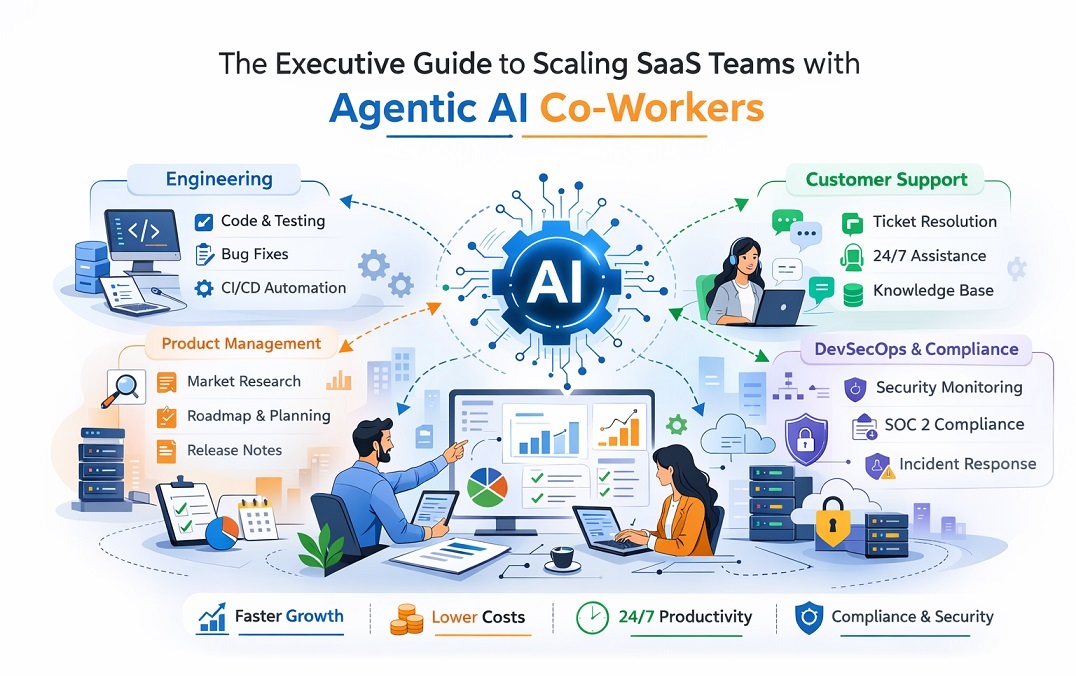
Traditional automation follows predefined rules. Agentic AI operates based on goals and context. These systems can make independent decisions, reason across multiple steps, adapt to changing conditions, and coordinate across engineering, support, and product teams.
This flexibility makes agentic AI powerful, but also risky without structure. Teams that skip planning often build complex agents before validating business value, leading to wasted effort and unclear ownership.
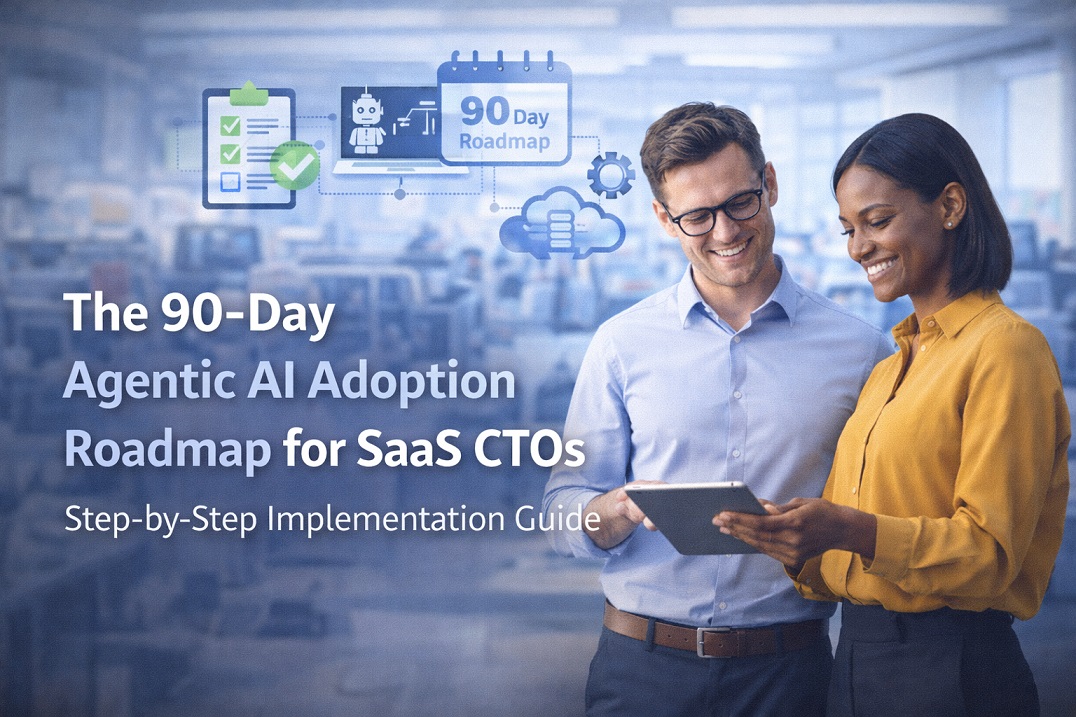
The 90-Day Agentic AI Adoption Roadmap
1. Process Audit Across Teams
Begin by identifying real operational friction instead of hypothetical AI use cases. Focus on:
Repetitive engineering tasks
Product workflow bottlenecks
Support processes consuming senior staff time
The goal is to locate high-frequency, decision-intensive activities suitable for automation.
2. Data Readiness Assessment
Before development begins, review:
Available structured and unstructured data
Required system access
Existing data gaps
Agentic systems do not require perfect data, but they depend on reliable accessibility.
3. Quick-Win Use Case Selection
Select one pilot project with visible impact. Common examples include:
Developer productivity agents
Internal knowledge assistants
CI/CD automation agents
Testing and validation agents
Early wins build internal confidence and justify expansion.
4. System Architecture Setup
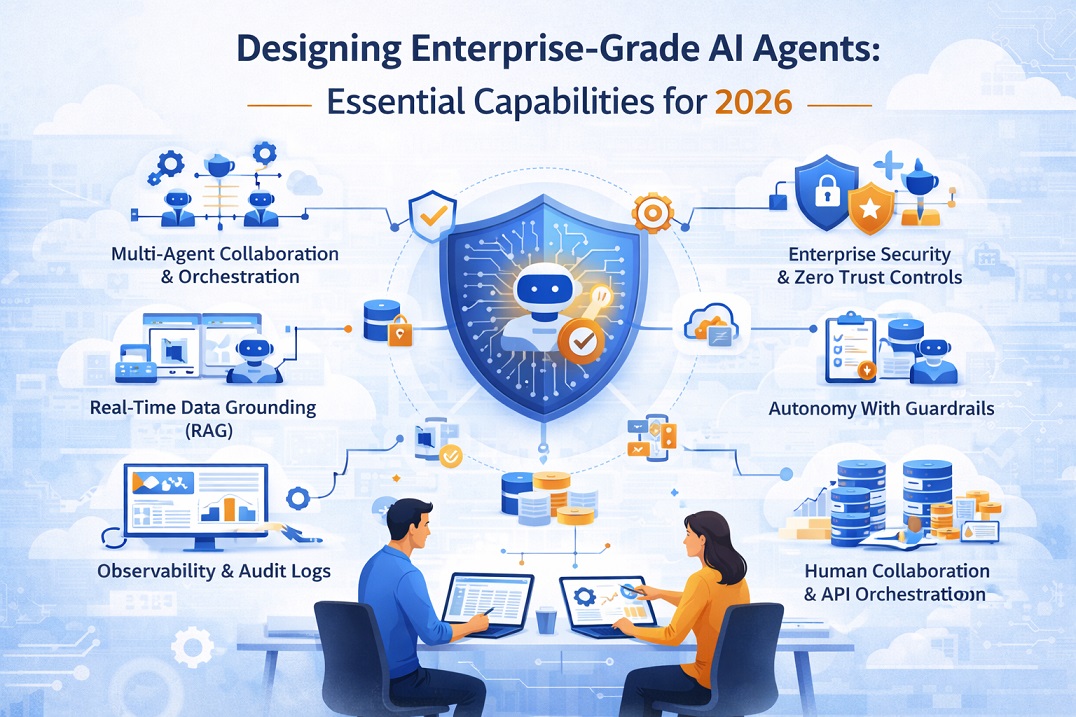
This phase focuses on building strong foundations. Key decisions include:
API readiness
LLM selection based on workload
Extensible agent frameworks
Security and access controls
Scalability comes later. Stability comes first.
5. Building the First Agent
Design the agent as a digital team member with:
A clear objective
Defined actions
Logical reasoning flow
Integrated tools such as Jira, GitHub, and Slack
Security must be embedded from the beginning.
6. Pilot Testing and Validation
Deploy agents in real environments and evaluate:
Decision accuracy
System reliability
Response latency
Hallucination prevention
Human override mechanisms
Compare results with existing manual workflows.
7. Expanding Use Cases
After a successful pilot, scale horizontally. Common extensions include:
Bug triage and code review agents
Tier-1 support automation
Product operations assistants
Analytics and anomaly detection agents
8. Production Deployment
Before full rollout, ensure:
Cost controls and API limits
Continuous monitoring
Feedback mechanisms
Governance structures
Autonomous agents must always remain observable.
9. Measuring the Right KPIs
Track performance using business-focused metrics:
Sprint velocity improvement
Ticket resolution time reduction
Faster release cycles
Lower operational costs
If these metrics do not improve, the system is not production-ready.
Common Mistakes SaaS CTOs Should Avoid
Several issues repeatedly delay adoption:
Starting with complex multi-agent systems
Ignoring early data accessibility
Building without business objectives
Skipping governance and audit controls
Most failures result from premature overengineering.
Closing Thoughts
Agentic AI adoption does not require multi-year transformation programs. It requires focused execution over 90 days.
Organizations that follow this roadmap and invest in reliable agentic AI development for SaaS move beyond experimentation and build dependable delivery engines that compound value over time.