


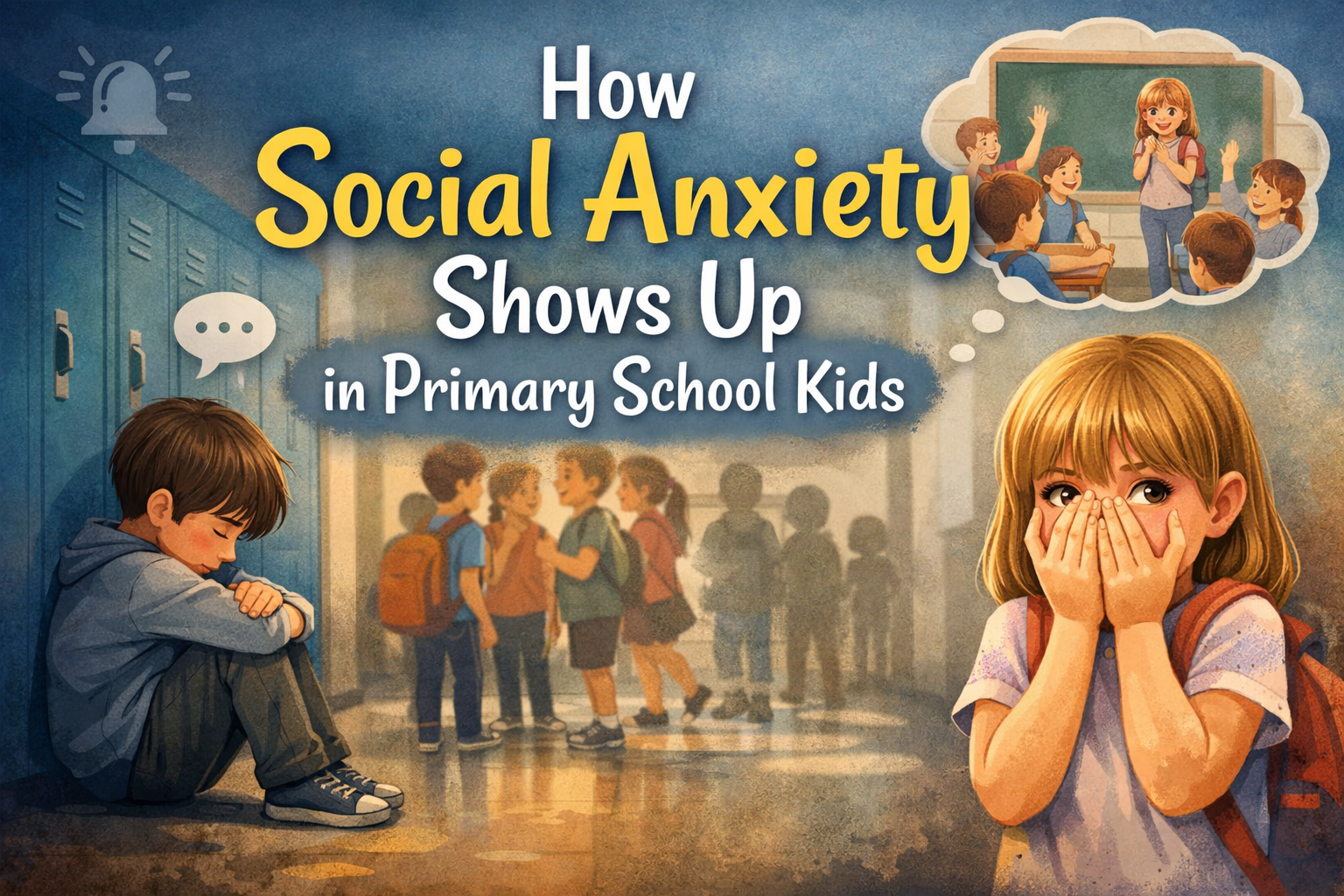

Many children feel shy in new situations — that’s a normal part of growing up.
But some children experience something deeper than shyness. They want friends, they want to participate, and they understand what’s expected… yet their body simply won’t cooperate. They freeze, avoid, cling, or quietly suffer through the school day.
This is often social anxiety, and it commonly begins during the primary school years.
Understanding how it appears in everyday behavior helps parents respond with support instead of pressure.
The Difference Between Shyness and Social Anxiety
A shy child feels uncomfortable but gradually warms up.
A child with social anxiety feels overwhelmed — even when they know everyone is friendly.
They aren’t refusing on purpose. Their brain is reacting as if social situations are unsafe. The body activates a stress response: racing heart, tight chest, nausea, shaky voice, or complete silence.
To adults it can look like stubbornness or lack of confidence.
To the child, it feels like danger.
Early Signs Parents Often Miss
Social anxiety rarely starts with dramatic behaviour. It usually appears in small daily patterns.
1. Avoiding Attention
The child avoids:
- raising their hand
- answering when called
- reading aloud
- performing in front of others
Even when they know the answer.
2. Morning Resistance Before School
Many parents notice complaints like:
- stomach aches
- headaches
- feeling sick before school
Symptoms disappear on weekends or holidays.
The child isn’t pretending — anxiety causes real physical sensations.
3. Silence Around Peers
At home the child talks normally.
At school they:
- whisper
- speak only to one safe friend
- avoid teachers
- stop talking in groups
This can sometimes develop into selective mutism.
4. Over-Thinking Social Situations
After school they may repeatedly ask:
- “Did I say something wrong?”
- “Are they mad at me?”
- “Did everyone laugh at me?”
Their mind keeps replaying small moments.
5. Avoiding Activities They Actually Enjoy
They may want to join:
- sports
- birthday parties
- excursions
But become distressed right before attending.
Get Hypnotherapist in Melbourne’s stories in your inbox
Join Medium for free to get updates from this writer.
Subscribe
Subscribe
Parents often hear:
“I don’t want to go” — even when the child was excited earlier.
Why It Often Starts in Primary School
Primary school introduces constant evaluation:
- answering in class
- making friends
- group activities
- teacher attention
- performance expectations
For sensitive children, the brain begins predicting embarrassment or rejection — even when nothing bad has happened.
The child’s nervous system learns:
attention = risk
So avoidance becomes a coping strategy.
What Doesn’t Help (Even With Good Intentions)
Parents naturally try to encourage confidence, but some common responses increase pressure:
- “Just be brave”
- “Everyone else can do it”
- “There’s nothing to worry about”
- forcing participation suddenly
These unintentionally confirm to the child that something is wrong with them.
What Helps Instead
Children with social anxiety improve when they feel understood first — challenged second.
Helpful approaches include:
1. Name the feeling
“I can see your body feels nervous when people look at you.”
2. Reduce anticipation pressure
Avoid repeatedly warning about upcoming events.
3. Practice in safe environments
Small, predictable social steps build confidence.
4. Focus on effort, not performance
Confidence grows from successful experiences, not persuasion.
When Extra Support May Be Useful
If anxiety starts affecting learning, friendships, sleep, or school attendance, professional support can help children learn how to calm their response rather than avoid situations.
Some families seek guidance from child-focused therapy approaches that work with the child’s emotional and subconscious responses, helping them feel safe participating rather than forced to cope.
When Children Need Extra Help With Anxiety
Most children improve with reassurance, patience, and gradual exposure to situations that feel uncomfortable. However, some children continue to experience intense fear responses even when they understand there is no real danger. In these cases, the reaction comes from the brain’s automatic protective patterns rather than conscious thinking.
Child-focused hypnotherapy is sometimes used as a gentle approach to help children relax their emotional response and feel safer participating in school and social situations. Instead of forcing behaviour, it works by helping the child’s mind learn calmer reactions during situations that previously felt overwhelming.
Families looking for structured support often explore Hypnotherapy for Children with a qualified hypnotherapist in Melbourne, especially when anxiety, school avoidance, sleep difficulties, or confidence issues continue over time.
Final Thought
Teachers and parents often see different sides of the same child — quiet at school, expressive at home. Recognising this difference is important. Behaviour that appears compliant in class may actually involve significant internal distress. Supportive environments that reduce fear of embarrassment allow participation to develop naturally over time.
FAQ:
Q 1: What is social anxiety in primary school children?
Ans: Social anxiety is a strong fear of speaking, joining groups, or being noticed at school, even when the child wants to participate.
Q 2: What are early signs of social anxiety in kids?
Ans: Stomach aches before school, silence in class, avoiding eye contact, clinging to parents, and fear of answering questions.
Q 3: Is social anxiety different from shyness?
Ans: Yes. Shy children warm up slowly, but socially anxious children feel overwhelmed and avoid situations despite wanting friends.
Q 4: Why does my child feel sick before school?
Ans: Anxiety activates real physical symptoms like nausea or headaches when the brain perceives social situations as threatening.
Q 5: Can social anxiety affect learning?
Ans: Yes. Children may avoid speaking, asking questions, or participating, which reduces confidence and classroom engagement.
Q 6: How can parents help a socially anxious child?
Ans: Offer reassurance, gradual exposure, and calm practice situations instead of forcing participation or dismissing fears.
Q 7: When should I seek professional help for my child?
Ans: Seek support if anxiety affects sleep, friendships, school attendance, or daily routines for several weeks.
Q 8: Can hypnotherapy help children with anxiety?
Ans: Child-focused hypnotherapy helps kids relax their emotional response and feel safer in social and school environments.
Q 9: Which are the best Harmony Hypnotherapy in Melbourne?
Ans: Parents often choose Harmony Hypnotherapy, known for Hypnotherapy Services Melbourne supporting anxiety, confidence and fears.
Q 10: Will my child outgrow social anxiety naturally?
Ans: Some improve with age, but untreated avoidance can persist, so early support helps build long-term confidence.


Have you ever seen people who are giving a presentation or facing an interview panel, tremble in fear?
It is definitely not easy to enter into a room full of unfamiliar persons but somehow we have been managing this task for years and years, but where is the confidence and ability to stand up to others?
Social situations and interactions are not a very thrilling experience for some and can make a person very nervous.
They definitely need suggestive therapy from a professional trained in hypnotherapy for social anxiety.Social phobias can be treated; all you need to do is get help.
The normal social silence has overstepped the boundaries and you need to understand that the shyness you are feeling is basically “fear of contact with people” other than your close group.
Hypnotherapy for social anxiety has shown amazing advancement in treating anxiety disorders related to social interaction.