


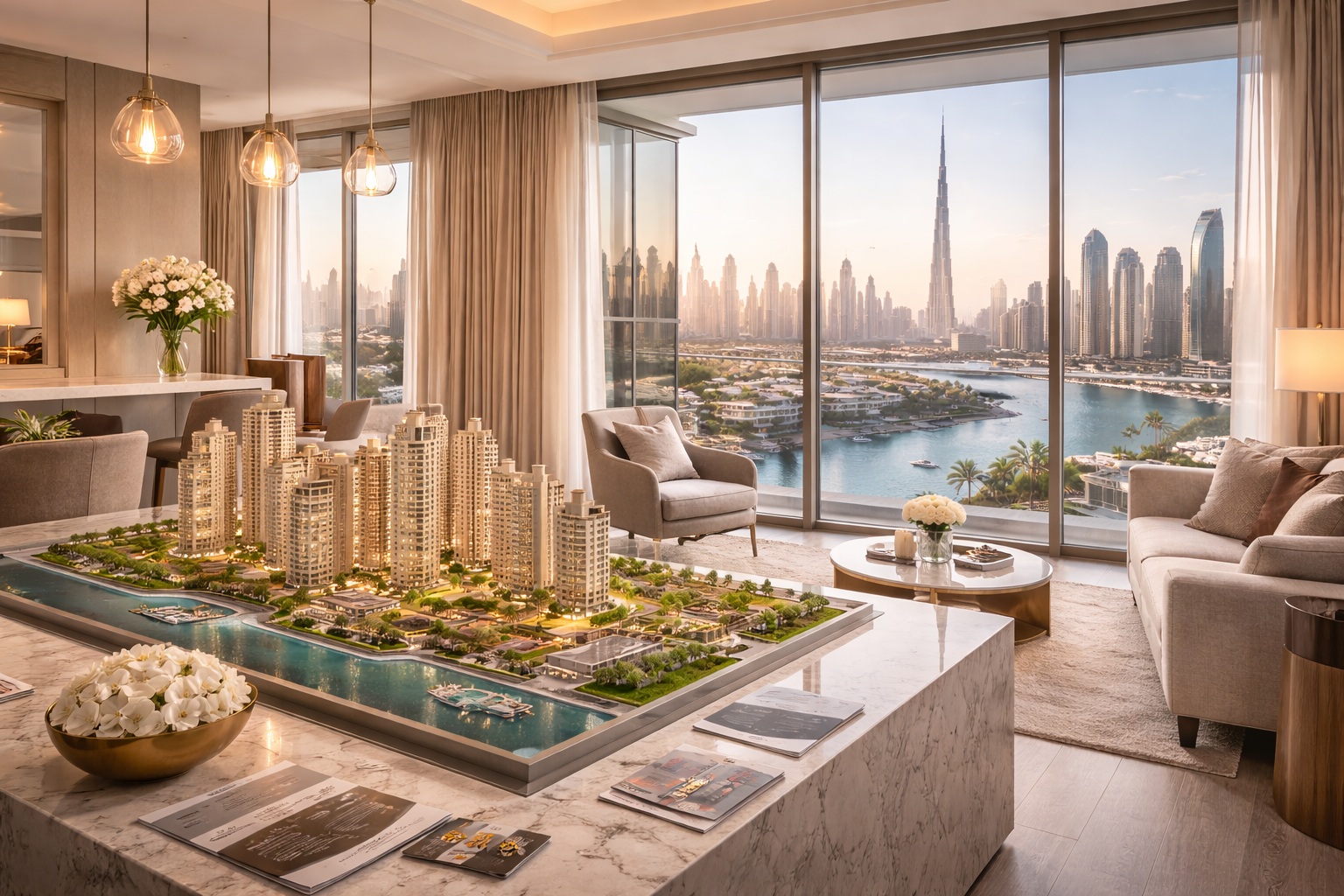
Off plan property in Dubai is one of the most talked-about opportunities in the real estate market. Developers promote flexible payment plans, attractive launch prices, and future appreciation potential. Investors see early entry advantages, while first-time buyers are drawn to structured installment options.
Yet despite the visibility, many buyers still do not fully understand how off plan property in Dubai actually works.
Buying a property that does not yet exist physically requires a different mindset compared to purchasing a ready unit. The process, financial structure, legal safeguards, and risk exposure are all different. This guide explains the mechanics behind off plan property for sale in Dubai clearly and practically—so you can evaluate it strategically rather than emotionally.
What is off-plan property in Dubai?
An off plan property is purchased directly from a developer before construction is completed. In many cases, the project may still be in early construction phases, or even pre-construction.
Unlike a ready property—where you can physically inspect the completed unit—off plan purchases are based on floor plans, master layouts, project brochures, and developer track record.
The main distinction lies in timing. With ready property, you pay and take ownership immediately. With off plan property, you commit to phased payments while the project is being built, with final handover occurring upon completion.
This structure changes both the financial exposure and the opportunity profile.
Why Developers Sell Off-Plan Property
Developers in Dubai use the off-plan model as part of a structured financing and sales strategy. By selling units before completion, they generate capital to fund construction while simultaneously measuring real market demand.
From the developer’s perspective, early buyers validate pricing and absorption rates. From the buyer’s perspective, this often translates into more attractive launch pricing and flexible installment schedules.
However, early entry does not automatically guarantee profit. The real advantage comes from selecting the right project, location, and developer—not simply from buying early.
How Buying Off Plan Property in Dubai Actually Works
The off plan purchase process begins with selecting a project. This stage requires careful evaluation of the developer’s track record, the surrounding infrastructure, and the long-term viability of the location. In Dubai’s regulated environment, developer credibility is one of the most important decision factors.
Once a unit is selected, a reservation is made through a booking form and an initial payment. This secures the property and locks in the agreed price. Following this, a Sales and Purchase Agreement (SPA) is signed. The SPA outlines the total property price, installment structure, projected completion timeline, and detailed project specifications.
Dubai’s real estate regulatory framework requires off plan payments to be deposited into escrow accounts linked to the specific project. These escrow protections ensure that funds are allocated exclusively to construction costs, significantly reducing systemic risk compared to unregulated markets.
Payments are then made in stages, usually tied to construction milestones. These installments continue until the project reaches completion. Upon handover, the final balance is settled, snagging inspections are conducted, and ownership is formally transferred.
This structured progression is what defines the off plan model.
Understanding Payment Plans
One of the primary reasons buyers are attracted to off plan property investment in Dubai is payment flexibility. Instead of requiring full payment or mortgage financing upfront, developers distribute the financial obligation over time.
Some payment plans are construction-linked, meaning installments correspond to building progress. Others may include post-handover payment structures, allowing buyers to continue payments even after receiving the property.
This flexibility lowers the immediate financial barrier to entry. However, it also requires disciplined financial planning. Buyers must ensure they can comfortably meet installment obligations throughout the development period.
The strength of an off plan investment lies not in the size of the installment, but in the sustainability of the payment structure relative to your financial capacity.
Risks Associated with Off Plan Property
While Dubai’s regulatory system provides safeguards, off plan property is not risk-free.
Construction timelines may extend beyond initial projections. Market conditions may shift between purchase and completion. Supply levels in the surrounding area may increase during development phases.
These risks do not invalidate the opportunity—but they reinforce the importance of due diligence. Evaluating developer history, understanding community master plans, and assessing broader market cycles are critical components of a sound off plan strategy.
In other words, off plan property should be approached as a calculated investment—not a speculative shortcut.
Advantages of Off Plan Property Investment
When properly selected, off plan property offers several strategic benefits. Entry pricing is often lower than completed market rates, allowing for potential appreciation before handover. Payment flexibility improves cash flow management compared to traditional mortgage-heavy purchases.
Additionally, buyers receive a brand-new unit at completion, which may offer higher appeal to tenants or resale buyers. In growing communities, early investors may benefit from infrastructure expansion and population growth over the development period.
These advantages are strongest when paired with long-term planning rather than short-term flipping expectations.
Who Should Consider Buying Off Plan Property
Off plan property in Dubai tends to suit long-term investors who are comfortable with delayed occupancy and structured payments. It is also suitable for buyers who do not require immediate rental income and can wait for capital appreciation over time.
Conversely, buyers needing immediate occupancy, immediate rental returns, or minimal timeline uncertainty may find ready properties more aligned with their goals.
Success in off plan investing depends less on optimism and more on alignment between property timeline and personal strategy.
Off Plan vs Ready Property: A Strategic Comparison
Ready properties provide immediate usability and rental potential, but typically require larger upfront capital or mortgage financing. They carry lower development risk but also offer more limited early-stage appreciation.
Off plan properties offer staged payments and potential capital growth before completion, but introduce construction and timing variables.
Neither option is inherently superior. The right choice depends on your investment horizon, liquidity position, and tolerance for phased development exposure.
Conclusion
Off plan property for sale in Dubai is a structured investment mechanism—not a shortcut to guaranteed returns.
When approached with careful evaluation, realistic expectations, and long-term alignment, it can provide:
Flexible capital deployment
Access to early-stage growth zones
Gradual financial exposure
However, its effectiveness depends entirely on strategic selection rather than marketing appeal.
If you are considering buying property in Dubai, understanding how the off plan model works at a structural level is essential. Informed decisions outperform impulsive ones—especially in dynamic markets like Dubai.



Luxury real estate and smart investment opportunities in Dubai by Apex Skyline, built on trust, expertise, and excellence. Delivering luxury real estate and smart investment opportunities in Dubai,