

Enterprise Resource Planning (ERP) systems are no longer optional for modern businesses—they’re essential. Whether you’re transitioning from fragmented systems to an integrated platform or pursuing custom ERP development, a structured approach is critical. This guide walks you through a practical ERP implementation roadmap, highlights key ERP rollout phases, identifies common risks, and explains how to execute change management that actually works.
Successful ERP adoption doesn’t happen by accident. It requires clear planning, stakeholder alignment, meticulous integration, and user readiness. Follow this step-by-step guide to ensure your ERP project delivers measurable business value.
Understand Why You Need an ERP System
Before starting any ERP initiative, clarify what you want to achieve:
- Eliminate data silos
- Improve operational visibility
- Enable automation and process standardization
- Support scalability and digital transformation
Align these goals with measurable outcomes. A well-defined purpose simplifies future decisions about whether to customize your ERP solution or select pre-built modules.
Establish Your ERP Project Team
An ERP implementation isn’t an IT project—it’s a business transformation. Form a cross-functional team including representatives from finance, operations, HR, supply chain, and IT. This team will:
- Define requirements
- Champion process changes
- Ensure departments stay aligned throughout the implementation
Leadership support is equally essential. Sponsors help secure resources and remove organizational roadblocks.
Conduct a Current-State Assessment
Identify all existing systems, workflows, and pain points. This audit should evaluate:
- Manual processes that need automation
- Poorly integrated systems
- Reporting challenges
- Data quality issues
Use this assessment to inform your ERP project plan, the foundation for the entire implementation.
Choose the Right ERP Approach
Not all ERP projects are the same. Consider these options:
- Out-of-the-box ERP: Faster to deploy but less customizable
- Custom ERP development: Tailored to your unique business processes but requires more planning
- Hybrid: Standard ERP core with select custom modules
If your business has industry-specific needs, custom ERP development might deliver the flexibility required to future-proof operations.
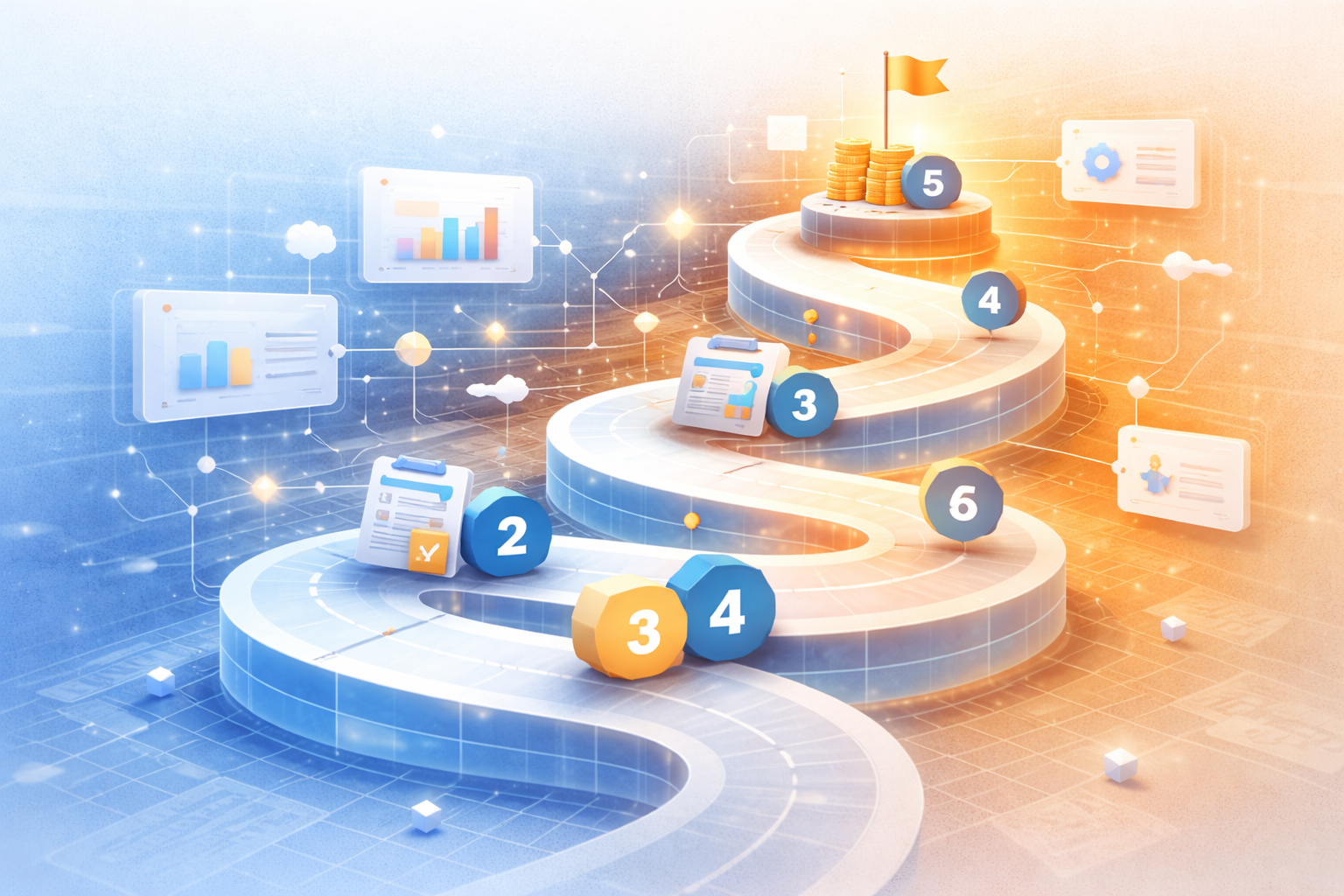
Plan Your ERP Rollout Phases
A successful ERP implementation divides the project into logical phases:
Phase 1: Blueprinting and Requirements
Document detailed requirements based on cross-functional input. This phase shapes configuration, integrations, and custom features.
Phase 2: Design and Customization
Configure the ERP system or develop custom modules. Ensure ERP integration points are identified—whether connecting to CRM, e-commerce platforms, or other legacy systems.
Phase 3: Data Migration
Clean and consolidate data from disparate sources. This step is often under-estimated, yet it’s one of the most common causes of implementation delays. Prioritize:
- Data cleansing
- Validation
- Migration scripts and tools
Phase 4: Testing
Comprehensive testing uncovers issues before go-live. Include:
- Unit testing
- Integration testing
- User acceptance testing (UAT)
Allow business users to test workflows that reflect real-world usage.
Phase 5: Deployment
Roll out the system according to your plan. You can choose a big-bang approach or staggered deployment based on function or location.
Support Change Management That Works
ERP projects often fail not because of technology, but due to resistance to change. Here’s how to overcome it:
Communicate Early and Often
Start communication when the project begins and maintain transparency. Address questions like:
- What is changing?
- Why is it happening?
- How does it benefit staff?
Focus on User Training
Invest in comprehensive user training tailored to roles and responsibilities. Training increases confidence, reduces errors, and accelerates adoption.
Training methods can include:
- Instructor-led sessions
- E-learning modules
- On-demand reference guides
Monitor learning progress and provide refresher sessions after go-live.
Address Common ERP Implementation Risks
Being proactive about risks prevents costly setbacks. Key challenges include:
- Scope creep – Avoid adding features mid-project without impact evaluation
- Inadequate testing – Insufficient testing leads to go-live issues
- Poor data quality – “Garbage in, garbage out” remains true in ERP systems
- Lack of executive buy-in – Sponsors must champion the project continuously
Create a risk register to track issues, owners, and mitigation strategies.
Measure Success and Optimize
Post-implementation, measure results against your initial goals:
- Process improvements
- Efficiency gains
- Reduced errors
- Enhanced visibility
Continuous improvement is a hallmark of ERP best practices. Use system data to refine workflows and expand automation over time.
Plan for ERP Modernization
Technology evolves rapidly. Cloud capabilities, AI, advanced analytics, and mobile access are now expected. Your ERP roadmap shouldn’t end at go-live. Consider future phases like:
- Mobile access for field teams
- Real-time dashboards
- Predictive analytics
- Integration with IoT or other emerging technologies
A modernization mindset ensures your ERP remains an asset—not a liability.
Final Thoughts
ERP implementation is a significant undertaking, but with the right roadmap, it becomes a catalyst for transformation. From planning and integration to change management and training, each phase plays a crucial role in the project’s success.
If you want expert guidance on building a fully customized ERP system, explore this in-depth resource on developing a successful custom ERP.
By following this structured approach, your organization can reduce risk, empower users, standardize processes, and unlock the full potential of ERP technology.



Cloud ERP is a business process management software that allows an organization to use a system of integrated applications to manage the business and automate many back-office functions related to technology, services, HRMS etc.
Know more at https://techclouderp.com.For any type of business ERP Software is useful, our Tech Cloud ERP Software Solutions provides excellent cloud based ERP software system in India.
Our ERP System is more secure than other ERP Software’s.

The days of traditional and isolated data processing ERP are all over.
After 2020, international companies aim to build a skilled workforce capable of competing and identifying themselves in their respective sectors.
Businesses need a SaaS-based ERP platform that benefits from the introduction of improvements and new functions to fulfill this need for empowerment.
Cloud-based ERP platforms' advancement makes them perfect for their growth plans and entrepreneurs.In case you looked for an ERP solution that was effective, you must have heard the excitement for Microsoft Dynamics 365, the cloud successor Dynamics AX.
Whether you're upgrading from Microsoft Dynamics AX (2009, 2012, 2012R2, 2012 R3) to Microsoft Dynamics 365 with up-to-date features or moving from another ERP supplier, or even implementing Dynamics 365 customer engagement since the ERP platform in your business, it is important to be aware of dynamics 365 customer engagement featuresTo Know More: https://bit.ly/2V6Lgnd