

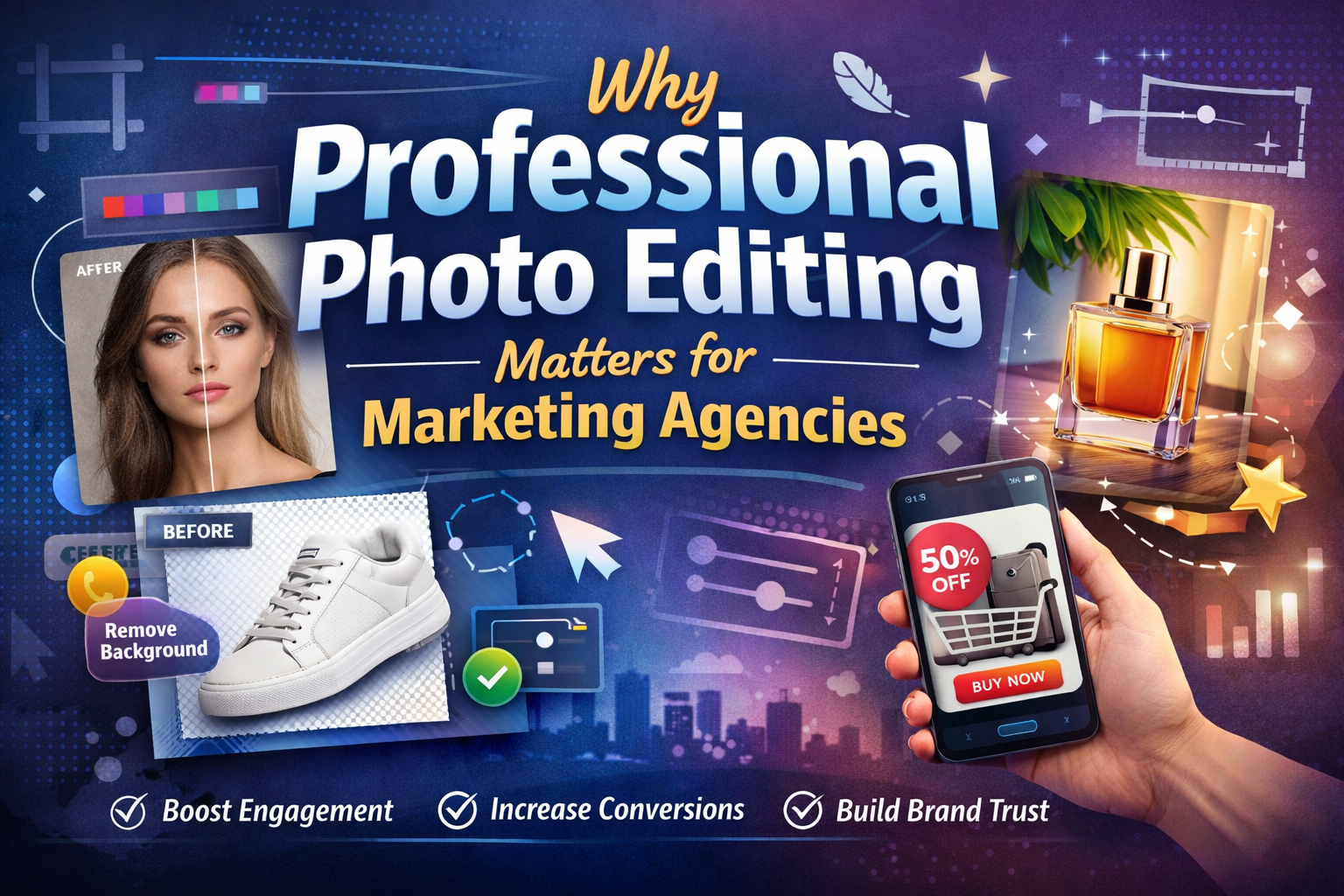
In today’s marketing world, attention is currency. People scroll fast, skip faster, and judge brands in seconds. That’s why visuals matter more than ever. For marketing agencies, the quality of images used in ads, websites, social media, and eCommerce campaigns can directly impact engagement, trust, click-through rate, and conversions.
But here’s the truth: raw photos—no matter how good the camera is—rarely look “campaign-ready.” They often need refinement, consistency, and brand-level polish. This is where professional photo editing becomes essential.
In this blog, we’ll explore why professional photo editing matters for marketing agencies, how it improves campaign performance, and why it helps agencies scale faster while delivering premium results.
What Is Professional Photo Editing?
Professional photo editing is the process of enhancing, correcting, and optimizing images to meet commercial standards. Unlike basic edits (like applying a filter or adjusting brightness), professional editing is detail-focused and done with marketing goals in mind.
It ensures the image:
* Matches brand style
* Looks consistent across a campaign
* Feels premium and trustworthy
* Meets platform requirements (ads, web, marketplaces)
* Removes distractions that reduce conversions
Common Professional Photo Editing Tasks
Marketing agencies typically need editing services such as:
* Color correction and white balance
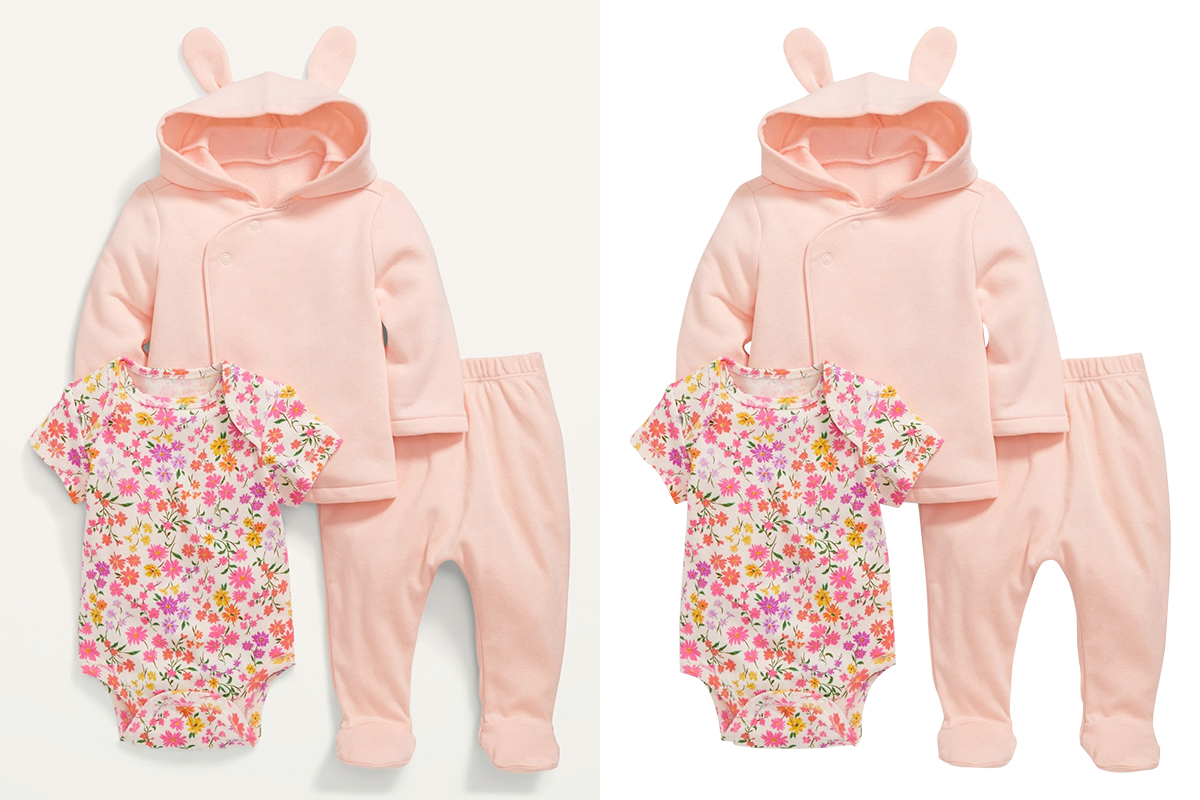
* Background removal and clipping paths
* Product retouching (dust removal, wrinkle fixing, detail enhancement)
* Model and beauty retouching
* Shadow and reflection creation
* Image resizing for multiple platforms
* Creative photo manipulation and composites
Why Marketing Agencies Need High-Quality Edited Images
Marketing agencies don’t just “post content.” They build brand perception. And brand perception is heavily visual.
1) Stronger First Impressions
The first thing a customer notices in an ad or website is the visual. If the image looks dull, poorly lit, or inconsistent, customers subconsciously assume the brand is low-quality too.
Professional editing ensures:
* Better lighting balance
* Cleaner composition
* More appealing colors
* Premium feel instantly
A polished image can make a brand look established—even if it’s a startup.
2) Better Brand Consistency Across Campaigns
Consistency is one of the most underrated factors in marketing success.
Marketing agencies often manage:
* Multiple campaigns
* Multiple product lines
* Multiple photoshoots
* Multiple photographers
Without professional editing, the final visuals can look mismatched:
* One image looks warm
* Another looks cool
* One has a bright background
* Another looks gray and flat
Professional editing creates a unified brand look across:
* Social media posts
* Paid ads
* Website banners
* Product catalogs
* Email marketing visuals
3) Higher Engagement and Click-Through Rates (CTR)
High-quality images attract attention. Low-quality images get ignored.
Professional photo editing helps agencies create visuals that:
* Stop the scroll
* Increase likes, saves, shares
* Improve CTR on paid ads
* Increase landing page engagement
In performance marketing, even small improvements in CTR can reduce cost-per-click and improve ROI significantly.
Key Benefits of Professional Photo Editing for Marketing Agencies
Professional photo editing isn’t just about making images look “nice.” It’s about producing marketing assets that perform.
1) Improves Campaign Performance and ROI
Whether it’s a product ad, fashion campaign, or corporate branding, edited images tend to perform better because they look more trustworthy and visually attractive.
Better visuals can improve:
* Ad engagement
* Website conversion rate
* Product listing performance
* Social media reach
A high-quality image makes people take the brand seriously.
2) Saves Time for Designers and Creative Teams
In most agencies, designers already handle:
* Ad layouts
* Brand assets
* Social media templates
* Landing page designs
* Client revisions
If they also have to edit raw photos, it slows down the entire workflow.
Professional photo editing allows agencies to:
* Focus on strategy and creative direction
* Reduce workload
* Deliver faster
* Keep designers productive
3) Enhances Client Satisfaction and Retention
Clients pay agencies for results and professionalism. Even if the marketing strategy is great, poor visuals can ruin client trust.
When images look polished, clients feel:
* Their brand is premium
* Their money is well spent
* Their agency is professional
This leads to:
* Fewer complaints
* Fewer revision rounds
* Higher retention
* More referrals
4) Supports Multi-Platform Marketing
Every marketing platform has different image requirements.
For example:
* Instagram needs clean, consistent visuals
* Facebook ads need attention-grabbing creatives
* Google display ads require multiple sizes
* Websites require optimized images for speed
* Amazon/eCommerce requires strict background rules
Professional editing ensures each image is:
* Sized correctly
* Cropped properly
* Optimized for web speed
* High resolution without being heavy
* Platform compliant
5) Helps Agencies Scale Faster
Scaling an agency is difficult when production work becomes the bottleneck.
If an agency handles:
* 5 clients per month → manageable
* 20 clients per month → chaos without a strong workflow
Professional editing services help agencies scale by:
* Handling bulk image volumes
* Delivering consistent output
* Reducing internal workload
* Allowing the agency to take on more clients
Professional Photo Editing vs In-House Editing: What’s Better for Agencies?
Many agencies face this decision: edit images in-house or outsource to a professional editing team.
In-House Editing (Pros & Cons)
Pros:
* Full control
* Instant communication
* Easier to align with creative team
Cons:
* Expensive hiring cost
* Requires skilled editors
* Slower when workload increases
* Difficult to scale quickly
Outsourcing Editing (Pros & Cons)
Pros:
* Faster turnaround for bulk projects
* Cost-effective
* Access to expert retouchers
* Scalable workflow
Cons:
* Requires clear instructions
* Need reliable partners
* Quality may vary if you choose the wrong service
Best Practice for Most Agencies
Many successful agencies use a hybrid model:
* Creative direction and QC in-house
* Editing execution outsourced
This keeps quality high while saving time and cost.
Most Common Photo Editing Services Marketing Agencies Use
Marketing agencies typically require a mix of technical and creative editing.
1) Background Removal and Cutouts
This is essential for:
* Product ads
* Marketplace listings
* Catalog designs
* Banner visuals
Clean cutouts make product-focused designs look professional.
2) Color Correction and White Balance
Color accuracy is critical, especially for:
* Fashion brands
* Cosmetics
* Food products
* Home décor
Professional correction ensures:
* True-to-life colors
* Consistent tone across all images
* Better product representation
3) Product Retouching for eCommerce
Product photos often contain imperfections like:
* Dust
* Wrinkles
* Uneven lighting
* Fabric creases
* Scratches
* Unwanted reflections
Professional retouching enhances the product while keeping it natural and realistic.
4) Model and Beauty Retouching
Marketing agencies working with fashion, skincare, or lifestyle brands often need:
* Skin retouching (natural look)
* Removing blemishes
* Fixing flyaway hair
* Enhancing details
* Balancing lighting
The key is making it look professional without looking fake.
5) Shadow and Reflection Creation
Shadows add realism and depth to products.
Agencies commonly use:
* Natural shadows
* Reflection shadows
These make products look more premium and “3D” in marketing creatives.
6) Creative Photo Manipulation
Sometimes agencies need visuals that don’t exist in real life, such as:
* Composite ads
* Lifestyle backgrounds
* Seasonal campaigns
* Promotional banners
Creative manipulation helps agencies produce powerful visuals without expensive photoshoots.
How Professional Editing Improves Different Marketing Channels
Professional editing impacts every channel an agency manages.
Social Media Marketing
Social media is visual-first. Professional editing helps:
* Create a consistent feed
* Improve engagement
* Increase saves and shares
* Make content look premium
It also helps brands stand out in crowded niches.
Paid Ads (Meta, Google, TikTok)
Paid ads require scroll-stopping visuals. Professional editing helps:
* Increase CTR
* Improve ad quality perception
* Reduce wasted ad spend
* Strengthen brand trust
Even if the copy is great, weak visuals reduce performance.
Websites and Landing Pages
A website is often the first “real impression” of a brand.
Professional images help:
* Build trust instantly
* Increase time on page
* Improve conversion rates
* Reduce bounce rate
If a landing page looks cheap, users won’t buy—even if the offer is good.
Email Marketing
Email campaigns work better when visuals are:
* Clean
* Consistent
* Optimized for fast loading
* Professional
Good product images increase click-through and purchase intent.
eCommerce Campaigns
For eCommerce, professional editing is not optional.
It helps:
* Meet marketplace requirements
* Improve listing quality
* Increase sales
* Reduce customer returns caused by misleading visuals
Common Problems Agencies Face Without Professional Editing
If an agency ignores professional editing, they often face these issues:
Inconsistent Visual Branding
Campaign visuals look random, which weakens brand identity.
Distracting Backgrounds and Imperfections
Unedited images may contain:
* Messy backgrounds
* Dust spots
* Wrinkles
* Lighting issues
These reduce trust.
Too Many Revisions
Clients notice flaws quickly. This leads to:
* Multiple revision rounds
* Delayed delivery
* Team burnout
Missed Deadlines
Editing takes time. If the agency tries to do everything internally, deadlines become harder to meet.
What to Look for in a Professional Photo Editing Partner
If you’re an agency outsourcing photo editing, choosing the right partner matters.
Here are key qualities to look for:
Consistent Quality
They should deliver the same quality across 10 images or 1,000 images.
Fast Turnaround Time
Marketing is deadline-driven. Your partner must be reliable and quick.
Bulk Handling Capability
Agencies often work with large volumes. The editing team should be able to scale.
Clear Communication
Quick response, easy file sharing, and clear updates matter.
Revision Support
A professional partner should offer revisions when needed.
File Security and NDA
Agencies handle client assets. A good editing partner must maintain confidentiality.
Workflow Tips for Agencies Using Photo Editing Services
To get the best results, agencies should build a simple workflow.
1) Provide Clear Instructions
Use:
* Style guides
* Reference images
* Brand color preferences
2) Send Files in Organized Folders
Use clear naming like:
* ClientName_ProductName_001.jpg
3) Batch Requests
Sending images in batches saves time and reduces confusion.
4) Do Quality Checks
Before delivering to clients, review:
* Color consistency
* Background cleanliness
* Shadow realism
* Cropping and alignment
Cost of Professional Photo Editing for Marketing Agencies
The cost of photo editing depends on:
* Complexity of editing
* Number of images
* Turnaround speed
* Revision requirements
* Type of images (product, model, real estate)
However, agencies should view photo editing as an investment.
Why It’s Worth It
Professional editing can:
* Improve campaign performance
* Increase client satisfaction
* Save internal production time
* Reduce revision costs
In most cases, the ROI is far higher than the editing cost.
Real-World Use Cases: How Agencies Use Photo Editing
1) eCommerce Brand Launch
A new apparel brand needs:
* Clean product images
* Consistent colors
* Ghost mannequin effects
* Marketplace-ready photos
Editing makes the brand look premium from day one.
2) Fashion Campaign Retouching
Agencies working with fashion brands need:
* Beauty retouching
* Fabric detail enhancement
* Consistent lighting across the campaign
3) Real Estate Marketing
Real estate images require:
* Exposure balancing
* Sky replacement
* Color correction
* Object removal
Professional edits make properties look more appealing and sell faster.
4) Restaurant and Food Brand Ads
Food photography often needs:
* Color correction
* Sharpening
* Removing unwanted reflections
* Enhancing texture
Good editing makes food look fresh and irresistible.
5) Corporate Branding Campaigns
For corporate clients, agencies need:
* Clean headshots
* Consistent lighting
* Professional background enhancement
This supports brand trust and professionalism.
Future Trends in Photo Editing for Marketing Agencies
Marketing is evolving, and so is photo editing.
AI-Assisted Editing (But Human Quality Still Matters)
AI tools can speed up basic editing, but professional retouchers are still essential for:
* Natural results
* Brand consistency
* Detailed product editing
* High-end retouching
AI is a tool, not a replacement for quality control.
Faster Content Cycles
Brands now need content weekly, sometimes daily. Agencies must deliver quickly, and professional editing helps keep up with the demand.
More Demand for Platform-Ready Visuals
Brands don’t want “just images.” They want:
* Ad-ready
* Web-ready
* Social-ready
* Marketplace-ready assets
Professional editing supports this demand.
Conclusion
Professional photo editing matters for marketing agencies because it directly impacts brand perception, campaign performance, and client satisfaction.
In a world where customers judge brands in seconds, visuals are not just decoration—they are a marketing weapon.
By using professional editing, agencies can:
* Deliver premium results consistently
* Improve ad and content performance
* Save time for internal teams
* Scale faster and handle more clients
* Build long-term trust with clients
If you want your agency to compete in modern marketing, professional photo editing is not optional—it’s essential.
FAQs
1. Why is professional photo editing important for marketing?
Because edited images look more professional, build trust, and improve engagement and conversions across all marketing platforms.
2. Do marketing agencies outsource photo editing?
Yes, many agencies outsource photo editing to save time, reduce cost, and handle bulk projects efficiently.
3. Can photo editing improve ad performance?
Yes. Better visuals can increase CTR, engagement, and conversion rates, which improves overall campaign ROI.
4. What types of photo editing do agencies need most?
Background removal, product retouching, color correction, model retouching, and shadow creation are the most common.
5. Is professional photo editing expensive?
Pricing depends on complexity and volume, but for agencies it’s usually a cost-effective investment due to improved performance and saved production time.
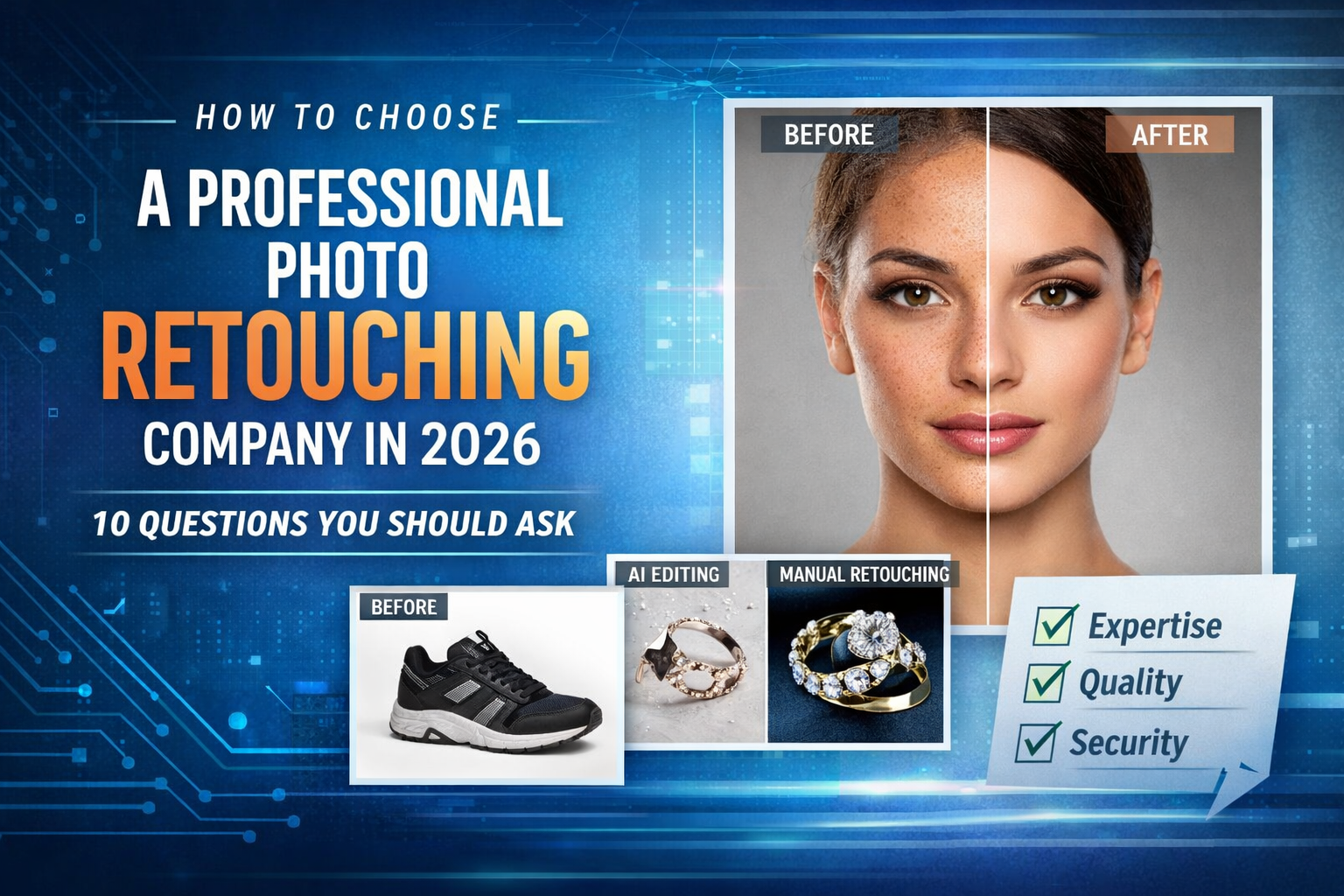
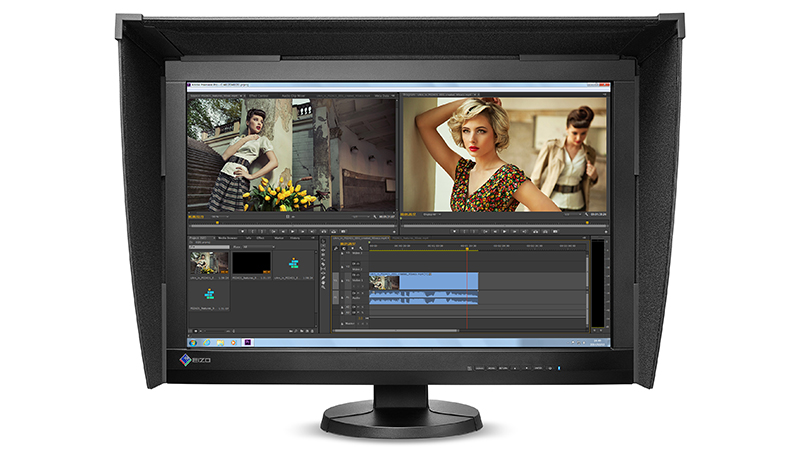
It is tough looking for the best professional monitor and effort can prove to be very daunting, especially if it is about photo editing.
Here are a few features that must be seen in this monitor.
It must come with the newest screen technology so that you can use it for the best results.ResolutionThe first feature that you must look into a photo retouching monitor is its resolution.
This monitor shows 4000 pixels along the monitor edge.
Since an average laptop has anywhere around 1366 pixels along the long edge, going forward with a 4000 pixels monitor is surely a huge upgrade.
Theoretically, one may have a 32-inch screen or a 12-inch screen with the same resolution of 1920x1080 but the quality of viewing in a 12-inch screen is better than that of 32-inch screen.
Today photo editing has become one of the demanding marketing tools by enterprises as it helps them promote their services, enhance sales and tap large audiences.
This post will describe how professional photo editing services help a business brand mark a different presence from the conventional market.
But before digging deep, let’s take a quick look at why photo editing is essential for your business?1.
Increase CredibilityHow Hiring Photo Editing Services Will Benefit Your Business?1.
It Saves Your Money And Additional Expenses On Software2.
Improve Brand Presence And Help Tap New CustomersWant to read more in detail read this amazing guide "How Can Professional Photo Editing Increase The Chances Of Success For Your Startup Business?