What “Emergency Deployment” Really Means
When water systems fail during a crisis, the problem is rarely “no water.” It’s unsafe water, unstable supply and no time to rebuild. Emergency deployment is the fast delivery and commissioning of a rental water treatment plant that can turn an available source—river water, borewell water, tanker supply, or even seawater—into usable water for people and operations.
Rental Water Treatment Plants Explained
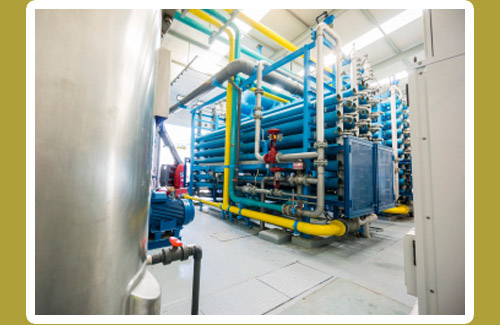
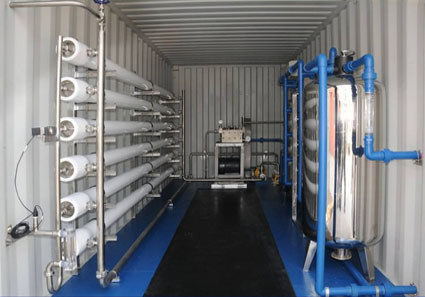
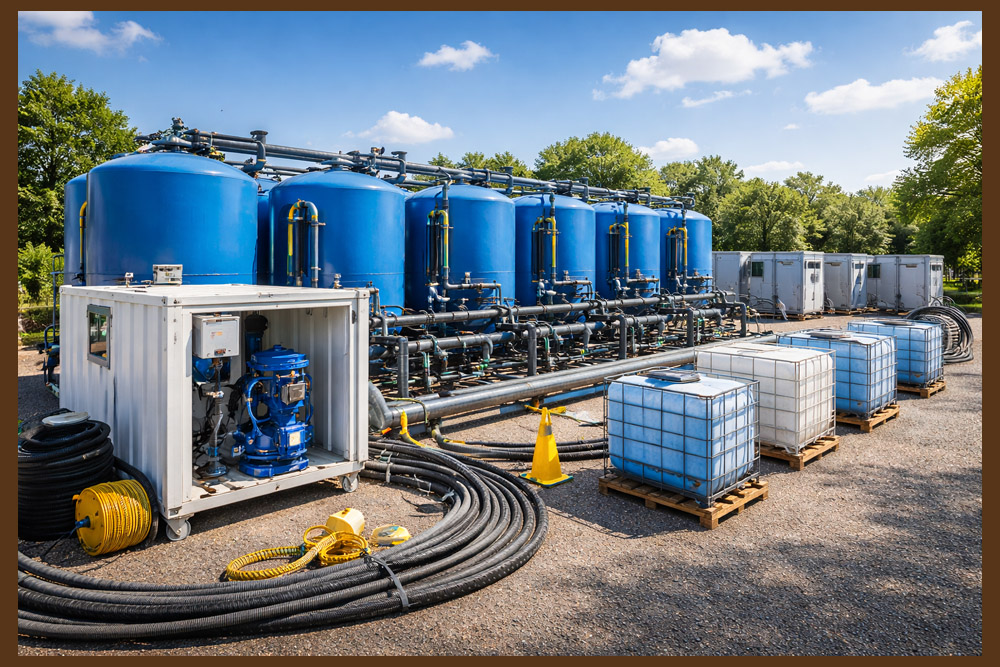
Most crisis-response rentals arrive as containerized or skid-mounted units. The treatment train is selected based on the source: screening & clarification for heavy turbidity, media filtration for suspended solids, ultrafiltration for fine particles & pathogens, reverse osmosis for high TDS or salinity and final disinfection (often chlorine or UV) to protect distribution. The key is matching the process to the risk, not overspending on technology that doesn’t move the needle.
Rapid Site Assessment & Setup
Speed comes from discipline. A quick site assessment checks source reliability, access for trucks/cranes, safe drainage points and space for tanks. Next is a rapid water quality profile—turbidity, conductivity/TDS, pH, iron and a basic microbiology plan. Power is often the hidden constraint, so generator sizing, fuel logistics & chemical storage must be confirmed before the unit lands. With a prepared pad, hoses & tanks, commissioning can be measured in hours, not weeks.
Sizing the Plant for Real Demand
Sizing should start with people and use-case: drinking and hygiene needs, medical facilities, kitchens, or process water for temporary operations. Plan for peaks, not averages and include buffer storage so distribution doesn’t choke output. Modular systems help you scale by adding parallel trains, while redundancy protects uptime when parts or consumables run short. See industrial use-cases for ceramic membrane technology —visit our website today.
Water Quality Assurance in the Field
Field quality control must be practical: turbidity, residual chlorine & conductivity are daily essentials; microbiology verification follows a defined schedule. Align targets with WHO guidance and local emergency requirements and document results to keep stakeholders aligned.
The Practical Path Forward
In crisis response, the best rental plant is the one that can be deployed, powered, monitored & maintained with the resources on-site. Start with a clear demand estimate, confirm the source profile and choose a modular system with a tight SLA, spares support and simple operating procedures. That’s how safe water becomes predictable again.
Author Resource:-
Lee Wood writes about sustainable and scalable water and wastewater treatment solutions.