



In the increasingly connected world in which we live, cyberattacks are no longer headline-hitting rarities but a daily reality.
With bad actors executing roughly 2,200 attacks every day across the globe, the need for strong cybersecurity has never been more vital — and ethical hackers play a role in ensuring just that.

Ethical hackers, or white-hat hackers, are cybersecurity experts who learn to think like criminals while behaving in an ethical manner. While black hat hackers exploit flaws, ethical hackers help find them by being proactive.
Hackers' View From the Other Side
To understand how ethical hackers, also known as “white hat hackers,” protect computer systems, you must first be aware of their methods — techniques that often mimic the actions of cybercriminals (for example: scanning, probing for weaknesses, and simulating attacks) with one exception: they perform these activities with permission.
They conduct penetration testing, which is like a real-world attack to identify weaknesses that attackers may exploit.
It’s a “strike to protect” belief that informs their work.
To decrypt vulnerabilities, such as weak spots in firewalls, servers, and web applications, ethical hackers rely on tools like vulnerability scanners and network analyzers to expose them before malicious actors exploit the unknown risks, which are then turned into actionable patches.
From Risk Assessment to Risk Reduction
Ethical hackers not only find — they are also part of the solution. Vulnerability assessment is a big part of their job, which means identifying and prioritizing system weaknesses so that companies know where to best direct efforts to strengthen cybersecurity.
When weaknesses are located, ethical hackers collaborate with security organizations to fix systems, restrict access, and harden encryption practices. This is a proactive approach that narrows the window for a potential large-scale breach to occur.
So it’s no surprise that businesses are increasingly seeing ethical hacking as an investment in security resilience rather than a luxury.
Putting Costs in Perspective
The financial stakes are staggering. Estimates indicate that the cost of global cybercrime will hit $16 trillion by 2029. This adds in the expenses of actual data theft, downtime, and reputational harm.

Which is where the “white hats” come in: Ethical hackers serve as a kind of preventative shield, identifying weak links before they tumble into millions of stolen dollars.
And with the average data breach currently costing millions of dollars, performing regular security assessments by professionals is no longer optional for progressive organizations; it’s a requirement.
Building a Robust Security Culture
Ethical hackers don’t just test systems; they also help organizations develop a culture in which security is top of mind. They train teams to identify phishing attacks, maintain stronger password hygiene, and flag suspicious behavior.
It is important to develop this level of awareness because human error plays a major role in the number of successful outcomes.
Whether it’s structuring a secure network model or consulting on how to remain compliant with security standards, white hat hackers develop the full scope of your security process as the threat landscape continues to grow.
Why Learning Ethical Hacking Matters?
An Ethical Hacking course is life-changing for folks looking to venture into this exciting domain. Whether ethical hacking is integrated into your cybersecurity education or you’re exploring an online ethical hacking course, the in-demand skills you’ll develop can be used to protect digital infrastructure.
The best ethical hacking courses meld theory and experience, helping learners to think like a hacker even as they learn how to defend against those attacks.
Ethical hacker training online allows those who take it to develop skills in penetration testing, network security, and incident response — the exact skills companies around the world are currently hiring for as demand for cybersecurity personnel skyrockets.
For those interested in the basics or who are seeking to improve their skills in this area, even online courses like Coursera's ethical hacking provide some very friendly entry points into how to get started and what being an ethical hacker means in terms of the big picture of system protection.
Conclusion
In today’s escalating climate of cybercrime, ethical hackers are increasingly indispensable figures in the digital world.
Their job — finding flaws in systems and fortifying defenses against those attacks — does more than just stop an attacker: It also shapes the future of the technology we use every day.
For anyone interested in the cybersecurity field, signing up for an ethical hacking training is, of course, an added bonus.


The latest version of CEH by EC-Council is all set to launch the latest version CEH v11.
As sticking with a hacker to approach for their thinking, for gaining knowledge about the latest advancements in the field of cybersecurity.
The latest advancements are added in the field of cyber-security and to its curriculum.
Some of the topics are removed, as the new segments are released and introduced.
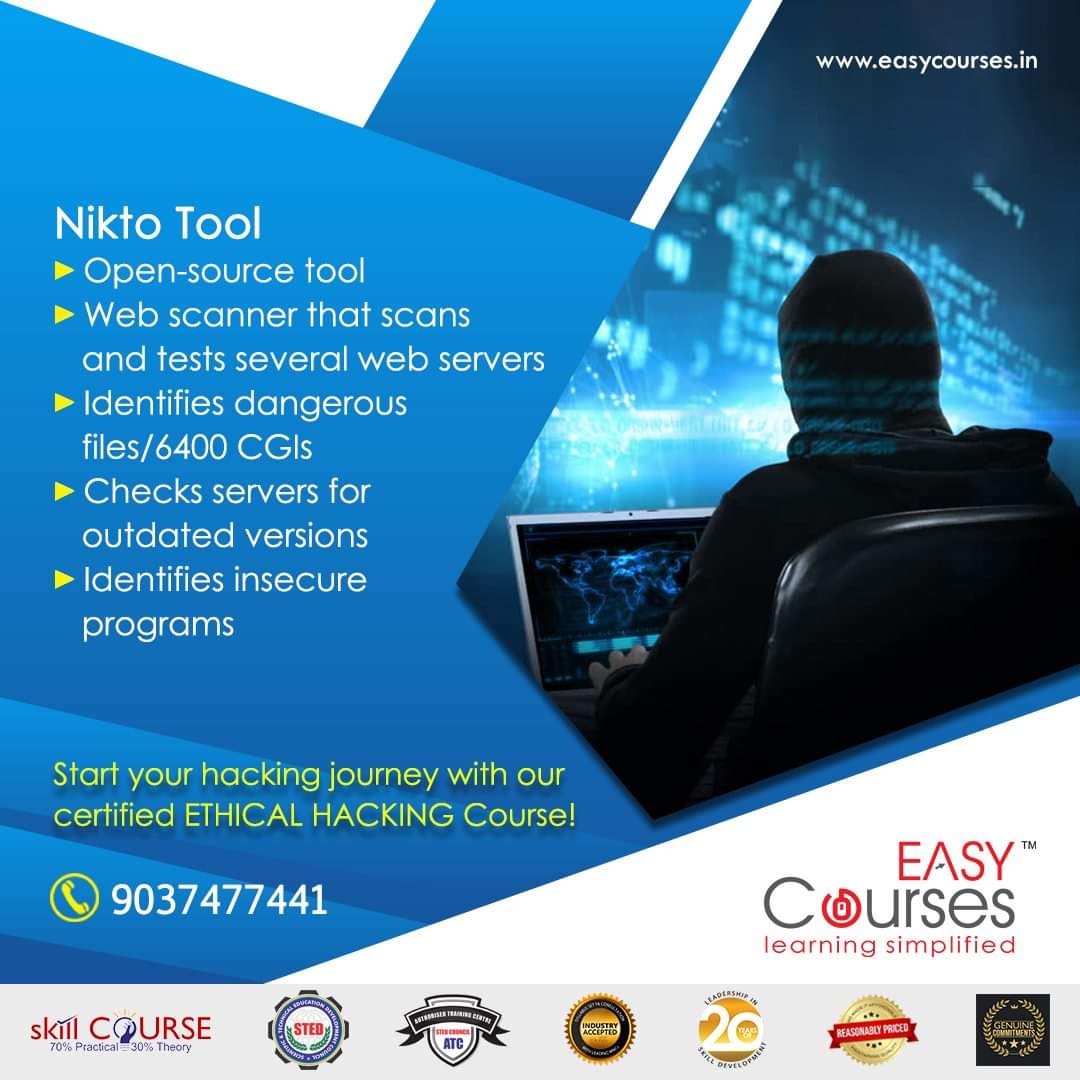
Internet Security is one of the fastest growing industry in the world.Companies are ready to invest big money to ensure that their data is safe.
They hire Ethical Hackers to set a second layer of security to their IT infrastructure.
Our Ethical Hacking Course helps passionate professionals build a bright career in the field of cyber security.For more info : https://www.easycourses.in/course/ethicalhacking