





In today’s fast-moving business environment, contracts are no longer just legal documents sitting in shared drives. They define revenue, relationships, compliance, and growth. That’s why choosing the best CLM software is one of the most strategic decisions a company can make.
Whether you're part of a legal team, sales department, finance unit, or operations group, managing contracts manually can slow you down. Missed renewals, approval bottlenecks, version confusion, and compliance risks can directly impact revenue.
Let’s break down what makes the best contract lifecycle management software—and answer some of the most common questions businesses ask.
What’s the Best Contract Lifecycle Management Software?
The best contract lifecycle management software is one that:
- Centralizes all contracts in one secure location
- Automates approvals and workflows
- Integrates with tools like CRM and ERP systems
- Tracks renewals and key milestones
- Offers AI-powered contract search and insights
Popular enterprise CLM platforms in the market include:
- DocuSign (CLM + eSignature integration)
- Icertis (enterprise-grade CLM)
- Agiloft (highly customizable CLM)
- Ironclad (legal-friendly automation)
- Dock 365 (CLM built on Microsoft 365 & SharePoint)
The “best” choice depends on your company size, industry, integration requirements, and budget. For SMBs using Microsoft 365, a SharePoint-based CLM may offer faster adoption and lower implementation costs. For large enterprises with global compliance needs, a robust enterprise CLM platform may be more suitable.
What’s the Best Software for Managing Revenue Lifecycle?
Revenue lifecycle management goes beyond contracts—it includes quoting, billing, renewals, and revenue recognition.
Platforms like:
- Salesforce (with Revenue Cloud)
- Zuora
- SAP
help manage pricing, billing, and revenue streams.
However, CLM software plays a critical role in revenue lifecycle management because contracts define pricing terms, renewal dates, payment schedules, and obligations. Without proper contract visibility, revenue leaks happen.
The best CLM software integrates directly with CRM and billing systems to create a seamless flow from contract creation to revenue realization.
Are CLM and CRM the Same?
No, CLM and CRM are not the same—but they work closely together.
- CRM (Customer Relationship Management) systems like Salesforce manage customer data, leads, and sales pipelines.
- CLM (Contract Lifecycle Management) software manages contracts from drafting to renewal.
Think of it this way:
CRM helps you close the deal.
CLM helps you manage what you promised in the deal.
When integrated, CRM and CLM create a powerful system where sales teams can generate contracts directly from approved templates, legal teams can automate approvals, and finance can track revenue commitments.
What Is the Most Popular Construction Management Software?
In the construction industry, contract management is just one part of a larger project ecosystem.
Some of the most popular construction management platforms include:
- Procore
- Autodesk (Construction Cloud)
- Buildertrend
These platforms manage project timelines, budgets, documentation, and contractor collaboration.
However, construction companies also benefit significantly from CLM software to manage vendor agreements, subcontractor contracts, and compliance documentation. Integrating CLM with construction management systems ensures fewer disputes and better financial control.
How Much Does CLM Software Cost?
CLM software pricing varies widely depending on:
- Company size
- Number of users
- Required integrations
- Customization level
- AI capabilities
Here’s a rough estimate:
- Small businesses: $30–$80 per user/month
- Mid-sized companies: $15,000–$50,000 annually
- Enterprise solutions: $100,000+ annually
Some vendors offer subscription-based pricing, while others provide custom enterprise quotes. Implementation and training costs may also apply.
The key is not just cost—but return on investment. The best CLM software reduces legal turnaround time, prevents revenue leakage, improves compliance, and accelerates contract approvals.
Why Businesses Are Investing in the Best CLM Software
Manual contract management leads to:
- Missed renewals
- Slow approvals
- Compliance risks
- Revenue loss
- Poor visibility
Modern CLM systems use automation, AI-driven clause extraction, and real-time dashboards to provide contract intelligence—not just storage.
Organizations adopting CLM solutions report:
- Faster contract turnaround times
- Improved sales velocity
- Stronger compliance control
- Better cross-department collaboration
Contracts are no longer back-office documents—they’re revenue-driving assets.
Final Thoughts
Choosing the best CLM software is about more than features. It’s about alignment with your business processes, team workflows, and long-term growth strategy.
Whether you’re a growing SMB or a large enterprise, investing in the right contract lifecycle management solution can transform how your organization handles agreements—and ultimately, how it drives revenue.
If contracts are the foundation of your business relationships, then CLM software is the system that protects and optimizes that foundation.
The real question isn’t whether you need CLM.
It’s whether your current process is costing you more than you realize.

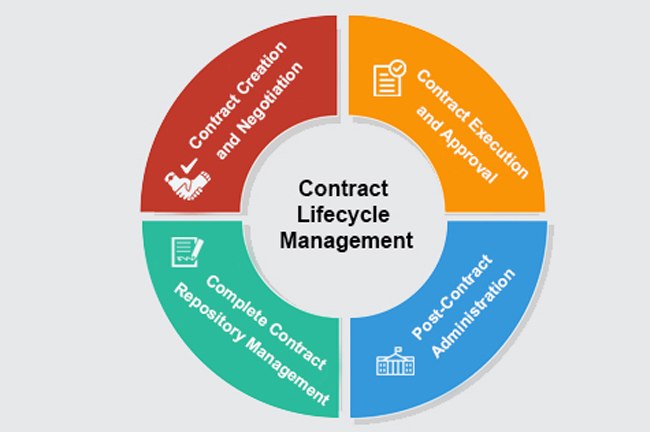

A business intelligence report on the global Contract Lifecycle Management market offers quantitative estimation of the opportunities and qualitative assessment various growth dynamics.
The study highlights estimations of the opportunities in the historical period, and offers several projections during the forecast period.The following are taken into consideration:Historical Period: 2015 – 2019Forecast Period: 2020 to 2030Request to View Sample of Research Report @ https://www.factmr.com/connectus/sample?flag=S_id=4815Key Focus Areas of Report on Global Contract Lifecycle Management MarketThe study on the Contract Lifecycle Management market includes detailed market estimations of opportunities in various segments and their share/size globally in each year during the forecast period.
The following are the broad insights that form the backbone of the evaluation of the Contract Lifecycle Management market.Detailed segmentation to at least two levels based on various parameters that include region, end user/application, and product/technology/service type/modelCurrent valuation of all the key segmentsProjected CAGR of the key segments from 2020 to 2030Qualitative analyses of the growth trajectory of the Contract Lifecycle Management market year-over-year; these include scrutiny of the key growth dynamics: drivers, restraints, winning imperatives for players, challenges, and opportunitiesProfile of prominent players in the Contract Lifecycle Management marketStrategies and Recent Moves made by them to consolidate their positionsCOVID-19 disruptions in macroeconomic dynamics that will shape the future contours of the market dynamicsAttractiveness of key product/technology segmentsSegmental Analysis Comprise the following.Based on End-use Industry/Application,BFSIIT & TelecomGovt & Public SectorEnergy & UtilitiesRetailBased on Product/Technology,CLM SoftwareServicesProfessionalRisk & Compliance AssessmentBased on Region,North AmericaLatin AmericaEuropeJapanAPEJMEATop players includeExari Coupa Software Inc.InforNewgen SoftwareSAP SEInfosys LimitedInformation Services Group, Inc.Model N, IncWhat Businesses Can Hope to Get in Business Intelligence on Contract Lifecycle Management Market?The study insights on the Contract Lifecycle Management market growth dynamics and opportunities highlights various key aspects, in which crucial ones are:Which are the technology and strategic areas that emerging, new entrants, and established players should focus on keep growing in the industry-wide disruptions that COVID-19 has caused?Which new avenues bear incredible potential during the ongoing COVID-19 lockdown restrictions?Which policies by governments can give the top stakeholders support their efforts of consolidation?What new business models are gathering pace among companies to remain agile in post-COVID-era?Which segments will see a surge in popularity in near future, and what calibrations players need to make to utilize the trend for an elongated period?To Know More Information about This Report, Ask The Analyst @ https://www.factmr.com/connectus/sample?flag=AE_id=4815Insights and Perspectives that make this Study on Contract Lifecycle Management Market Stand OutThe analysts who have prepared the report have been keen observers of the dynamism due to macroeconomic upheavals.
Using the best industry assessment quantitative methods and data integration technologies, they have come out with a holistic overview of the future growth trajectories of the Contract Lifecycle Management market.
Fact-based insights and easy-to-comprehend information based on wide spectrum of market data is what makes this study different from competitors.The following evaluations create a differentiating approach towards understanding the market dynamics and presenting the crux to its readers:The analysts harness rigorous statistical analytical tools combined with their expertise to identify imminent investment pockets in various regions and in various technology segments.The study offers a broad framework for businesses to assess the change in policies on their internal growth dynamics.The study strives to offer a multi-dimensional and inter-industry evaluation of the market impacts on recent mergers and acquisitions, deals and partnerships, and venture funding.The analysts have presented this information in easy-to-understand formats.About Fact.MRFact.MR is a fast-growing market research firm that offers the most comprehensive suite of syndicated and customized market research reports.
We believe transformative intelligence can educate and inspire businesses to make smarter decisions.