HACCP Certification India: Complete Guide for Food Safety Compliance and Market Trust
HACCP certification India is a structured food safety certification that verifies a company has implemented Hazard Analysis and Critical Control Points controls across its food production or handling processes. It is designed to prevent biological, chemical, and physical hazards rather than detect them after occurrence. For food manufacturers, processors, exporters, restaurants, and packaging units, HACCP certification acts as a recognized food safety assurance framework.
The HACCP methodology is globally aligned with guidance from the Codex Alimentarius Commission and is widely accepted across international food trade systems. In India, HACCP certification is commonly adopted by businesses that supply to export markets or high-compliance domestic buyers.
What HACCP Certification India Actually Verifies
HACCP certification India verifies that a food business has mapped its entire production workflow and identified critical risk points where hazards could occur. Instead of relying only on end-product testing, HACCP forces preventive controls at each sensitive stage such as raw material receipt, storage, processing, cooking, cooling, packing, and transport.
Auditors evaluate hazard analysis documents, critical control point limits, monitoring records, corrective action logs, and verification procedures. The certification confirms that food safety risks are being actively controlled through process discipline and documented monitoring.
It is a preventive control system, not just an inspection checklist.
Which Businesses Need HACCP Certification in India
HACCP certification India is relevant for a wide range of food-sector operations. It is especially valuable where export, private labeling, or institutional supply contracts are involved. Many international buyers require HACCP or HACCP-based systems as a supplier qualification condition.
Typical adopters include food processors, spice exporters, seafood units, dairy plants, meat processors, packaged food brands, cloud kitchens, and catering companies. Even logistics and cold chain operators pursue HACCP certification when handling temperature-sensitive food products.
It strengthens supplier credibility in regulated supply chains.
Core Principles Behind HACCP Certification India
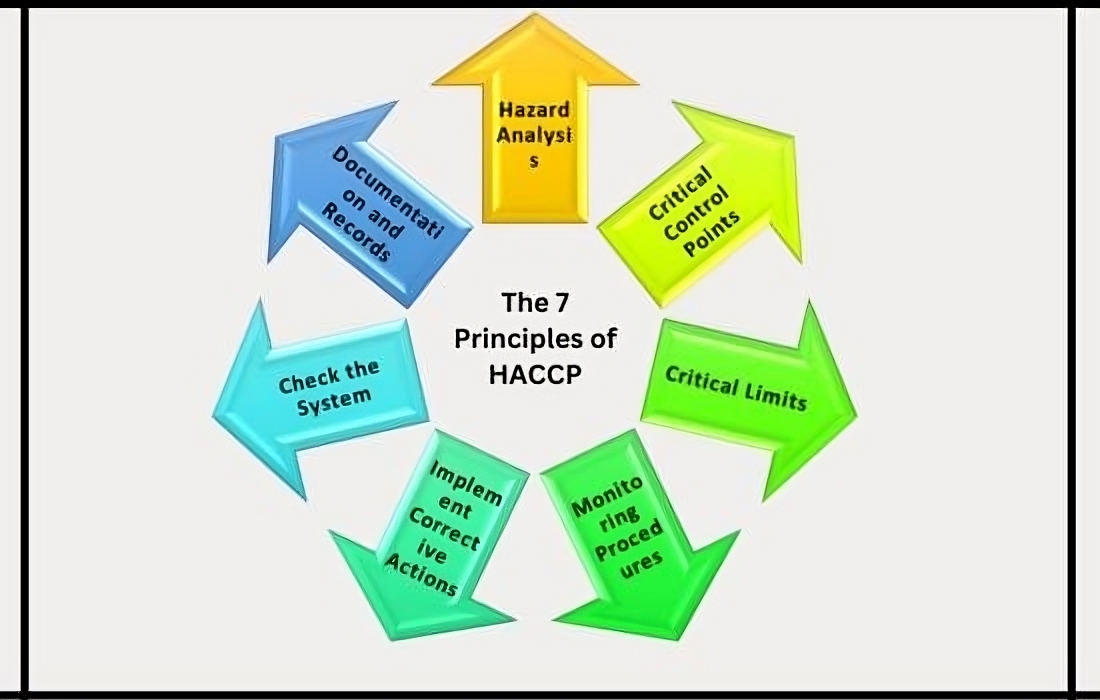
The HACCP certification India model is built on seven technical principles that structure the entire food safety control system. These principles ensure hazard prevention is systematic and measurable rather than dependent on operator judgment alone.
The framework includes:
Hazard analysis across each process step
Identification of critical control points (CCPs)
Defined critical limits for each CCP
Continuous monitoring procedures
Corrective action protocols when limits are breached
The remaining principles cover verification and documentation systems. Auditors expect complete traceability between hazard analysis, CCP controls, and monitoring records.
Implementation Process for HACCP Certification India
Implementing HACCP certification India begins with a process flow study and hazard identification exercise. A multidisciplinary food safety team maps each step and evaluates potential contamination or safety risks. Then CCPs are defined and measurable limits are set, such as temperature, pH, or time thresholds.
Organizations must then build monitoring formats, deviation handling procedures, sanitation controls, and verification activities. Staff training is mandatory because CCP monitoring depends heavily on operator execution. Internal audits and mock recall exercises are often conducted before the certification audit.
Operational evidence is essential for approval.
Audit Structure and Certification Validity
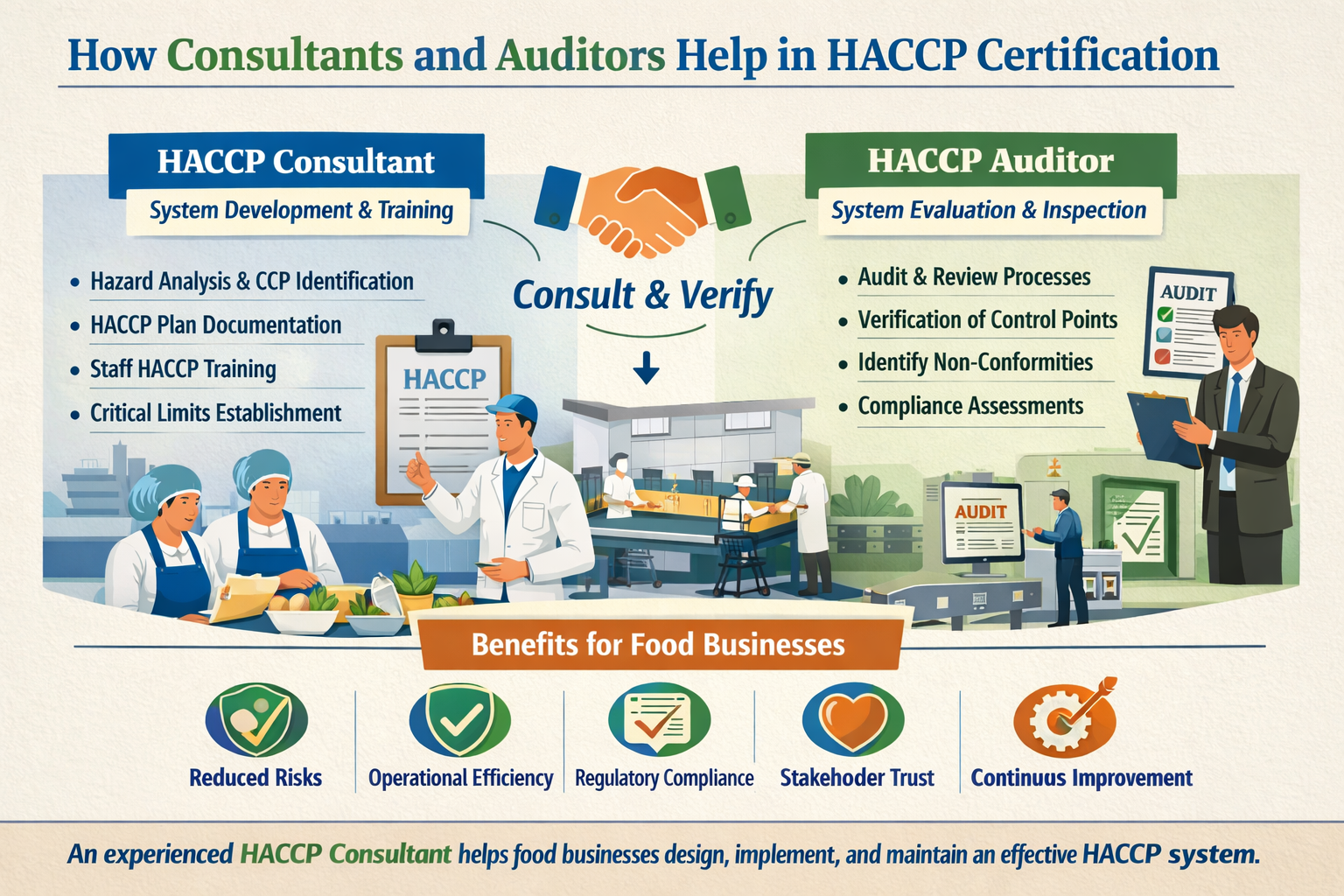
The HACCP certification India audit is performed by an accredited certification body. Auditors review documentation first and then conduct an on-site assessment. They examine plant hygiene, process controls, calibration records, traceability systems, and CCP monitoring logs. Any nonconformities must be corrected with documented root cause action.
Once certified, surveillance audits are conducted periodically to confirm ongoing compliance. Certification validity typically runs in a multi-year cycle with periodic review audits.
Food safety control must be continuous, not event-based.
Business Benefits of HACCP Certification India
Companies holding HACCP certification India gain measurable operational and commercial advantages. The certification reduces contamination risk, improves process discipline, and supports regulatory inspections. It also improves acceptance in export markets and modern retail supply chains.
From a management perspective, HACCP systems reduce recall probability and liability exposure. They also improve batch traceability and incident response readiness. Buyers and regulators view HACCP-certified operations as lower risk and better controlled.