Forklifts are supposed to make moving stuff easier. And they do - as long as what you're moving happens to fit nicely on standard forks. Which in real warehouses and job sites? Not always.
Then you're stuck trying to move awkward loads with equipment that wasn't designed for them. Which is inefficient at best, dangerous at worst.
Why Forklift Attachments Exist
Standard forks work great for pallets. That's what they're designed for. But what about drums? Coils? Oversized boxes? Items that roll, slip, or need lifting from specific points?
Forklift attachment options convert your standard lift into specialized equipment. Drum handlers, coil rams, work platforms, side shifters. Different jobs need different tools.
Buying specialized equipment for occasional tasks makes no financial sense. Attachments let one forklift handle multiple applications. Way more cost-effective than maintaining separate machines for different purposes.
The Forklift Lifting Attachment Categories
Lifting attachments come in various forms. Work platforms lift personnel safely. Jib booms extend reach. Carpet poles handle rolled materials. Each solves specific problems standard forks can't address.
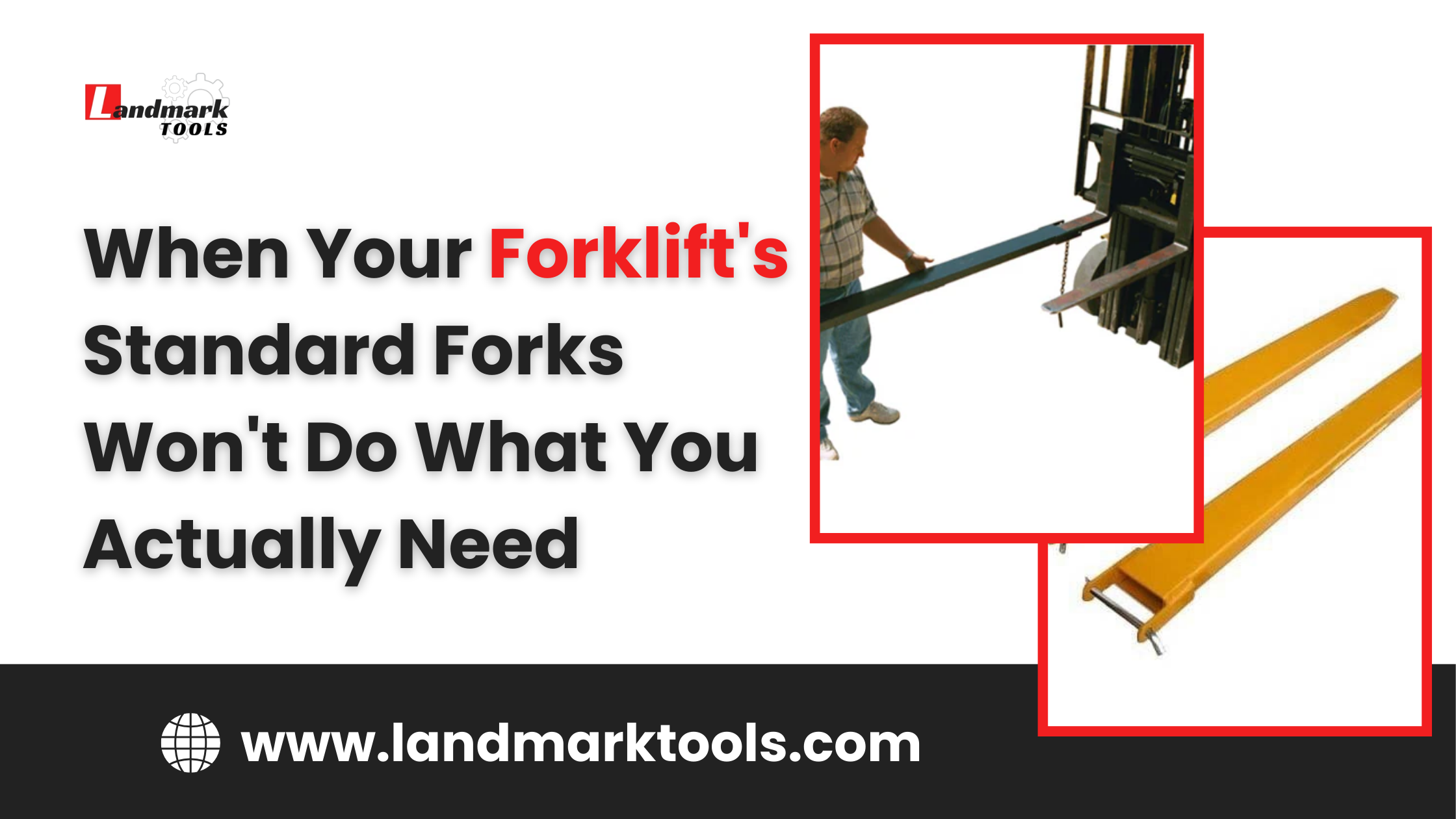
Some attach to existing forks. Others replace them entirely. Installation varies - some are quick-change, others require more setup. Depends on the attachment type and how often you're switching between configurations.
Quality matters more than you'd think. Cheap attachments fail under load. Or wear out fast. Or don't fit properly, creating safety hazards. Heavy-duty tools cost more upfront but last longer and perform reliably.
When Safety Becomes the Primary Concern
Improper lifting causes accidents. Workers get hurt. Equipment gets damaged. Loads fall. Insurance rates increase. Safety violations trigger fines and shutdowns.
Proper attachments reduce these risks significantly. Drum handlers secure loads that would otherwise roll off forks. Work platforms have guardrails and proper weight ratings. Side shifters let operators position loads accurately without risky maneuvering.
OSHA's pretty clear about safe lifting practices. Using inappropriate equipment violates regulations even if nobody gets hurt. Proper attachments keep operations compliant and safe.
Why Generic Attachments Sometimes Don't Work
Not all attachments fit all forklifts. Your carriage width might be different. Lifting capacity varies. Mounting systems aren't standardized across manufacturers. Those "universal" attachments claiming to work everywhere? Often don't actually work universally once you try installing them.
Getting the right attachment means knowing your forklift's specifications. Weight capacity, carriage dimensions, and hydraulic requirements if attachment uses power. Guessing wrong means buying equipment that doesn't fit or cannot be safely used.
Reputable suppliers match attachments to specific equipment. They ask about your forklift, your application, and what you are trying to accomplish. Generic sellers just sell whatever without verifying compatibility.
The Cost-Benefit of Specialization
Good attachments aren't cheap. But neither is renting specialized equipment every time you need it. Or paying workers to struggle with inadequate tools. Or dealing with accidents from unsafe practices.
Calculate actual costs. Rental fees add up fast. Labor inefficiency compounds. One accident's investigation and downtime exceed attachment cost by orders of magnitude.
If you need specialized capability more than occasionally, owning the proper attachment makes economic sense. Even expensive attachments pay for themselves through efficiency and risk reduction.
When Maintenance Actually Matters
Attachments need maintenance like any equipment. Hydraulics leak. Welds crack. Pins wear. Neglecting maintenance means failures at the worst possible times - usually under load.
Regular inspection catches problems early. Hydraulic lines before they burst. Structural issues before catastrophic failure. Worn components before they compromise safety.
Heavy duty equipment requires proper care. You can't just run attachments until they break, then replace them. Maintenance extends life, maintains safety ratings, and prevents accidents.
Your forklift's only as capable as its attachments allow. Standard forks handle standard loads. Everything else needs proper equipment designed for the specific application.