

In today’s competitive plastics industry, manufacturers are under increasing pressure to deliver higher quality products, faster production cycles, and lower operational costs. As thermoplastics processing becomes more automated and data-driven, one critical yet often overlooked factor is reshaping efficiency across the industry: advanced purging material.
What was once considered a simple maintenance step has now become a strategic tool for improving performance, reducing waste, and protecting equipment.
The Hidden Cost of Contamination in Molding Operations
Injection molding, extrusion, and blow molding processes frequently require color changes, resin transitions, and production shutdowns. Each transition introduces a risk—residual resin, carbon buildup, and degraded material left inside barrels, screws, and hot runners.
Without proper cleaning, these residues can cause:
Black specks and streaking
Inconsistent product quality
Increased scrap rates
Extended downtime
Higher raw material consumption
Traditional purging with base resin is inefficient and unpredictable. It consumes valuable production resin and often fails to remove stubborn contamination.
This is where advanced purging material makes a measurable difference.
Why Modern Purging Material Is a Production Essential
Today’s purging materials are engineered for both mechanical and chemical cleaning performance. They are designed to operate across wide processing temperature ranges and are compatible with multiple thermoplastics.
Key operational advantages include:
Faster color and resin changeovers
Reduced machine downtime
Lower scrap and defect rates
Extended equipment lifespan
Consistent cleaning performance
For high-volume manufacturers, even small reductions in changeover time can translate into significant annual savings. In lean manufacturing environments, purging material is no longer optional—it is essential.
UNICLEANPLUS: Engineered for Reliable Performance
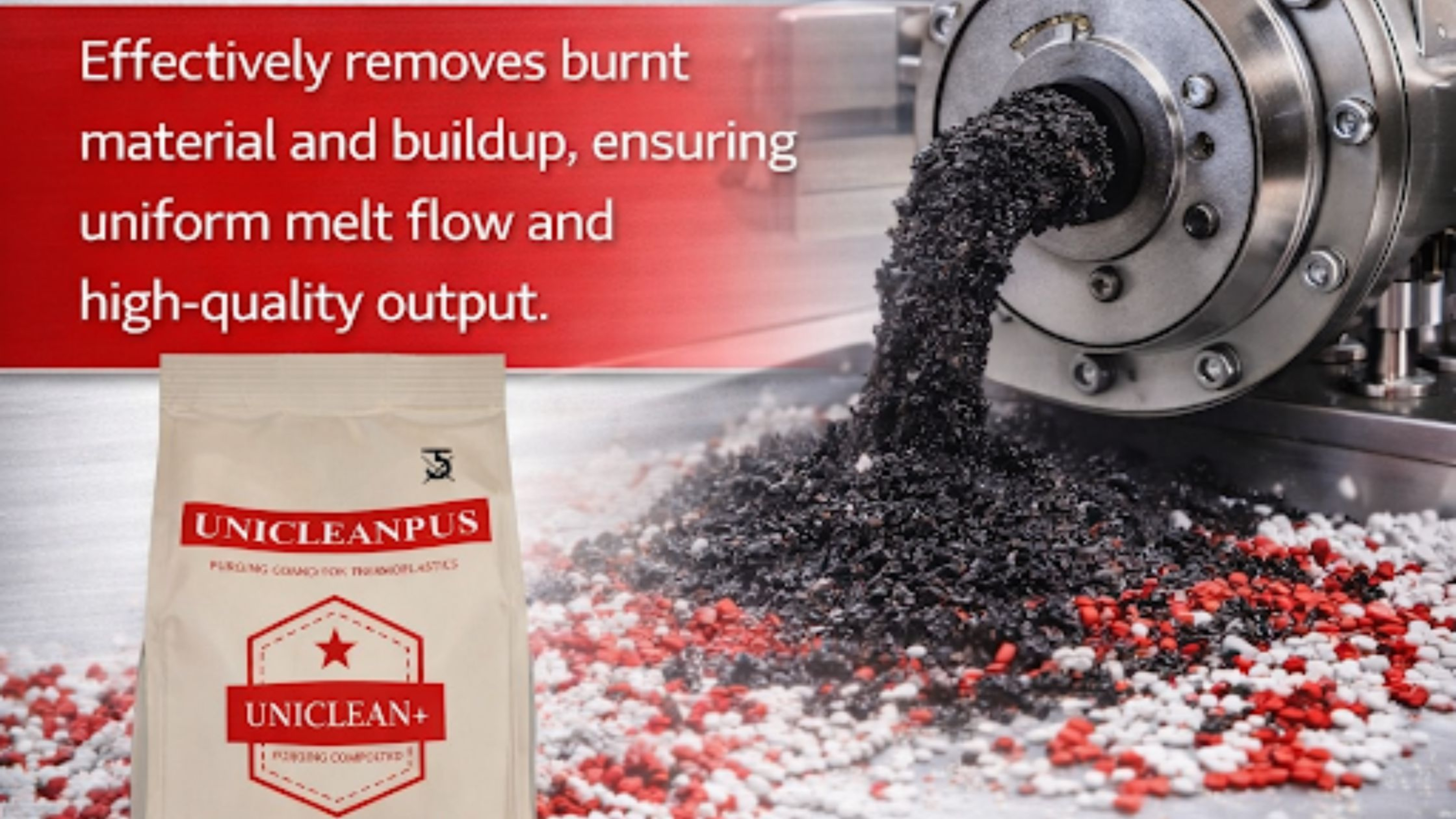
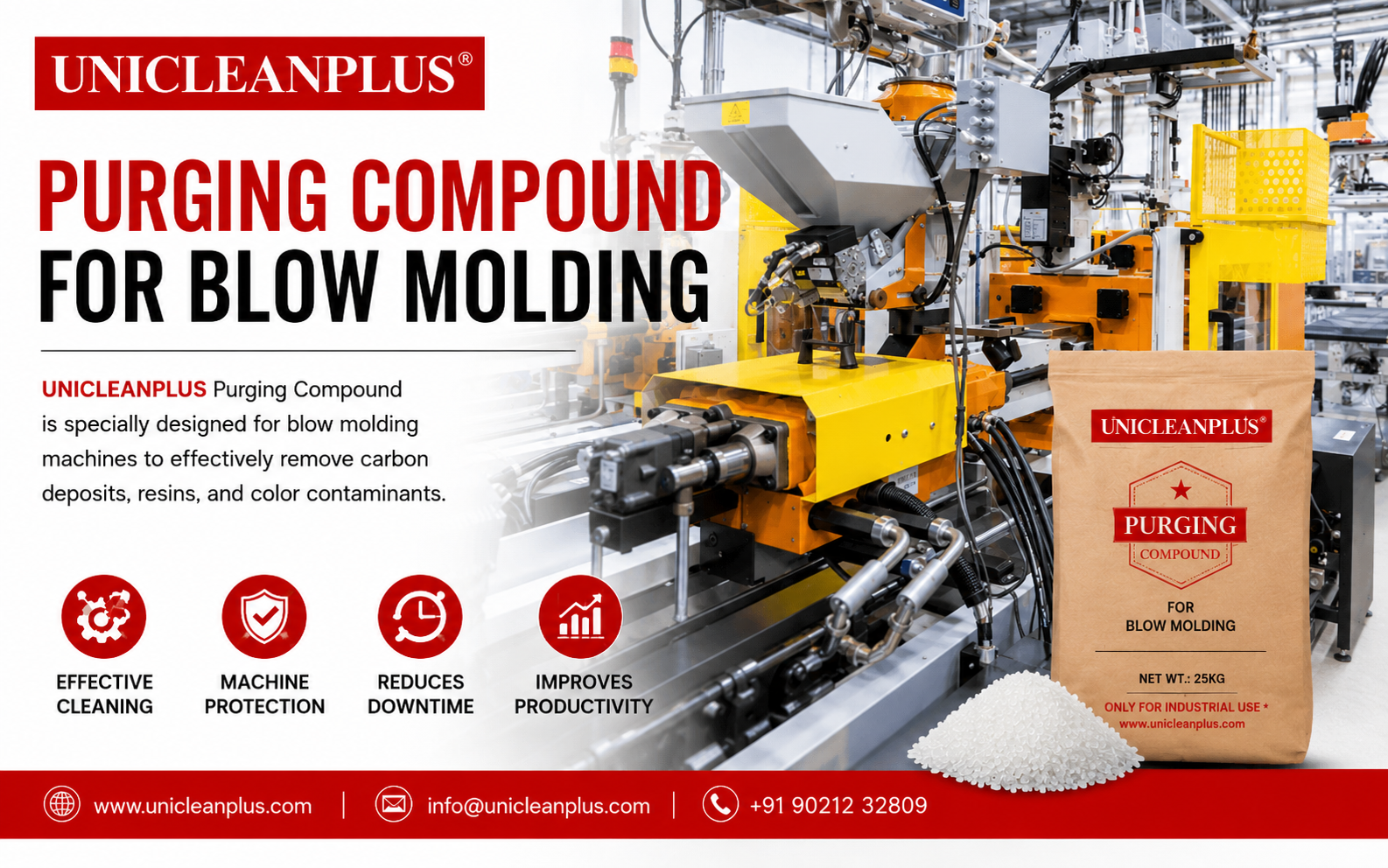
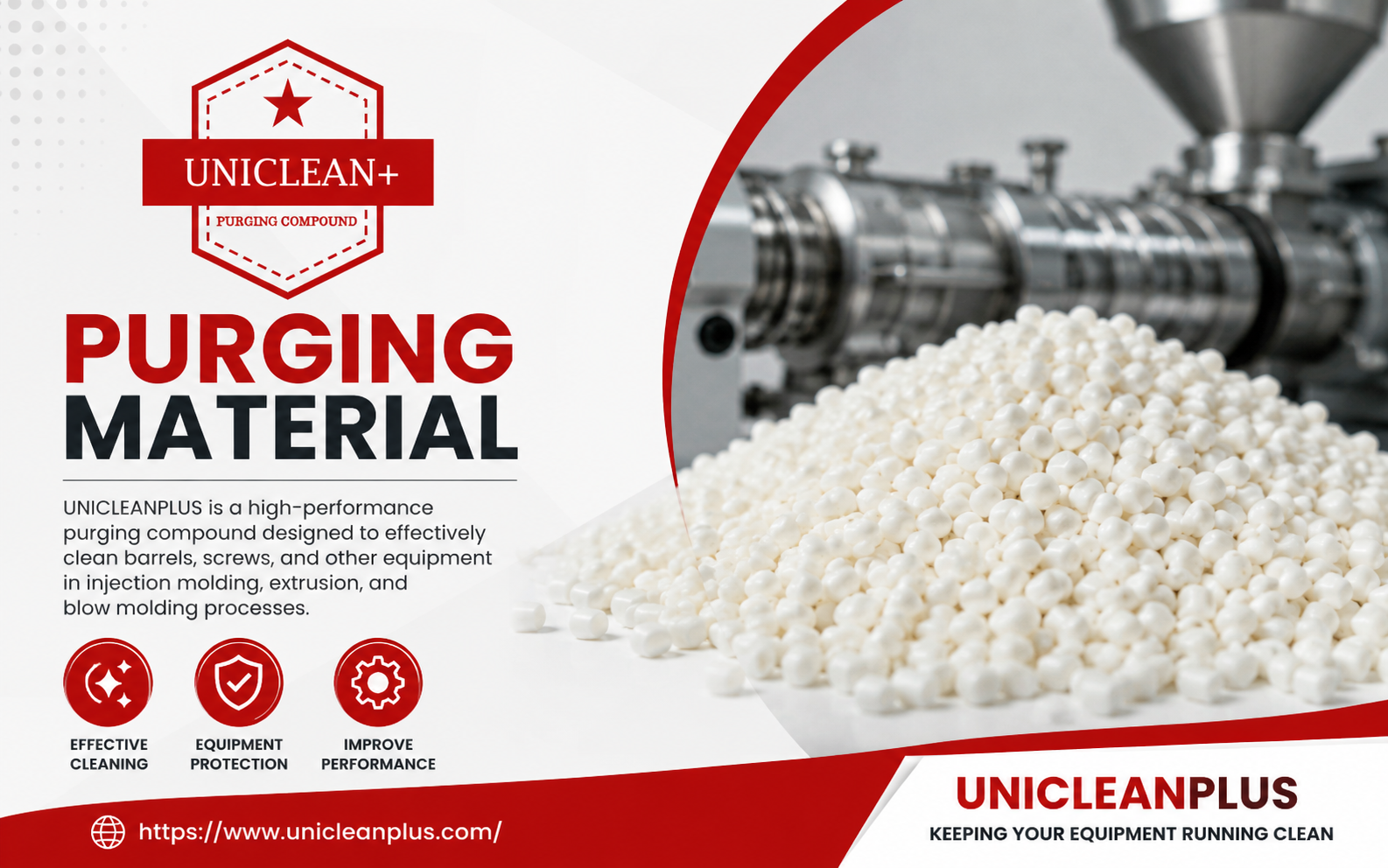
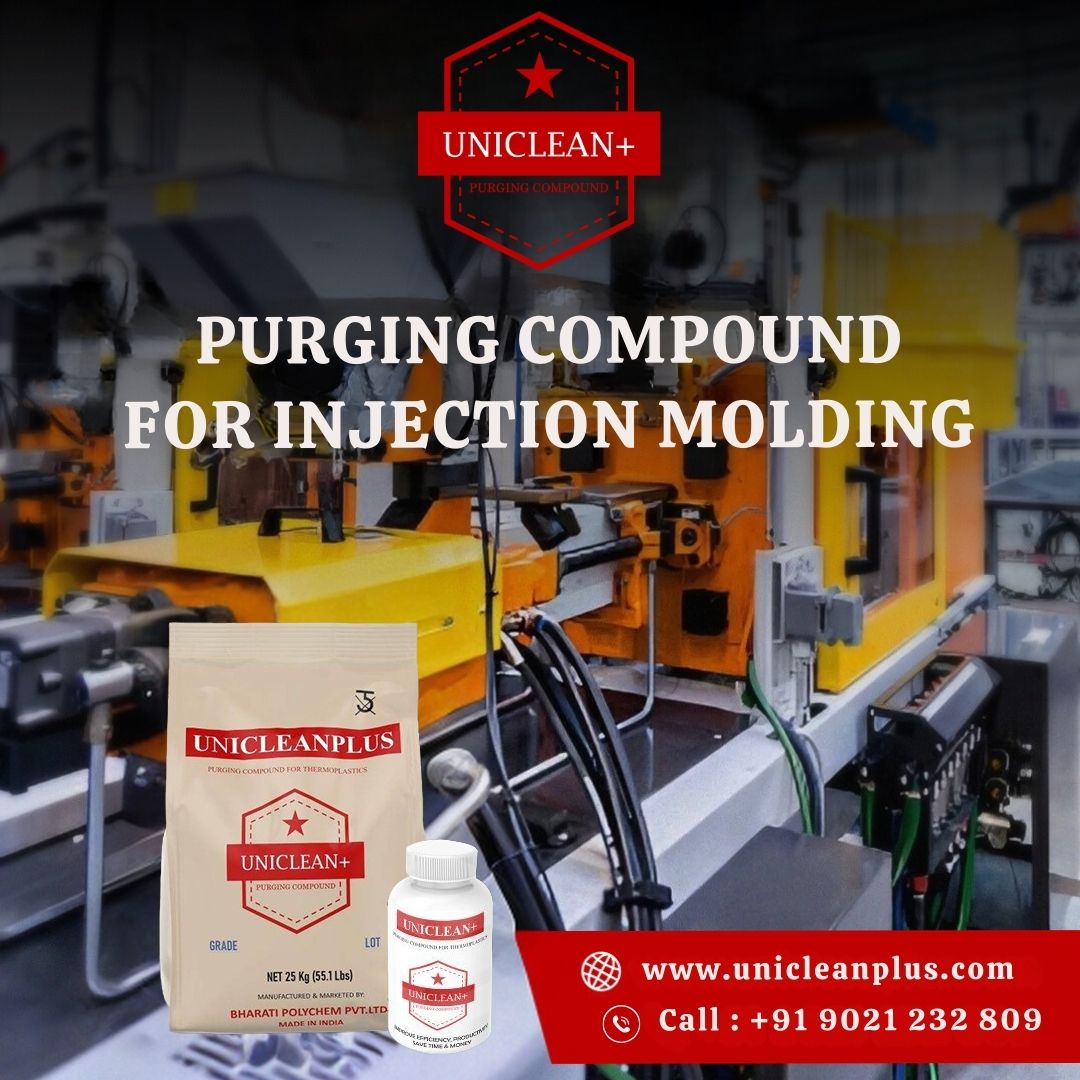
Among advanced solutions available in the market, UNICLEANPLUS has become a trusted purging material for thermoplastics processors seeking dependable, repeatable results.
UNICLEANPLUS is compatible with widely used resins such as:
Polypropylene (PP)
Polyethylene (PE)
ABS
Polystyrene (PS)
PET
Engineering-grade plastics
Its balanced formulation provides strong cleaning power while remaining safe for screws, barrels, and hot runner systems. Unlike aggressive compounds that may cause wear, UNICLEANPLUS delivers effective residue removal without damaging components.
Whether used for routine maintenance, material transitions, or shutdown cleaning, it supports consistent output and higher production reliability.
Supporting Lean and Sustainable Manufacturing
Sustainability has become a driving force in thermoplastics production. Reducing waste, conserving resin, and minimizing downtime all contribute to more responsible manufacturing practices.
By improving cleaning efficiency, UNICLEANPLUS helps manufacturers:
Reduce wasted resin during changeovers
Lower energy consumption from prolonged purging cycles
Minimize manual disassembly and cleaning
Maintain consistent production flow
This aligns directly with Industry 4.0 goals, where efficiency, predictability, and data-driven performance are critical.
Best Practices for Maximum Results
To achieve optimal performance from purging material, manufacturers should:
Match purging temperatures to the previous resin’s processing range
Purge proactively during transitions
Use purging material before extended shutdowns
Standardize purging cycles across shifts
Train operators on proper application techniques
Structured purging procedures ensure consistent cleaning results and prevent reactive maintenance issues.
The Competitive Advantage of Advanced Purging Solutions
As resin costs rise and quality standards tighten, manufacturers cannot afford contamination-related losses. Advanced purging material provides a direct pathway to cleaner machines, reduced downtime, and improved profitability.
By integrating high-performance solutions like UNICLEANPLUS into daily operations, thermoplastics processors position themselves for smarter, more efficient manufacturing.
In the evolving world of plastics production, clean equipment is not just a maintenance goal—it is a competitive advantage.
Purging materials are essential in the injection molding industry because they help clean molding machines, remove leftover resin, and prevent contamination between production cycles. By using effe