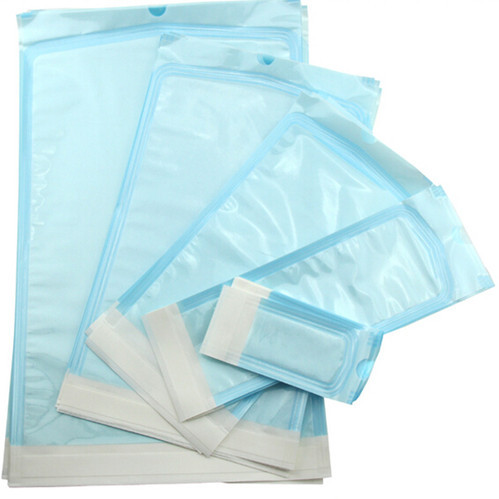


If sterilization kills microorganisms, the packaging prevents them from returning. That simple idea is why ISO 11607 has become the most referenced global standard for sterile barrier systems. Whether you manufacture medical devices, convert packaging, or operate a hospital CSSD, ISO 11607 defines what “good” means for medical packaging intended to maintain sterility until the time of use. (ISO)
For teams working with sterilization pouches, reels, tray lids or header pouch systems, ISO 11607 isn't just a compliance checkbox – it's a practical model to reduce packaging failures, improve aseptic presentation and create audit-ready documentation that is accepted worldwide.
What is ISO 11607?
The ISO 11607 standard is titled Packaging for terminally sterilized medical devices and is divided into two parts:
- ISO 11607-1 focuses on requirements for materials, preformed sterile barrier systems, sterile barrier systems (SBS) and packaging systems; essentially, what the packaging should be and do. (ISO)
- ISO 11607-2 focuses on validation requirements for form, seal and assembly processes: how to demonstrate that your packaging process consistently produces compliant packages. (ISO)
- Both parts are widely applied to industry and healthcare facilities, anywhere devices are packaged and terminally sterilized. (ISO)
- In recent years, ISO has also strengthened risk management requirements for medical device packaging (including a specific amendment Amendment 1:2023 to the 11607-2:2019). (ISO)
ISO 11607 Key Concepts You Should Understand
- Sterile Barrier System (SBS)
SBS is the minimum packaging configuration that maintains sterility and allows for aseptic presentation. In many cases, a pouch is the SBS; in others, it is a tray with a lid, placed inside an additional protective outer pouch. ISO 11607 treats SBS as essential for safety.
- Packaging system
A packaging system includes the SBS plus the protective packaging necessary for distribution (shipping cartons, protective wrappers, etc.). ISO 11607 expects the entire system to protect sterility during handling, shipping and shelf life, not just the inner package.
- Terminal sterilization
ISO 11607 is specifically aligned with devices sterilized in their final packaging configuration (e.g. EO, steam, radiation). This is important because packaging performance changes under sterilization stress and must be validated accordingly.
ISO 11607-1: What it requires from the design of materials and packaging
For medical packaging, Part 1 drives teams to specify and control the attributes that drive sterile barrier performance:
- Material suitability for sterilization method (porosity, microbial barrier, wet/dry strength, lint/particle behavior, EO/VHP/steam compatibility, etc.).
- Packaging design performance, including seal integrity, strength, and aseptic opening characteristics.
- Testing strategy demonstrating that the package maintains sterility during aging and distribution stresses.
For sterilization pouches, Part 1 connects everyday specifications (paper porosity, Tyvek® grade, film sealant chemistry, coating choice, and seal band design) to what really matters: sterilant penetration, microbial barrier, and clean peel at point-of-use.
ISO 11607-2: Why process validation is non-negotiable
You cannot "quality inspect" a poor seal. ISO 11607-2 requires documented validation of the processes used to form, seal or assemble the sterile barrier, typically through IQ/OQ/PQ thinking:
- Installation Qualification (IQ): Equipment installed correctly and calibrated.
- Operational Qualification (OQ): Define a sealing window (temperature, pressure, dwell/belt speed) and demonstrate that it produces acceptable seals.
- Performance Qualification (PQ): Demonstrate that routine production (real operators, real materials, real environment) consistently meets acceptance criteria.
While the OQ (operational qualification) demonstrates that the machine can operate at the limit, the PQ demonstrates that it works in the complicated reality of daily production. According to ISO 11607-2:2019, a strong PQ for packaging must satisfy these three pillars:
- Process Stability: It must demonstrate that the process is under control and reproducible over time. This typically requires a minimum of three independent production runs using full batches to capture “batch-to-batch” variability.
- The "Real" Factor: FDA's Process Validation Guidance emphasizes the use of real production materials and personnel who have received standard training, not just "pure laboratory" samples or expert engineers.
- Worst-case challenges: For packaging, this often includes “start-stop” simulations and power failure recovery to ensure the sterile barrier system (SBS) is not compromised by routine line interruptions.
Success in PQ is defined by the acceptance criteria established in the protocol, typically verified by physical tests such as seal strength (ASTM F88) and seal integrity (ASTM F1929).
This is very important for sterilization pouches and reels because most sterile barrier failures can be traced back to sealing issues: wrinkling, “smiles/frowns,” seal line contamination, incorrect seal strength, or incompatible coatings. ISO has also placed emphasis on linking packaging process controls to risk management, improving the link between hazards (channel leaks, wet packages, fiber tearing) and the controls that prevent them. (ISO)
Why compliance with ISO 11607 is a competitive advantage
- Fewer failures and complaints in the field
Channel leaks, bag tears after steaming, delamination after EO, and peel related contamination are costly. ISO 11607 requires disciplined control of materials, seals and handling, reducing the "unknowns" that cause nonconformities.
- Faster audits and smoother global market access
Regulators and notified bodies expect objective evidence that the sterile barrier remains intact throughout shelf life and distribution. ISO 11607 aligned files give you a structured story: requirements → risk analysis → validation → continuous monitoring.
- Better usability and infection control results
Aseptic presentation is not a “nice to have.” A bag that passes laboratory tests but opens unpredictably can contaminate the sterile field. ISO 11607 encourages usability thinking and performance confirmation in realistic scenarios.
Practical roadmap: Application of ISO 11607 to sterilization bags
- Define the packaging system and use case.
Device geometry, sharp tips, weight, intended sterilization mode, shelf life, and distribution route.
- Build a risk-based packaging URS (User Requirements Specification )
Identify hazards: pinholes, sealing channels, fiber tears, wet packages, indicator visibility, label placement, particle shedding.
- Lock Material Specifications
Paper (wet strength, Cobb, porosity), Tyvek® grade, film structure (PET/PE, PET/CPP), coatings, inks, adhesives.
- Validate the sealing process (ISO 11607-2)
Establish a sealing window and demonstrate capability with repeatable data. Include worst-case conditions (line speed, operator variation, environmental changes).
- Demonstrate package performance (ISO 11607-1)
The typical verification toolset includes seal strength testing, integrity methods (channel leak detection), distribution and aging simulation, selected to match the risk and package type.
- Establish routine monitoring and change control.
Regularly monitor Seal strength, seal width, visual defects during production with periodic integrity checks. Any material change (paper mill, coating, film thickness) should trigger a documented validation.
Use ISO/TS 16775 as your “how to” companion
Many teams find that guidance documents help translate ISO 11607 requirements into a workable validation plan. ISO/TS 16775 is the ISO guide for applying ISO 11607-1 and -2 and has been confirmed as current in recent revisions. (ISO)
Common ISO 11607 errors (and how to avoid them)
- Treat sealing as “set it and forget it” – sealing windows shift with heater wear, belt glazing and operator technique – update your data by regular monitoring. Both ISO 11607-2:2019/Amd 1:2023 and FDA 21 CFR 820 require moving from periodic revalidation to a model of Continuous Process Verification
- Overlabeling or printing in breathable areas: May block sterilant flow or hide sealing defects.
- Skipping distribution realities: Vibration, compression, and temperature/humidity changes expose weaknesses that pure lab testing misses.
- Weak change control – Minor changes in suppliers can alter porosity, peel strength or seal initiation – document and evaluate.
Conclusion
ISO 11607 is the backbone of global sterile barrier compliance: Part 1 ensures your medical packaging materials and designs are fit for purpose, while Part 2 demonstrates that your forming and sealing processes consistently deliver that performance. (ISO) Especially for sterilization pouches, ISO 11607 transforms “packaging as a consumable” into “packaging as a controlled safety system,” which reduces failures, strengthens infection control, and makes audits much more predictable.