Numbers tell one story. People tell another. But when both point in the same direction, it's time to pay attention.
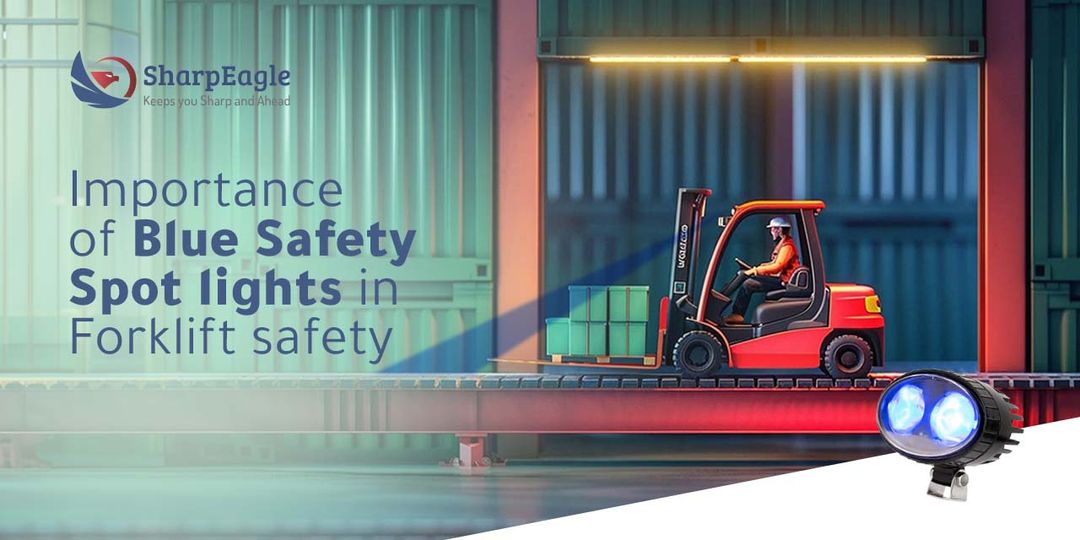
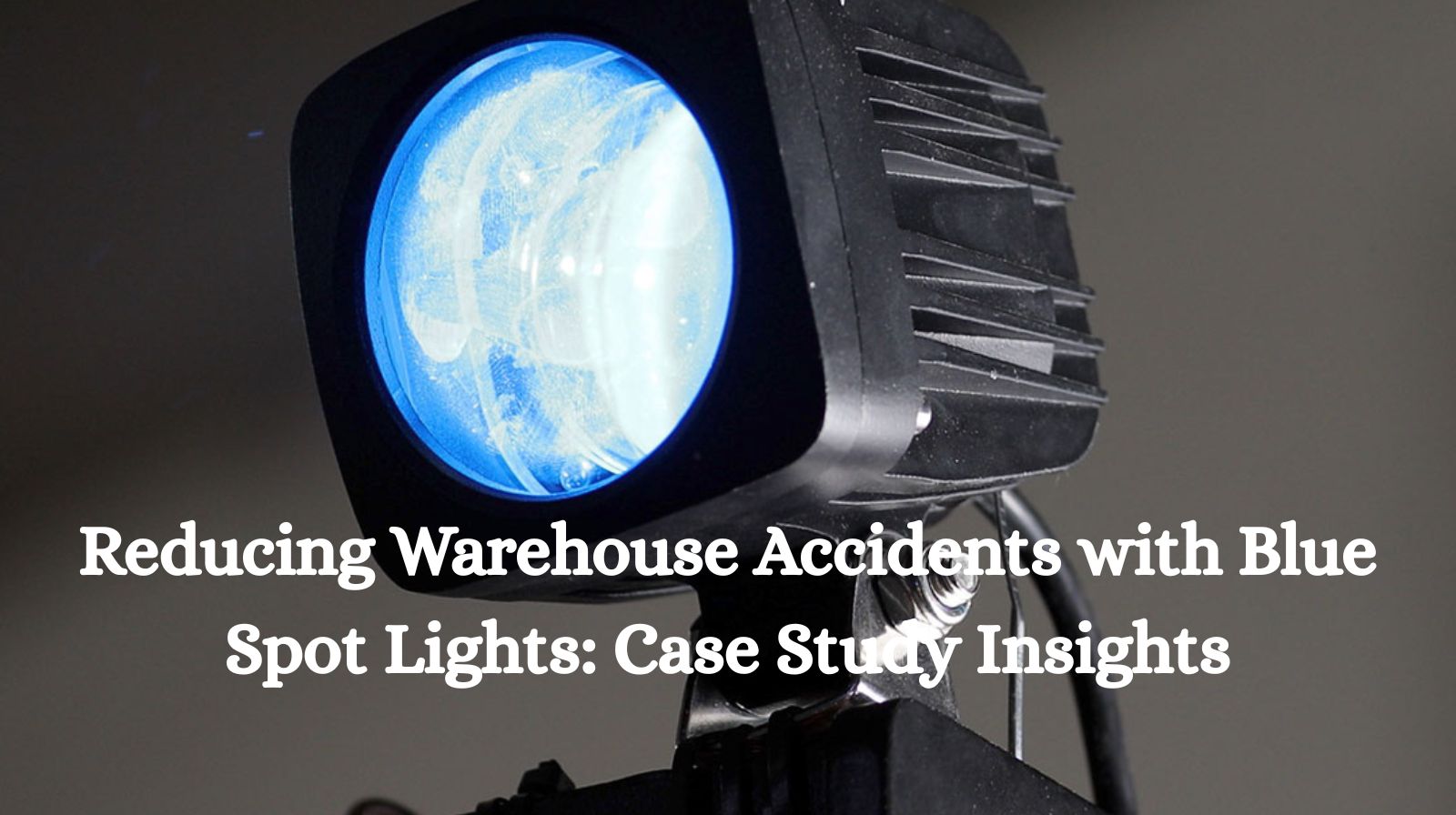
Across warehousing, logistics, and manufacturing sectors globally, a consistent pattern is emerging: facilities that proactively adopt the forklift blue spot warning light are recording measurable, sometimes dramatic, reductions in pedestrian-vehicle incidents. And the insights from these real-world implementations offer valuable lessons for any safety manager still weighing up the decision.
Let's look at what the evidence — drawn from anonymised sector patterns across the UK, UAE, and Kuwait — actually shows.

The Large-Scale Distribution Centre: Tackling Peak-Hour Risk
A major third-party logistics operator managing a high-volume distribution facility in the UK Midlands identified a troubling pattern: the majority of its near-miss incidents were clustered around two specific periods — morning goods-in shifts and late-afternoon dispatch peaks. During these windows, pedestrian and forklift traffic reached its highest density simultaneously.
Traditional controls — painted floor markings, audible reversing alarms, and speed limits — were all in place. Yet incidents continued.
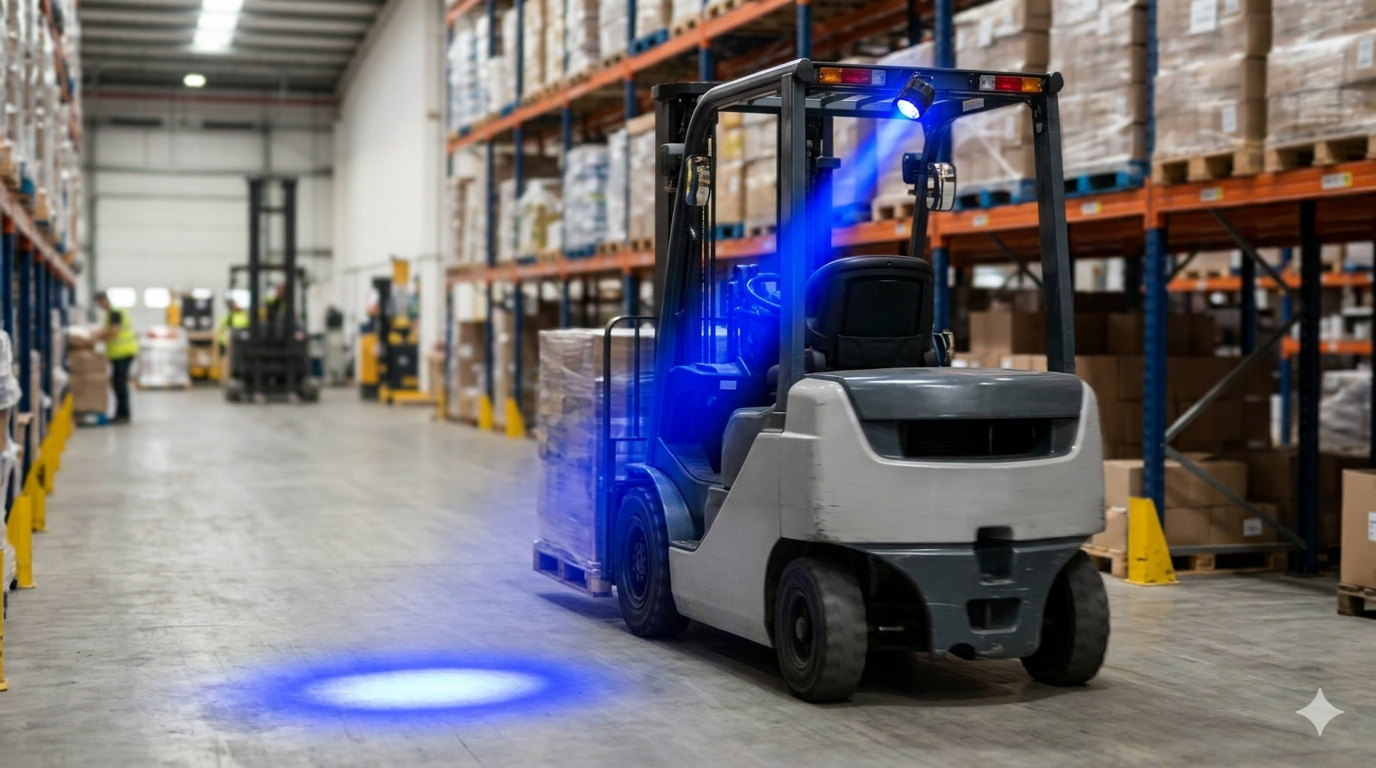
Following a formal risk review, the facility introduced forklift blue spot lights across its entire fleet of 34 vehicles. The blue beam projection — extending approximately 4–5 metres ahead of each moving forklift — provided real-time floor-level warnings at precisely the points where racking systems blocked sightlines.
Within six months, internal near-miss reporting dropped by 43%. More tellingly, worker feedback surveys showed a significant increase in perceived safety confidence — a leading indicator that safety culture was genuinely shifting, not just being managed on paper.
The Cold Storage Facility: Solving the Visibility Gap
Cold storage environments present a unique cocktail of safety challenges. Limited natural light, condensation on surfaces, bulky PPE that restricts peripheral vision, and pale or reflective flooring — all conspire to make standard warning systems less effective than they'd be in a conventional warehouse.
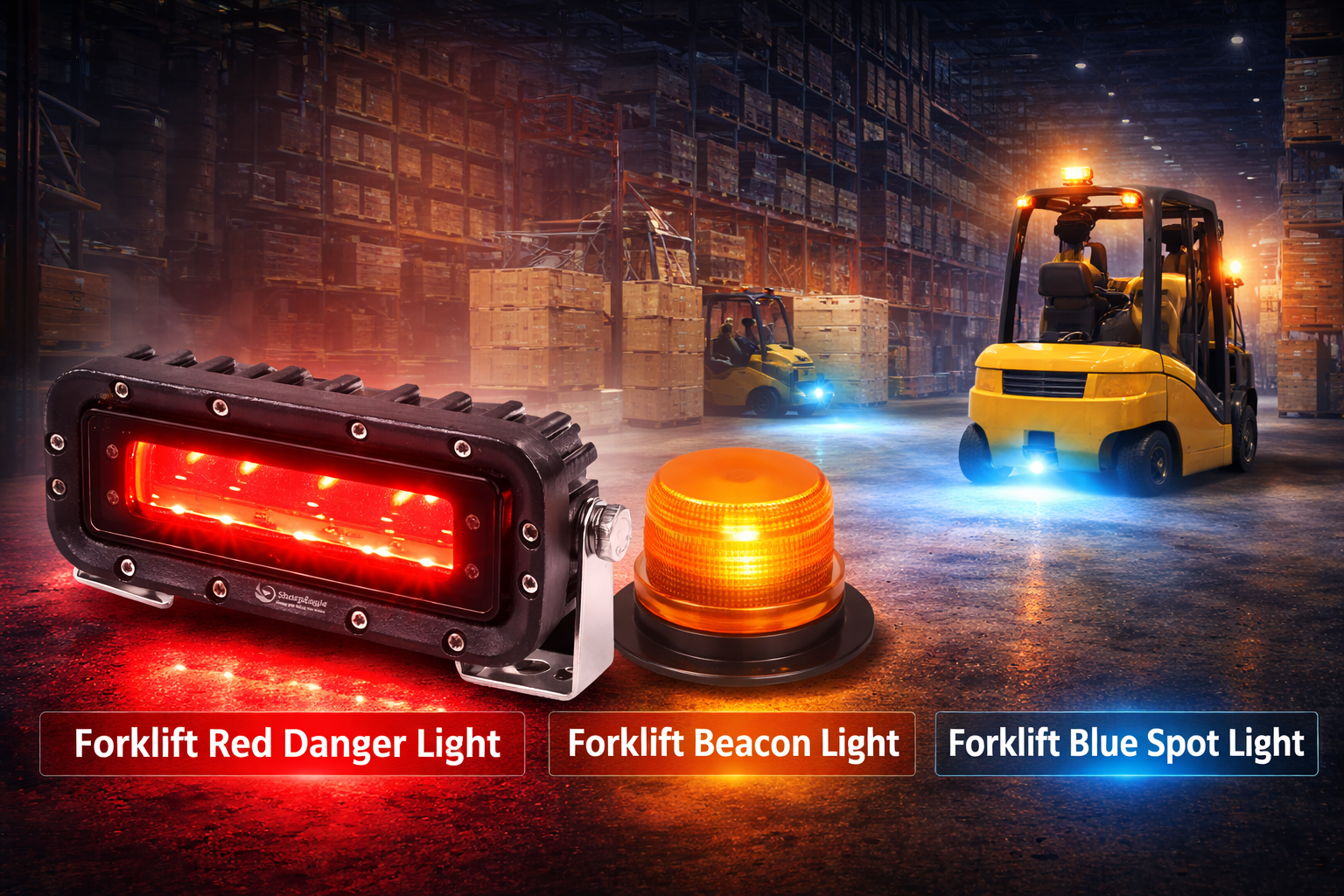
A food logistics operator running a large freezer hub in the UAE faced exactly this challenge. Amber warning lights, which had been the facility's standard, were found to blend too easily with internal lighting and high-visibility workwear — reducing their practical effectiveness in the specific environment.
The switch to forklift blue warning lights delivered an immediate visual contrast improvement. The blue wavelength, distinct from both the facility's emergency amber lighting and the workers' hi-vis jackets, created an unambiguous floor-level signal that cut through the visual noise of the environment.
Post-implementation safety audits recorded a 38% reduction in pedestrian proximity events detected by the facility's CCTV monitoring system within the first quarter. Crucially, zero contact incidents were recorded in the eight months following full fleet rollout — a meaningful improvement on the facility's prior incident history.
The Multi-Level Retail Distribution Hub: Managing Complexity at Scale
A large retail distribution operation in Kuwait — managing multiple product categories across a complex, multi-zone facility — faced a different kind of challenge. The sheer variety of zones within a single site meant that no single safety solution could address every risk point uniformly.
Loading docks, internal transfer corridors, picking zones, and dispatch staging areas all had different traffic patterns, sightline challenges, and pedestrian densities. A blanket approach wasn't working.
The solution was a blue spot light for forklift deployment paired with a zone-specific risk mapping exercise. Different forklift types received tailored light positioning — forward-facing projections in picking zones, dual front-and-rear configurations in cross-traffic transfer corridors — creating a consistent visual warning language that workers could rely on regardless of which zone they were operating in.
The result? A 51% reduction in reported near-miss incidents over a 12-month period, alongside a significant drop in insurance claims related to operational incidents. The facility's safety manager noted that the clarity and consistency of the warning signal was as important as the technology itself — workers knew exactly what the blue light meant, every time.
What These Patterns Tell Us
Three different sectors. Three different environmental challenges. Three meaningfully different outcomes — all pointing in the same direction.
The forklift blue spot warning light isn't a silver bullet. No single technology is. But what these sector patterns consistently demonstrate is that active, floor-level visual warnings address a gap that passive controls — signage, floor markings, policies — simply cannot fill on their own.
They work because they operate at the point of risk, in real time, without relying on a worker's memory, attention span, or familiarity with the environment. In high-pressure, high-turnover industrial settings, that reliability is everything.
The Regulatory Tailwind Is Real
It's also worth noting that these adoption decisions aren't happening in a regulatory vacuum. Safety authorities across the UK (HSE), Europe (EN ISO standards), the US (OSHA), and increasingly the UAE and Kuwait are signalling stronger expectations around active pedestrian warning systems.
Facilities that are implementing blue spot light for forklift operations now are getting ahead of what many industry observers expect to become formal requirements within the next regulatory cycle. Early adopters aren't just reducing accidents — they're future-proofing their compliance posture.
SharpEagle: Delivering Results, Not Just Products
At SharpEagle Technology, we don't just supply forklift blue spot lights — we help you implement them in a way that actually works for your facility's specific layout, traffic patterns, and operational demands. Our team has worked with logistics operators, manufacturers, and distribution centres across the UK, UAE, and Kuwait to deliver safety solutions that produce measurable outcomes.
Because at the end of the day, the only case study that truly matters is the one written by your own incident data — and we want to help you make it a success story.
👉 Reach out to SharpEagle Technology today for a free consultation and site-specific safety recommendation.
The patterns are clear and the evidence is compelling — but if you want the full picture on how blue safety lighting works, why it works, and how to implement it effectively across your operation, isn't it time you explored our comprehensive guide Forklift Blue Safety Light: A Complete Guide to Enhanced Warehouse Safety to see exactly what a well-executed blue spot light strategy could mean for your facility?
Offshore platforms and drill rigs operate in some of the world’s most demanding industrial conditions. Limited working space, constant equipment movement, harsh weather, and low visibility signific