


In the fast-evolving healthcare landscape, durable medical equipment (DME) providers face increasing scrutiny from regulators, insurers, and patients alike. As businesses grow and expand across multiple locations, maintaining consistent and effective compliance becomes both more challenging and more critical. Adhering to DME compliance standards not only safeguards against costly penalties but also ensures high-quality patient care and smooth operational efficiency. This article explores best practices that growing and multi-location DME providers can implement to stay audit-ready and compliant.
Understanding DME Compliance
DME compliance refers to the set of regulations, policies, and procedures that ensure medical equipment providers operate ethically, safely, and in line with federal, state, and payer-specific requirements. These standards cover a wide range of areas, including:
Proper documentation of prescriptions and patient records
Accurate coding and billing practices
Adherence to supplier standards and licensing requirements
Ensuring equipment safety and quality
Maintaining patient privacy under HIPAA guidelines
Non-compliance in any of these areas can lead to severe consequences, including denied claims, fines, legal action, and reputational damage. For growing and multi-location providers, the risk multiplies as operational complexity increases, making structured compliance programs a necessity.
Key Challenges for Growing DME Providers
As a DME provider expands, several compliance challenges emerge:
1. Decentralized Operations
Multiple locations often operate semi-independently, which can lead to inconsistent policies and procedures. Differences in staff training, documentation practices, and billing processes can result in compliance gaps.
2. Increased Volume of Documentation
Growth translates to more patients, prescriptions, and insurance claims. Without automated systems, manual handling of documents increases the risk of errors, missing records, or incomplete documentation.
3. Regulatory Variations Across States
Each state may have specific licensing, reporting, or operational requirements. Multi-location providers must ensure every site complies with both federal and local regulations to avoid audits or penalties.
4. Staff Turnover and Training
As organizations grow, onboarding new staff quickly while maintaining compliance knowledge is a recurring challenge. Inexperienced staff can inadvertently create audit risks if not adequately trained.
5. Complex Billing Processes
Handling billing across multiple locations often involves managing different payer requirements and documentation standards. Errors in coding or submission can lead to claim denials and financial losses.
Recognizing these challenges early allows providers to implement strategies that mitigate risk while sustaining operational growth.
Best Practices for Maintaining DME Compliance
Successful DME providers implement a combination of standardized processes, technology solutions, and continuous training to ensure compliance. Below are proven strategies.
1. Standardize Policies and Procedures Across All Locations
Consistency is key in multi-location operations. Create comprehensive manuals and SOPs that outline every critical process—from intake and verification to delivery, billing, and documentation. Standardization ensures every location adheres to the same compliance standards, reducing the risk of errors or regulatory violations.
Tips:
Include clear steps for patient verification, prescription validation, and equipment delivery.
Define who is responsible for audits, documentation updates, and internal compliance checks.
Regularly review and update policies to reflect changing regulations.
2. Implement a Centralized Compliance Management System
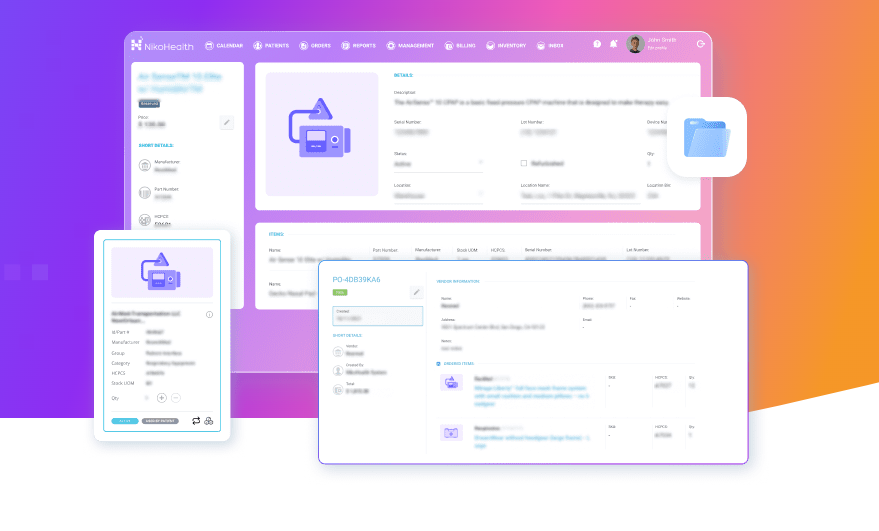
A centralized system allows providers to manage DME compliance efficiently across locations. Digital solutions can track inventory, patient records, billing, and documentation in one platform, ensuring transparency and reducing manual errors.
Benefits of a centralized system:
Real-time access to patient records for all locations
Automated alerts for missing or incomplete documentation
Standardized coding and billing practices
Audit-ready reports for regulators or payers
Investing in such a system not only reduces compliance risks but also streamlines operations, saving time and costs.
3. Conduct Regular Staff Training and Certification
Human error remains a significant factor in compliance failures. Regular training ensures that all staff, from front-desk personnel to delivery technicians, understand and follow regulatory requirements.
Training strategies:
Host onboarding sessions for new hires covering DME compliance fundamentals.
Offer refresher courses on documentation, billing codes, and patient privacy regulations.
Utilize scenario-based training to simulate real-world compliance challenges.
Encouraging staff to obtain certifications in relevant areas can further reinforce accountability and knowledge.
4. Perform Internal Audits Frequently
Regular internal audits help identify gaps before external regulators do. Auditing should cover every aspect of the operation, including:
Documentation completeness and accuracy
Billing and coding correctness
Equipment maintenance and safety
HIPAA compliance and patient privacy practices
Internal audits also provide opportunities to implement corrective actions promptly, avoiding escalations or fines.
5. Leverage Technology for Documentation and Billing
Manual processes in DME operations are prone to errors, particularly in growing organizations. Digital solutions can automate tasks such as:
Capturing patient intake forms
Validating prescriptions
Assigning correct billing codes
Generating reports for insurance submissions
Automation not only ensures accuracy but also creates a clear audit trail, which is crucial for demonstrating DME compliance during inspections.
6. Maintain Clear Communication Across Locations
Multi-location operations thrive on consistent communication. Establish channels for compliance updates, policy changes, and reporting discrepancies.
Best practices include:
Monthly compliance meetings with location managers
Centralized reporting dashboards
Secure messaging platforms for staff inquiries on compliance issues
Transparent communication fosters a culture of accountability and minimizes discrepancies across locations.
7. Stay Updated on Regulatory Changes
Healthcare regulations are constantly evolving. Providers must actively monitor updates from federal agencies such as the Centers for Medicare & Medicaid Services (CMS), state licensing boards, and payer-specific rules.
Strategies:
Subscribe to regulatory newsletters and alerts
Assign a compliance officer to track changes
Update policies and train staff promptly when regulations evolve
Proactive adaptation reduces the risk of non-compliance and positions providers as industry leaders.
8. Focus on Patient Privacy and Data Security
Patient information is highly sensitive, and mishandling it can result in severe penalties. Multi-location providers must ensure that all systems, including electronic health records (EHRs), billing software, and communication tools, meet HIPAA standards.
Security best practices:
Encrypt patient data both in transit and at rest
Implement role-based access controls
Conduct regular security audits and risk assessments
Patient trust and regulatory compliance depend on rigorous data protection measures.
9. Collaborate with Legal and Compliance Experts
Growing organizations often benefit from expert guidance. Legal and compliance consultants can assist with:
Reviewing policies and procedures
Conducting mock audits
Advising on state-specific licensing requirements
Developing strategies to prevent billing fraud or errors
External expertise provides reassurance and ensures adherence to evolving DME compliance standards.
10. Foster a Culture of Compliance
Ultimately, compliance is not just a process; it’s a mindset. Organizations that prioritize DME compliance in their culture experience fewer errors and more sustainable growth.
Ways to cultivate a compliance culture:
Recognize and reward staff for adherence to compliance standards
Encourage reporting of potential issues without fear of retaliation
Emphasize patient safety and ethical practices as core values
Embedding compliance into the organizational DNA reduces risks and reinforces operational excellence.
Benefits of Strong DME Compliance in Multi-Location Settings
Implementing these best practices offers several tangible advantages:
Reduced Risk of Audits and Penalties – Consistent documentation, billing accuracy, and adherence to regulations minimize exposure to costly fines.
Operational Efficiency – Centralized systems and standardized procedures streamline workflows across multiple locations.
Improved Patient Care – Accurate records, timely equipment delivery, and adherence to safety standards enhance patient satisfaction.
Financial Stability – Efficient billing processes and reduced claim denials improve revenue cycles.
Reputation and Trust – Regulatory compliance strengthens relationships with patients, payers, and partners.
By prioritizing DME compliance, providers not only mitigate risk but also create a scalable, high-performing business model.
Conclusion
For growing and multi-location DME providers, maintaining compliance is no longer optional—it’s a business imperative. Standardizing procedures, leveraging technology, training staff, performing audits, and fostering a culture of accountability are all essential components of an effective DME compliance strategy. By taking a proactive approach, providers can stay audit-ready, avoid costly penalties, and deliver high-quality care across every location.
In today’s competitive healthcare market, DME compliance is more than just a regulatory requirement—it’s the backbone of sustainable growth, operational efficiency, and patient trust. Multi-location providers that embrace best practices in compliance position themselves for long-term success, ensuring both regulatory alignment and superior service delivery.


Microsoft Compatibility Pack: Since the release of the Microsoft Compatibility Pack, which added the new Office Open XML formats with its course version 2007 and 2010?
Go to visit: www.office.com/setup get the downloading free office keyMicrosoft Office programs, users face problems opening and then saving files with this format.
This new format has been added to MS Office with its three basic applications, e.g.
However, if you face problem while opening a file, it doesn't mean that it is some kind of error.All you need to do is install the Microsoft Compatibility Pack and get started.The main performance of the Compatibility Pack is to provide a facility for a user to edit, open and save the Office files through the use of file formatting in advance versions of Word, Excel and Powerpoint.The computer that has Microsoft Office XP programs, Microsoft Office 2000 programs, and Microsoft Office 2003 programs can install the pack.
www.office.com/myaccount login 365If you're going to download or install the same compatibility pack with the Office XP or 2003, just make sure that the already installed version of Microsoft Office and the Windows operating system are up to date.
To check and update, go Do the following: Windows 7 or VistaFollow the pathStart -> All Programs -> Windows UpdateRun Microsoft Update to make sure the operating system and other programs are up to date.

Are you looking for the perfect app?
There is also tough competition in the app market but as I have hinted before, the only way to win is to follow the necessary steps in making the app.
This is why our mobile app development Company in Bangladesh takes all the accurate steps to make a successful app.
Because an idea that only scratches the surface is not the way to go, it only makes you waste money and time.
Either our experts devise up the full plan or if the customer has any requirements, they consider them and combine the pieces that go well together.
For which platform – android or ios, the customer’s mobile app development is going to take place is also decided.2.