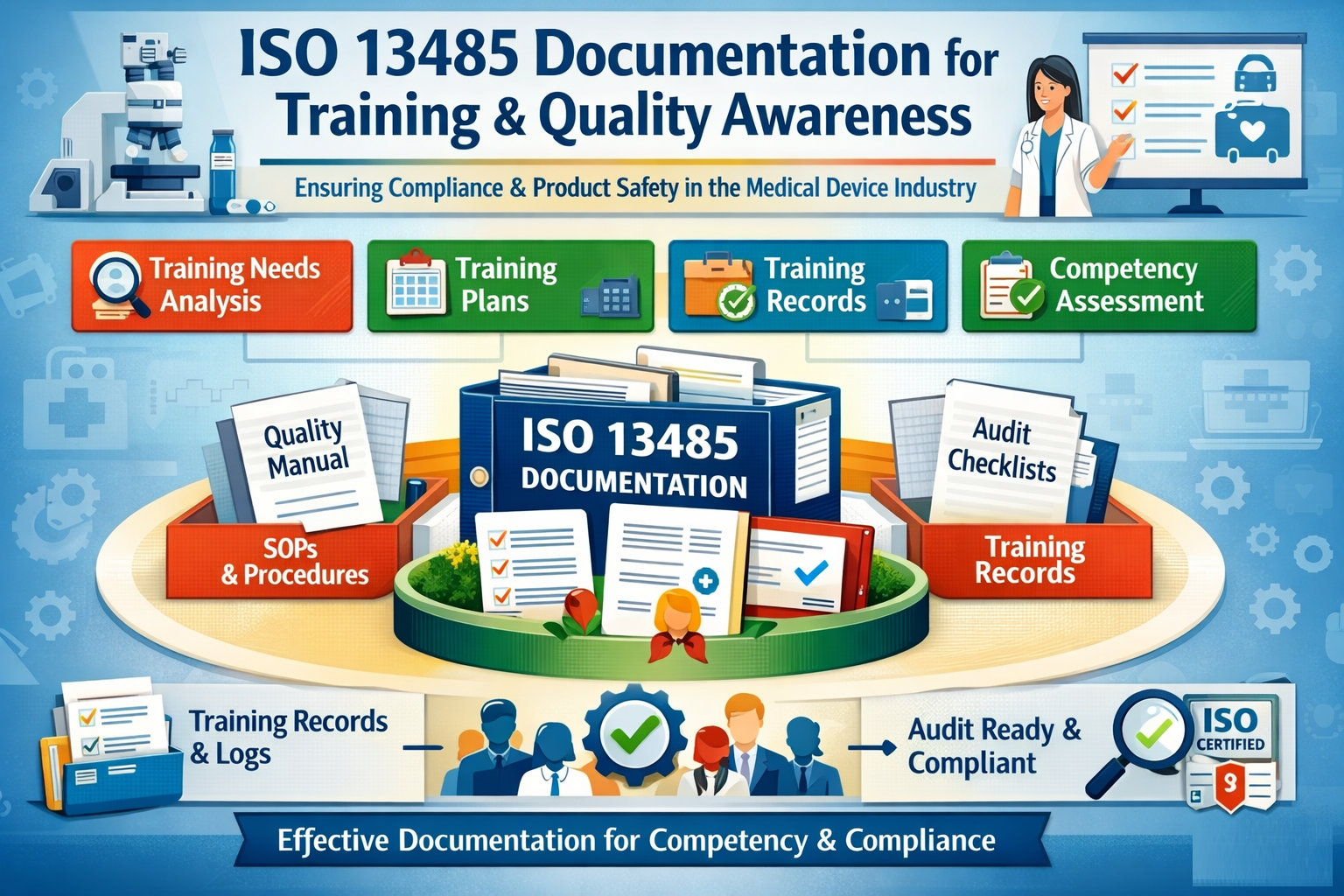
In the medical device industry, maintaining a strong quality management system is critical not only for regulatory compliance but also for ensuring product safety and performance. A key component of this success is ISO 13485 documentation for training and quality awareness, which enables organizations to define roles and responsibilities, identify training requirements, and promote a company-wide understanding of quality objectives. Effective documentation is essential to ensure that all employees are aware of their own roles and responsibilities and how they contribute to the company’s quality objectives, which is a key requirement under ISO 13485 standards.
At its core, ISO 13485 essentially provides requirements for a quality management system that medical device manufacturers are required to establish and maintain to ensure consistent quality and regulatory compliance of their products throughout their entire life cycle. These requirements include establishing documented procedures, maintaining records, and continually improving the effectiveness of the system. Training and awareness are essential components, as organizations must ensure personnel performing work affecting quality are competent and aware of the impact of their activities.
Why Training Documentation Is Important
Training-related documentation is more than just proof of compliance; it drives organizational consistency. Without proper documentation, organizations can find it difficult to demonstrate to auditors that employees have been provided with the necessary training and are aware of quality policies and procedures. Documented training plans and records help organizations monitor progress, identify training gaps, and ensure that training objectives are aligned with quality goals, especially during the time of audits and inspections. According to ISO 13485 requirements, organizations are required to maintain records of personnel training and evaluate the effectiveness of training, demonstrating that employees are qualified and capable of performing tasks that affect product quality.
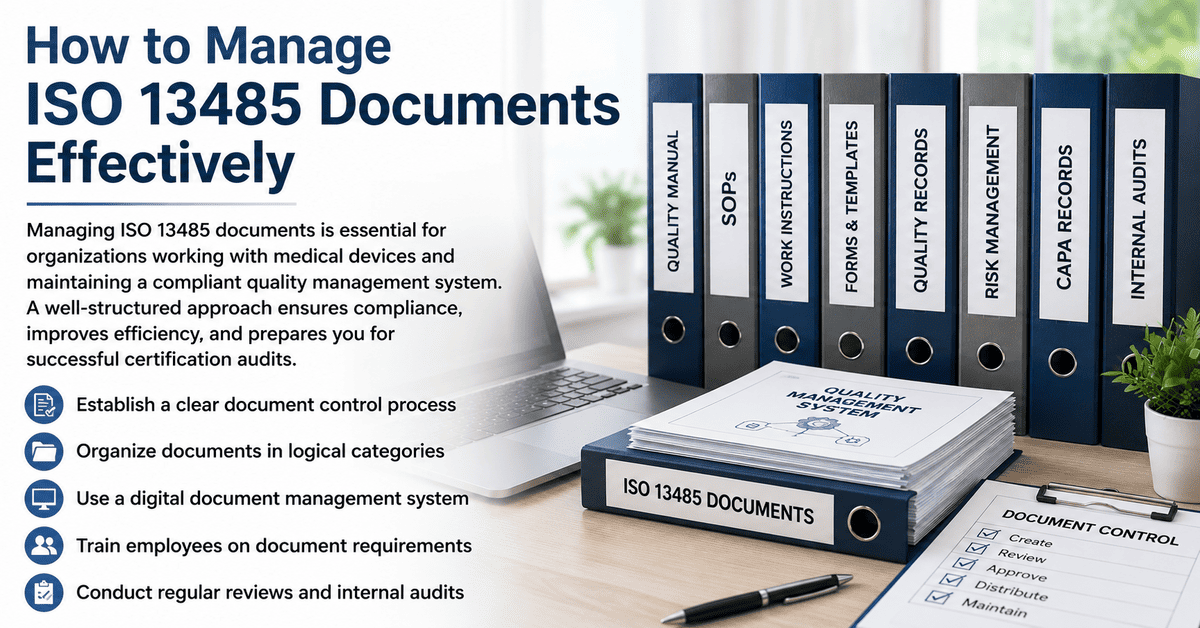
Organizations often use structured documentation kits to support these activities. A complete ISO 13485 document kit typically includes a quality manual, documented procedures, SOPs, formats, and sample templates, all designed to save time and provide a baseline system that aligns with standard requirements. Such kits also include audit checklists, which can help quality teams verify that training documentation meets the expectations of regulators and certification bodies.
Key Components of Training and Awareness Documentation
Effective training documentation under ISO 13485 certification usually includes the following elements:
1. Training Needs Analysis: Identifying particular job roles and corresponding competencies that require documented training.
2. Training Plans: Describing how training will be delivered, the frequency of sessions, and methods for evaluating effectiveness.
3. Training Records: Detailed logs of completed training activities, including attendee names, the dates of training, and assessment results.
4. Competency Assessment: Documentation that verifies not only training attendance but also the successful understanding and application of the training to job functions.
These components ensure that organizations document not just participation but also the effectiveness of training in real job performance—which is essential for continuous improvement and audit readiness.
For individuals seeking more in-depth knowledge of audit requirements and implementation of training documentation, programs like ISO 13485 Training offer detailed coverage of audit procedures, documentation control, and compliance.
Linking ISO 13485 Documentation to Quality Awareness Culture
Training documentation is the starting point for creating quality awareness within an organization. When employees can easily access well-written procedures, clear work instructions, and training history, they are better equipped to perform tasks correctly and consistently. This transparency enhances accountability and encourages a proactive approach toward identifying and solving quality issues.
Additionally, when employees understand the impact of their activities on the quality of the product, organizations can expect to experience fewer nonconformities, quicker responses to audits, and a smoother integration of quality principles into daily activities.
Practical Tools to Support ISO 13485 Documentation Requirements
A structured documentation toolkit can significantly streamline the process of creating and maintaining quality records. For instance, ready-to-use templates and formats can help companies develop clear procedures, training records, and supporting forms without starting from scratch. Documentation toolkits are designed by quality professionals and can be tailored to fit the particular needs of a company’s medical device procedures.
For organizations looking to accelerate their compliance process, comprehensive sets of ISO 13485 documents that include manuals, procedures, and audit checklists can be especially valuable. These tools assist not only in creating documentation but also in training staff and promoting quality awareness at every level of operation.