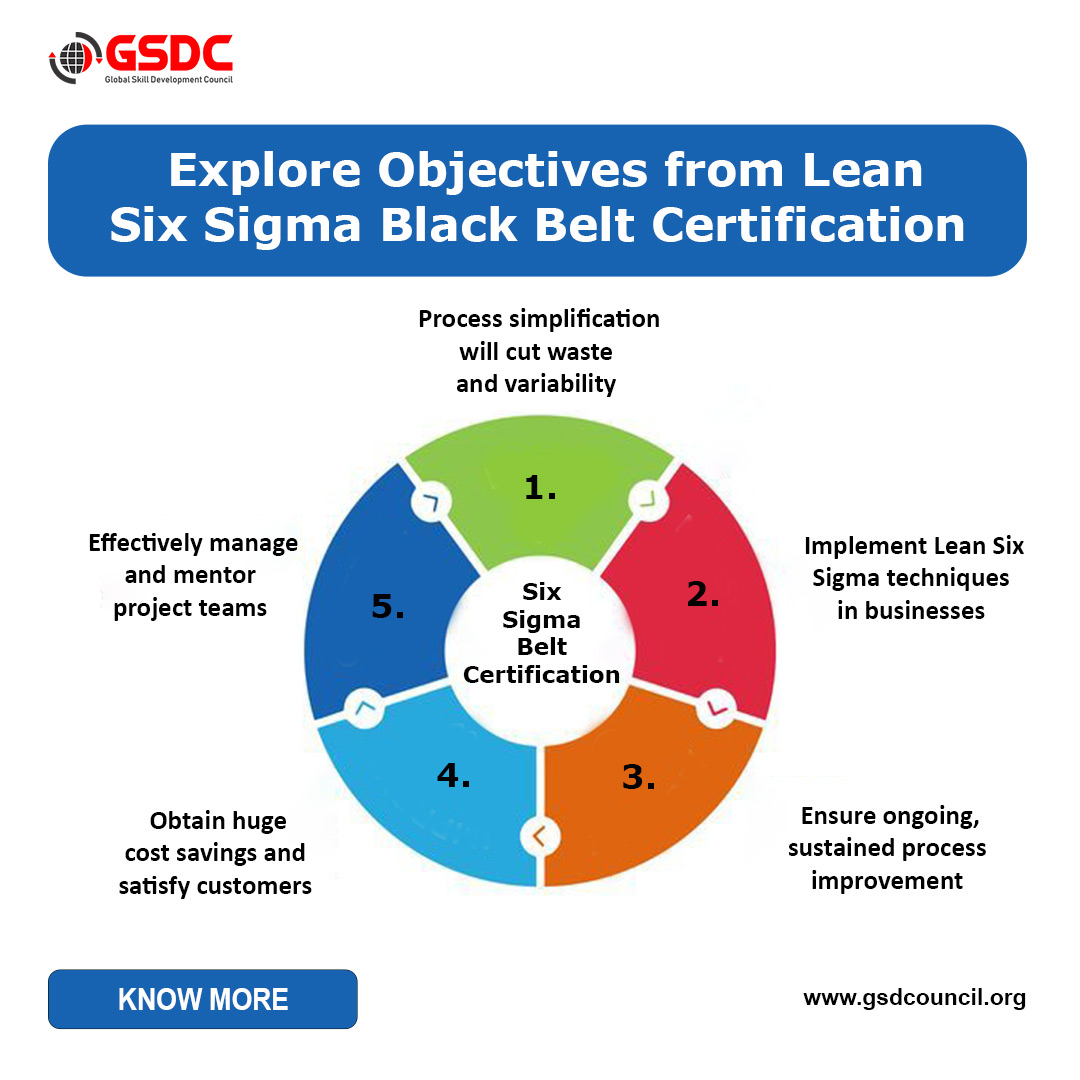
To unlock the full potential of Six Sigma, you must move beyond simply "following the steps" and start mastering the system. Black Belt training is designed to turn a professional into a tactical leader who can dismantle complex business problems using a combination of rigorous math and high-level soft skills.
Here is how a comprehensive Black Belt training program transforms your approach to success.
1. Advanced Statistical Infrastructure
While Green Belt training touches on basic data, Black Belt training dives into the "engine room" of process behavior. You learn to move from Descriptive Statistics (what happened) to Inferential Statistics (why it happened and what will happen next).
Key Technical Deep-Dives:
Non-Normal Data: Most real-world processes don't follow a perfect bell curve. Training teaches you how to handle Weibull or Poisson distributions.
ANOVA (Analysis of Variance): Testing if the means of three or more groups are different—essential for comparing performance across multiple factory lines or hospital shifts.
Sample Size Calculation: Using power and confidence intervals to ensure your pilot project isn't a "false positive."
2. The Architecture of Change (DMAIC+)
In Black Belt training, the DMAIC framework is treated as a strategic weapon. You learn to navigate the "Grey Areas" that stop most projects in their tracks.
Measurement System Analysis (MSA): You learn to perform a Gage R&R study. If your "ruler" (your data collection method) is broken, your entire project will fail.
Multi-Vari Studies: Identifying different families of variation (Positional, Cyclical, or Temporal) before they pollute your data.
The Control Plan: Transitioning from a "Project" to "Business as Usual" by building automated triggers that alert management when a process drifts.
3. Integrating Lean and Six Sigma
Training at this level bridges the gap between Sigma (Quality) and Lean (Speed). A Black Belt doesn't just make a process better; they make it faster and cheaper.
Lean Tool
Black Belt Application
Value Stream Mapping
Visualizing the "Hidden Factory" where time and money are lost.
Kaizen Events
Leading high-intensity, 3-5 day "bursts" of radical improvement.
Heijunka
Leveling the workload to prevent "Mura" (unevenness) in production.
4. The "Soft" Power of a Black Belt
Success in Six Sigma is 30% math and 70% buy-in. Training focuses heavily on Leadership Psychology:
Stakeholder Analysis: Identifying "Blockers" and "Champions" early in the project.
Mentoring: Learning how to explain complex p-values to a shop-floor operator or a busy CFO.
Facilitation: Keeping a diverse team focused on the "Critical to Quality" (CTQ) metrics rather than personal grievances.
5. Preparing for the Project Affidavit
The hallmark of successful training is the Real-World Project. To graduate, most reputable programs require you to lead a project that delivers a specific financial threshold (often $100k+). This project serves as your "Master’s Thesis" in operational excellence.
The Success Formula: >
$$Success = (Technical\ Skills \times Leadership\ Ability) + Executive\ Sponsorship$$
Are You Ready to Lead?
Training is the bridge between being a "subject matter expert" and being a "leader of experts." It provides the confidence to walk into any department and find the path to efficiency.