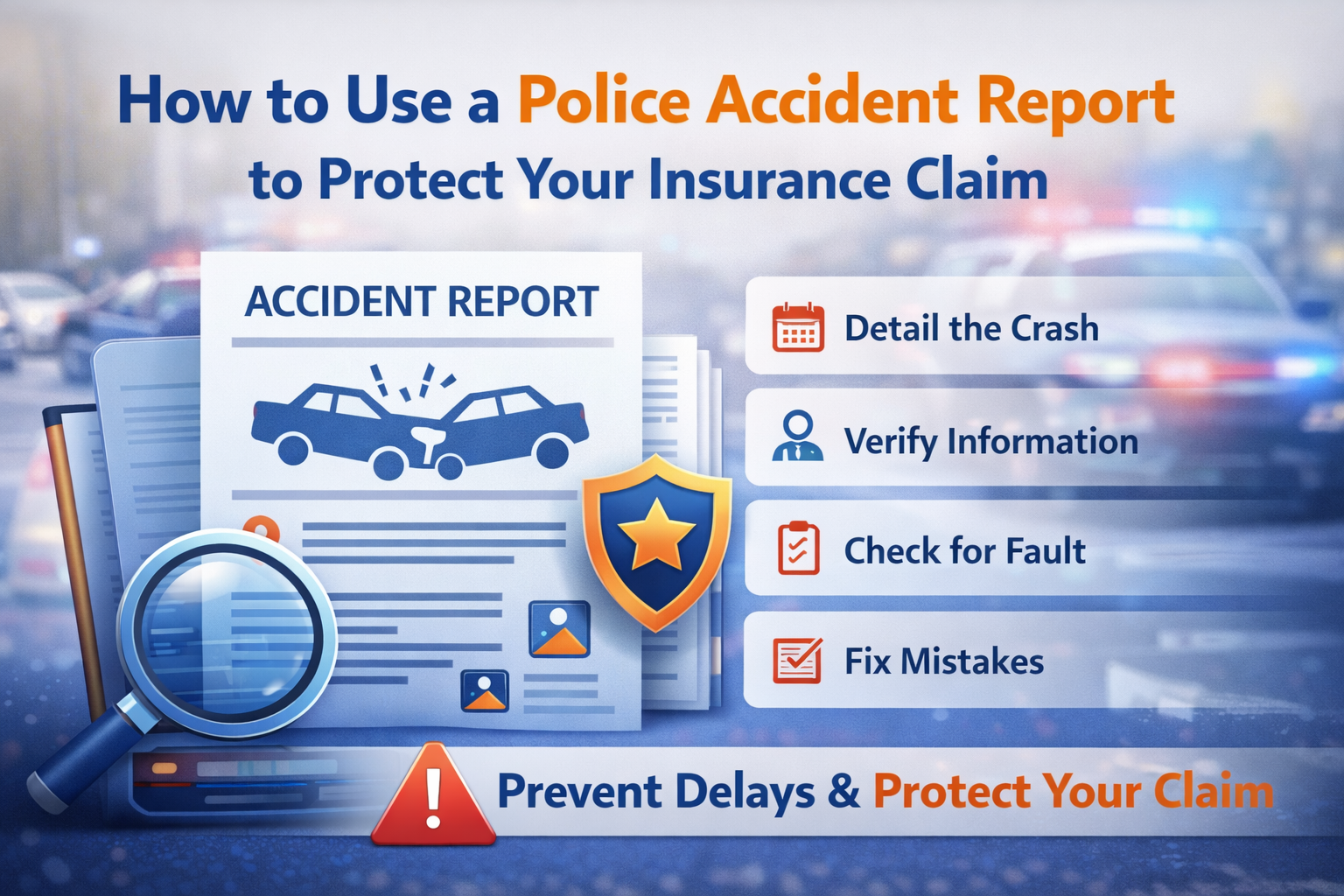
After a crash, everything feels urgent. You are dealing with repairs, medical visits, insurance calls, and unexpected paperwork. In the middle of all that, your police accident report becomes one of the most important documents tied to your case.
Most people do not realize how much influence this report has until something goes wrong. Insurance adjusters rely on it. Attorneys review it. Claims processors use it to verify details. Even small mistakes inside the report can affect how your claim moves forward.
Here is what you need to know.
Why the Police Report Matters So Much
A police report is not just a summary of what happened. It usually includes:
Date, time, and location of the crash
Driver and passenger details
Vehicle information
Insurance carrier names
Statements from drivers and witnesses
Officer observations
Diagrams of the scene
Initial fault assessment
Insurance companies often use this document as their starting reference point. If something is inaccurate, it can delay your claim or reduce your payout.
Step 1: Get the Right Report from the Right Agency
Many crashes happen near city boundaries, highways, or county lines. That means different agencies could respond:
City police
County sheriff
State highway patrol
Before requesting your report, confirm which agency handled the crash. You can usually find this on:
The exchange-of-information sheet given at the scene
A citation document
Your insurance correspondence
Requesting from the wrong department is one of the most common causes of delay.
Step 2: Carefully Review Every Detail
Once you receive your report, do not just skim it. Read every section closely.
Look for:
Misspelled names
Wrong vehicle year or model
Incorrect insurance policy numbers
Errors in location details
Missing passenger information
Even something as small as a typo in your policy number can create confusion during processing.
Step 3: Understand the Fault Section
One of the most sensitive parts of any crash documentation is the officer’s fault determination.
Keep in mind:
The officer’s opinion is not always final legal liability
Insurance companies conduct their own investigations
Contributing factors are different from legal fault
If the report suggests fault and you believe it is inaccurate, you may need to submit additional evidence such as photos, dashcam footage, or witness statements.
In many cases, reviewing your police accident report early helps you catch these issues before the insurance company makes a decision based on incomplete or incorrect information.
Step 4: Correct Mistakes Quickly
If you find an error:
Contact the agency that created the report.
Ask about their correction or amendment process.
Provide supporting documents if required.
Keep copies of all communication.
Some departments allow written corrections. Others may require a formal statement. Acting quickly prevents the error from spreading into your insurance file.
Step 5: Keep It Organized for Future Use
Even after your claim is resolved, keep a copy of your report in a safe place.
You may need it later for:
Disputes over vehicle value
Medical reimbursement questions
Legal follow-ups
Future insurance underwriting reviews
Accident records can surface months or even years later.
Common Mistakes People Make
Here are a few avoidable errors:
Waiting too long to request the report
Assuming the insurance company will fix errors
Ignoring minor spelling mistakes
Failing to verify which agency handled the crash
Not reviewing the narrative section
Your report is a foundational document. Treat it that way.
Final Thoughts
After a crash, it is easy to focus only on repairs and immediate expenses. But your documentation matters just as much. Taking time to review your police accident report carefully can protect your insurance claim, prevent unnecessary delays, and give you confidence that your case is supported by accurate information.
Small details today can make a big difference tomorrow.


Cheap How to Claim Car InsuranceHow to claim car insurance can be easy; This is why people are looking for cheap car insurance and can be claimed.
Finding a competitive car insurance offer is an assignment exercise and often, we can use help in those areas.Many people pay too expensive for a car protection policy, you don't have to.
All you need to find the best car insurance deal at an affordable price is to make sure you know the following things:1.
Every time you show your interest in any insurance company, they pull some information about you like your driving history.
You are a loyal customer when you insure some of your property with the same company as your life, motorcycle, car, house etc.
Your loyalty is rewarded by giving discounts on your vehicle insurance.