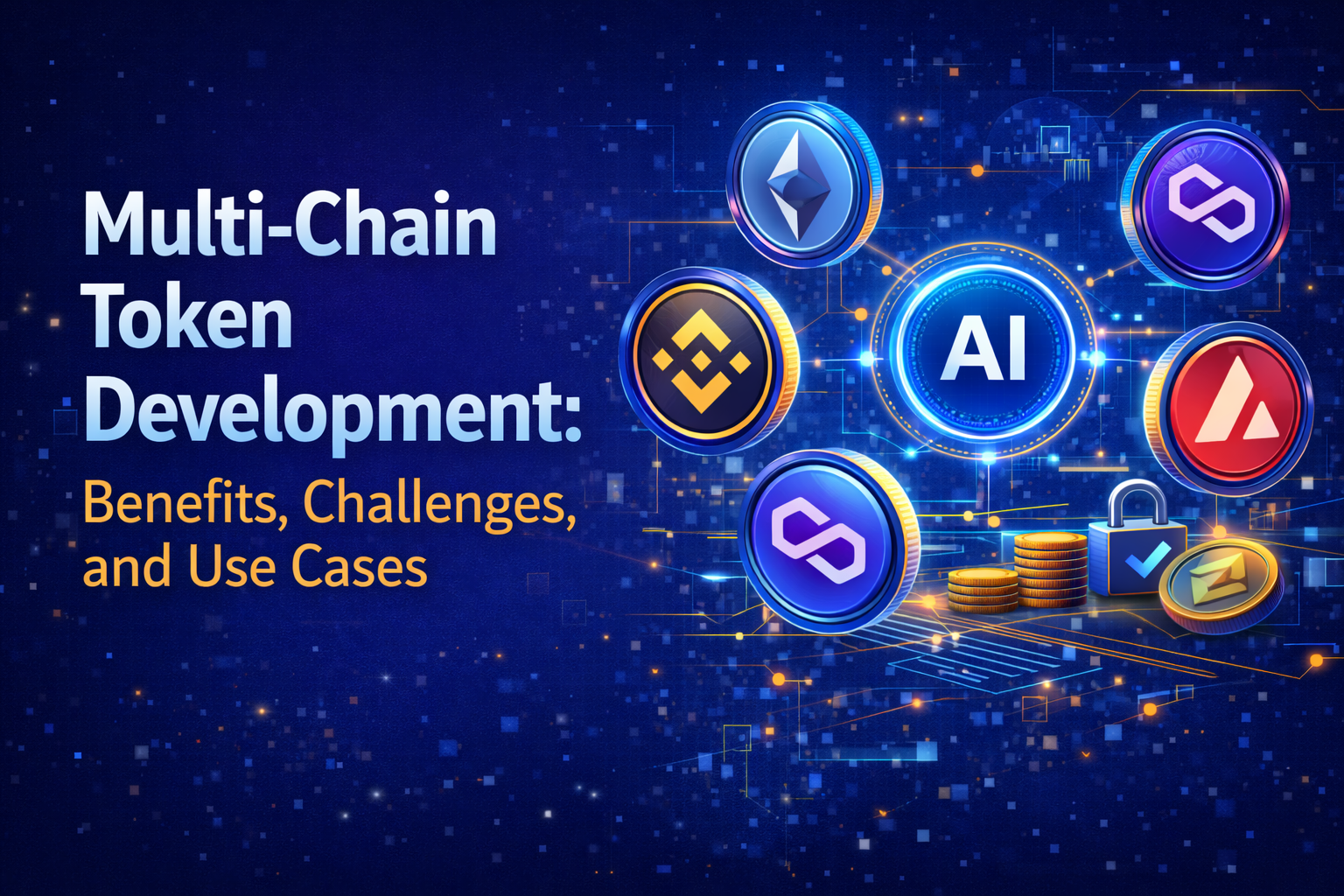
Multi-chain tokens development has become the new game-changer in the fast-paced environment of blockchain technology. This strategy will entail the development of tokens that can be used across a variety of blockchain networks, which will use bridges, wrappers, or native integrations to achieve interoperability. Multi-chain tokens are not limited to a single ecosystem, as opposed to single-chain tokens, which offer the silo-breaking effect to enable assets to freely move between the chains of Ethereum, Binance Smart Chain, Polygon, and others. This does not only increase functionality, it also solves major drawbacks of scalability and accessibility.
Benefits of Multi-Chain Token Development
Multi-chain token development offers several compelling advantages that can significantly enhance the utility and adoption of blockchain projects.
Improved Scalability: By distributing transactions across multiple chains, multi-chain tokens help alleviate congestion on high-traffic networks like Ethereum, reducing gas fees and improving transaction speeds. This is particularly beneficial for applications requiring high throughput.
Enhanced Interoperability: Tokens can leverage the unique strengths of different blockchains, such as Ethereum's robust smart contracts combined with Polygon's low-cost scaling. This fosters a more connected ecosystem where assets and data flow without barriers.
Increased Liquidity: Multi-chain support taps into diverse liquidity pools across ecosystems, making it easier for users to trade and access markets. For instance, bridging tokens to newer chains can boost overall market depth and reduce slippage.
Broader User Reach and Flexibility: Developers can attract users from various blockchain communities, offering choices in terms of cost, speed, and features. This user-centric approach can lead to higher engagement and adoption rates.
Risk Diversification and Future-Proofing: Spreading operations across chains mitigates risks like network outages or regulatory changes on a single platform, while preparing projects for emerging blockchain innovations.
Challenges in Multi-Chain Token Development
While the benefits are substantial, multi-chain development isn't without its hurdles. Addressing these requires careful planning and robust technical solutions.
Technical Complexity: Integrating tokens across chains involves managing bridges, oracles, and smart contracts, which can introduce bugs or compatibility issues. Developers must handle varying consensus mechanisms and standards.
Security Risks: Cross-chain bridges have been prime targets for hacks, with vulnerabilities potentially leading to asset losses. Ensuring secure token transfers demands rigorous audits and decentralized validation.
Liquidity Fragmentation: While multi-chain can enhance liquidity, it can also fragment it if not managed well, leading to uneven distribution across chains and potential price discrepancies.
Regulatory and Compliance Issues: Navigating different jurisdictions' rules for tokens on multiple chains can be complex, especially with varying standards for privacy, KYC, and taxation.
Higher Development Costs and Maintenance: Building and maintaining multi-chain infrastructure requires more resources, including ongoing updates to adapt to chain upgrades or forks.
Use Cases for Multi-Chain Tokens
Multi-chain tokens are already powering innovative applications across industries, demonstrating their real-world potential.
Decentralized Finance (DeFi): Tokens like stablecoins (e.g., USDC) operate across chains to enable cross-chain lending, borrowing, and yield farming, combining Ethereum's security with faster, cheaper alternatives.
Non-Fungible Tokens (NFTs): Multi-chain NFT marketplaces allow creators to mint and sell on multiple networks, expanding reach and reducing fees. This is ideal for gaming or art where users prefer different chains.
Supply Chain Management: Tokens representing assets or data can move across specialized chains for tracking goods, ensuring transparency from production to delivery in complex global networks.
Asset Tokenization: Real-world assets like real estate or securities can be tokenized and traded across chains, enabling fractional ownership and global liquidity.
Cross-Border Payments: Multi-chain tokens facilitate instant, low-cost international transfers by bridging fiat-pegged assets between networks optimized for speed and compliance.
Conclusion
Multi-chain token development platform represents a pivotal shift toward a more interconnected and efficient blockchain landscape. By harnessing its benefits—such as scalability and liquidity—while mitigating challenges like security and complexity, projects can unlock new opportunities. As the technology matures, expect even more innovative use cases to emerge, driving broader adoption. For developers and businesses, embracing multi-chain strategies could be key to staying competitive in this dynamic space.