





In most boardrooms, the conversation around AI and automation still sounds the same: Which tool should we buy next? A better chatbot. A smarter CRM plug-in. A faster analytics dashboard.
But on the ground — where customers switch between English, Odia, Hindi, and their regional comfort zones in the span of a single interaction — the problem isn’t the lack of tools. It’s the lack of understanding.
What businesses are running into is not a software gap. It’s a language gap.
And that’s why the next competitive advantage will not come from adding another interface. It will come from building a language layer.
The Invisible Friction in “Digital-First” Businesses
We like to believe the internet has standardized communication. In reality, it did the opposite — it amplified linguistic diversity.
A customer discovers your product in English, asks a question in Odia, receives support in Hindi, and signs the final document in English again. Every switch creates friction.
Most systems break at that exact moment.
Harvard Business Review has repeatedly pointed out that customer experience is now the primary battleground for growth. Yet experience is fundamentally a language problem. If a user cannot think, ask, or decide in their preferred language, the journey slows down — or stops.
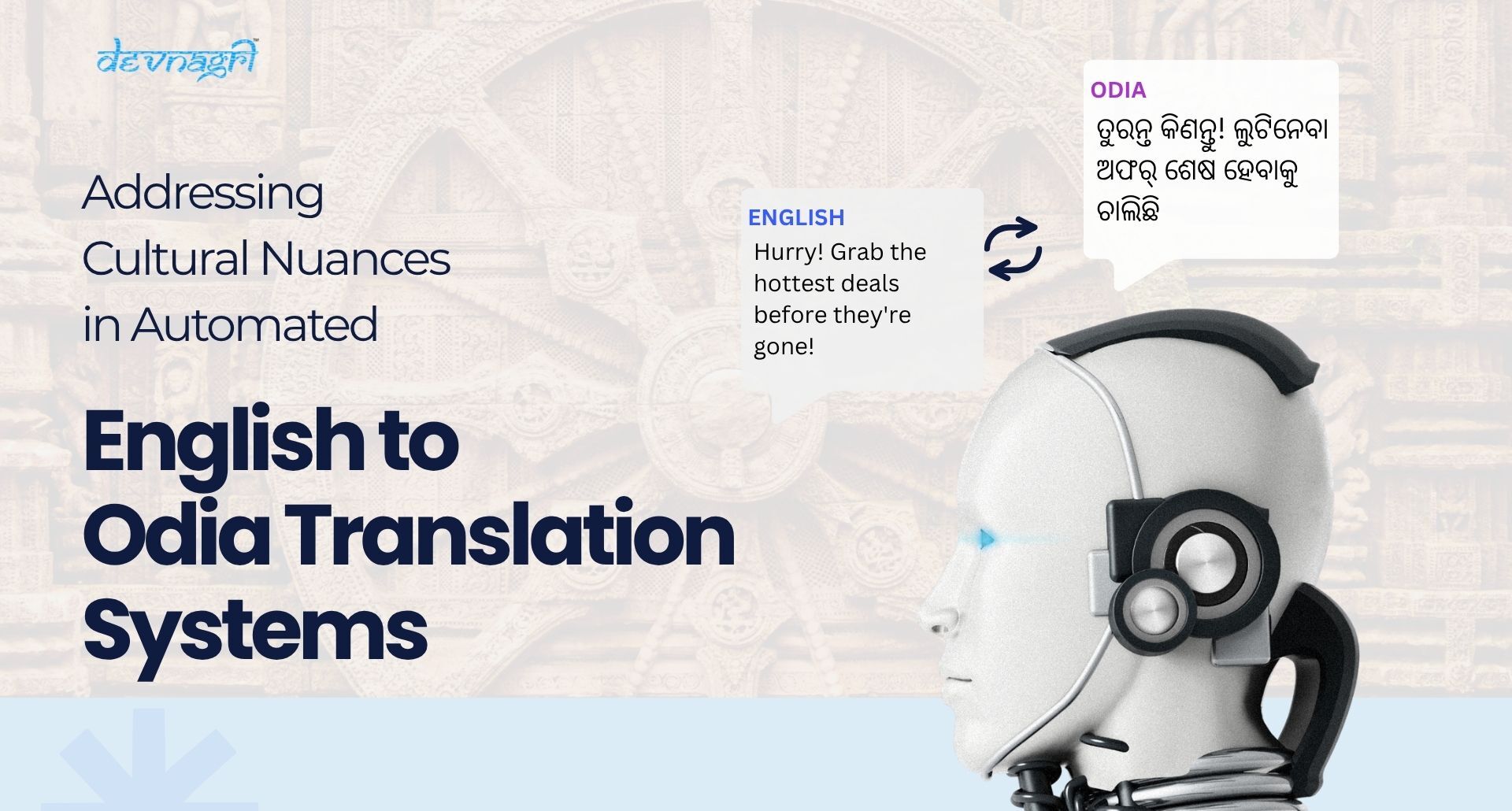
Even something as operationally simple as English to Odia translation becomes a bottleneck when it sits outside the core workflow.
So teams compensate manually.
Copy–paste.
Escalate to a regional agent.
Delay responses.
Not because they lack tools — but because their tools don’t speak.
A Tool Translates. A Language Layer Understands.
Here’s the critical distinction.
A translation tool is an action.
A language layer is infrastructure.
One works after the fact. The other works in real time, across systems.
Think about how payment gateways evolved. Businesses didn’t scale by adding separate payment tools for every transaction. They embedded a payment layer into the flow.
Language is heading the same way.
A language layer sits between your applications and your users — CRM, support, onboarding, compliance, search, product interfaces — and ensures that language is no longer an afterthought.
It means:
- Customer queries are understood in any language
- Responses are generated in the user’s preferred language
- Data remains structured and usable across the organization
No context loss. No manual relay.
Why This Matters Across Industries
This isn’t a sector-specific challenge. It’s structural.
1. Growth now comes from non-English markets
The World Economic Forum has noted that the next billion digital users will be overwhelmingly non-English-first. Businesses that operate in only one language are not scaling — they’re filtering their own demand.
2. Customer trust is built in the native language
Deloitte’s consumer studies consistently show that people are more likely to complete high-value transactions when information is presented in their primary language. Not translated awkwardly — delivered naturally.
3. Compliance and documentation are becoming multilingual
From financial disclosures to government services to healthcare forms, regulatory communication is no longer monolingual. Treating language as a manual process is a risk.
4. AI is only as good as the language it understands
An AI system that works beautifully in English but struggles with Odia, Marathi, or Tamil is not intelligent — it’s limited.
The Real Cost of Ignoring the Language Layer
What does the absence of a language layer look like in practice?
- Support teams are hiring more agents instead of scaling automation
- Marketing campaigns that reach but don’t convert
- Digital platforms with high drop-off in regional markets
- Knowledge bases that exist but aren’t accessible
All of this shows up as “low engagement” in dashboards.
But the root cause is linguistic disconnect.
From Feature to Foundation
Forward-looking organizations are quietly changing their approach.
They are not asking, “How do we translate this?”
They are asking, “How does language flow through our systems?”
That shift — from feature to foundation — is where the real transformation lies.
This is also where language AI platforms, including players like Devnagri, are positioning themselves: not as another tool in the stack, but as an intelligence layer that makes the stack usable for a multilingual market.
What Businesses Can Do Today
You don’t start by replacing everything. You start by reframing the problem.
Actionable steps:
- Audit your customer journey for language breakpoints
- Identify workflows where English becomes a hidden dependency
- Integrate language capabilities at the API or infrastructure level — not as a manual step
- Measure conversion, resolution time, and engagement by language, not just by region
The insight is simple and often surprising: when people can think in their own language, they move faster.
The Strategic Takeaway
For years, digital transformation meant adding new tools.
The next phase is about making those tools usable for everyone.
Because in a multilingual economy, language is not a UI feature.
It is the operating system.
And businesses that build a language layer today won’t just communicate better — they will grow where others cannot.
SOURCE: https://medium.com/@devnagri07/why-businesses-need-a-language-layer-not-another-tool-7f8f3da38576

That’s why Legal translation in Dubai are on demand right now.
Do you need to translate English to Arabic language for online documents of your projects?
You don’t need to worry as our team of expert translators consists of native Arabic speakers who are also very proficient in the English language in order to make your translations accurate.