Growing companies often reach a stage where their existing IT infrastructure cannot support expansion. Slow systems, security risks, and rising operational costs start affecting performance. This is where migration services in cloud computing become essential.
Cloud migration services help businesses move their applications, data, and workloads from on-premise servers or outdated environments to secure and scalable cloud platforms.
What Are Migration Services in Cloud Computing?
Migration services in cloud computing refer to the structured process of transferring digital assets — including applications, databases, and IT processes — to a cloud environment.
These services include:
• Infrastructure migration
• Application migration
• Database migration
• Cloud re-architecture
• Security and compliance setup
• Post-migration performance optimization
The purpose is to improve scalability, reduce costs, and enhance operational flexibility.
Why Do Growing Companies Need Cloud Migration Services?
1. To Scale Without Limits
As businesses grow, customer traffic and data volume increase. Cloud infrastructure allows instant resource scaling without hardware investment.
2. To Reduce IT Costs
Traditional infrastructure requires maintenance, upgrades, and physical security. Cloud computing shifts this to a pay-as-you-use model.
3. To Improve Security
Professional migration services ensure secure data transfer, encryption, access control, and compliance alignment.
4. To Enable Remote Operations
Cloud environments allow secure access from anywhere, supporting distributed teams and global operations.
How Do Migration Services in Cloud Computing Work?
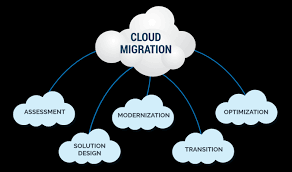
A professional migration process follows a clear structure:
Step 1: Assessment
Existing systems are evaluated to understand dependencies, risks, and business objectives.
Step 2: Migration Strategy
A customized roadmap is created. This may involve:
• Lift and shift
• Replatforming
• Refactoring applications
Step 3: Secure Migration
Data and applications are moved using controlled processes to avoid downtime or data loss.
Step 4: Testing and Optimization
Systems are tested for performance, integration, and security compliance.
What Makes Professional Cloud Migration Successful?
Successful migration services focus on:
• Zero data loss
• Minimal downtime
• Strong security controls
• Cost optimization
• Performance improvement
Without structured planning, businesses risk service interruptions and compliance issues.
What Problems Do Cloud Migration Services Solve?
Growing companies typically face:
• Server capacity limitations
• Frequent downtime
• High maintenance costs
• Poor disaster recovery systems
• Limited flexibility
Cloud migration services eliminate these bottlenecks by modernizing infrastructure.
Why Choose CloudKodeform for Migration Services?
The migration services at CloudKodeform are designed for scalability and long-term growth. The approach focuses on:
• Detailed pre-migration assessment
• Secure cloud architecture design
• Controlled data transition
• Post-migration optimization
• Ongoing performance monitoring
Instead of a one-size-fits-all solution, migration strategies are aligned with business objectives and industry requirements.
Key Benefits of Migration Services in Cloud Computing
• Faster deployment of applications
• Improved disaster recovery
• Better collaboration across teams
• Reduced infrastructure management burden
• Long-term operational flexibility
For growing companies, migration is not just a technical shift. It is a strategic transformation that supports expansion without operational limitations.
Final Answer
Migration services in cloud computing help growing companies securely move their IT systems to scalable cloud environments. These services reduce costs, improve security, increase flexibility, and support long-term business growth.
If your business is expanding and facing infrastructure challenges, professional migration services provide the structured, secure transition needed for sustainable scaling.