





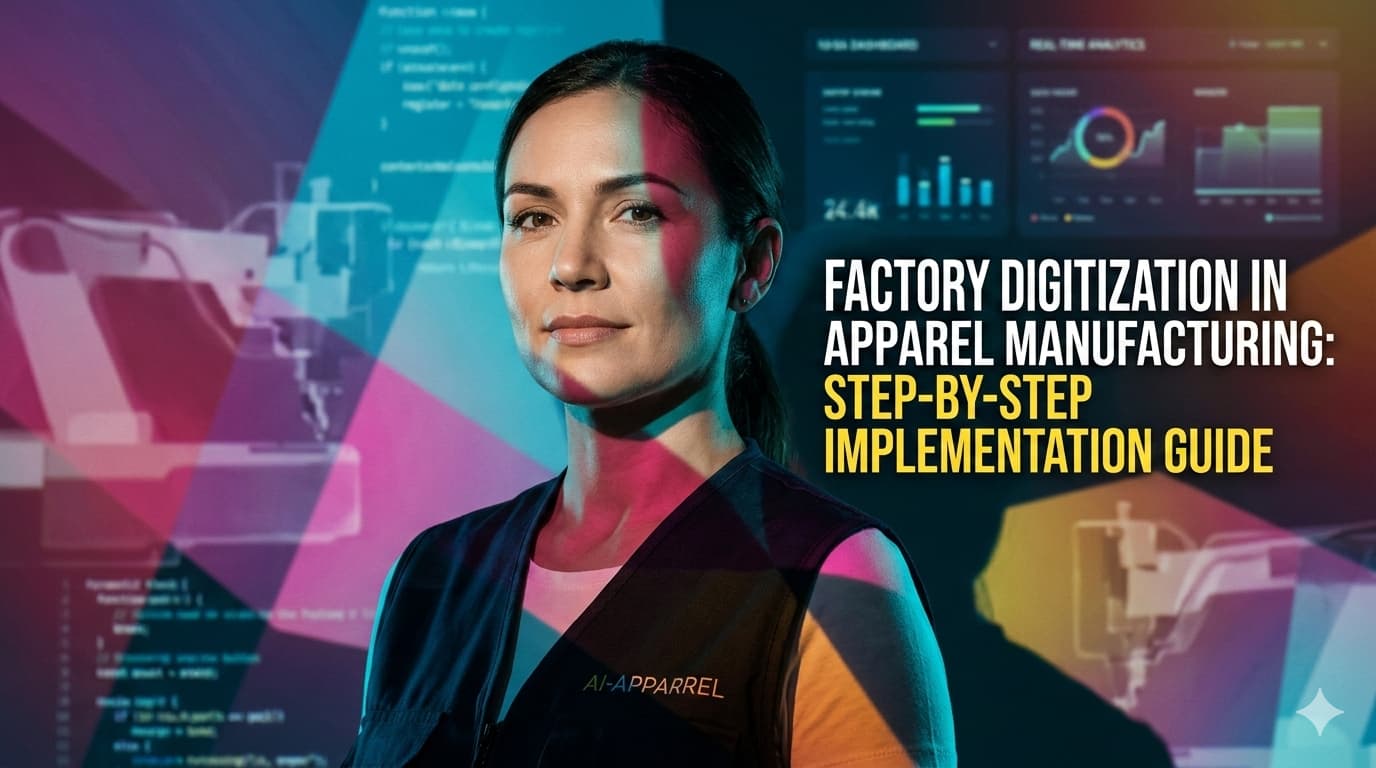
1. Why Factory Digitization Is the Future of Apparel Manufacturing
The global apparel industry is undergoing one of the most significant transformations in its history. Rising raw material costs, increasing wage pressures, unpredictable demand cycles, sustainability mandates, and global competition are forcing manufacturers to rethink how factories operate. Traditional, labor-intensive production models are no longer sufficient in a digital-first economy.
Factory digitization represents a structural shift from manual, experience-based operations to data-driven, intelligent manufacturing environments. Leading garment factories across India, Bangladesh, Vietnam, and other textile hubs are moving toward digital factory models powered by advanced Apparel Manufacturing Software and integrated production systems.
In today’s competitive landscape, speed, accuracy, cost control, and transparency define success. Manual cut planning, paper-based production tracking, and disconnected spreadsheets create inefficiencies that reduce profitability. Modern Clothing Manufacturing Software enables factories to scale operations, manage complexity, and compete in a globalized market.
The transition toward smart apparel manufacturing aligns with broader Industry 4.0 trends—integrating automation, analytics, connectivity, and artificial intelligence into garment production. The result is a digitally connected factory where planning, cutting, production, and reporting operate as one unified system.
2. What Is Factory Digitization in Apparel Manufacturing?
2.1 Definition and Scope
Factory digitization refers to the end-to-end digital transformation of apparel production processes, including:
Fabric planning and consumption forecasting
Marker making and cut planning
Cutting room automation
Production planning and scheduling
Real-time shop floor execution tracking
Quality and performance analytics
Unlike partial automation, full digitization connects every stage of manufacturing through integrated Apparel Production Software, creating a seamless data flow from order confirmation to shipment.
When planning data automatically syncs with cutting operations and shop floor activities, decision-makers gain real-time visibility into operations, costs, and bottlenecks.
2.2 Difference Between Basic ERP and Advanced Manufacturing Systems
Many factories operate on basic financial ERP systems that handle accounting, payroll, and inventory. While important, these systems are not designed to manage production complexity.
Advanced apparel-focused platforms differ significantly:
Basic ERP
Advanced Manufacturing System
Finance-focused
Production-focused
Limited shop floor visibility
Real-time production monitoring
Static reporting
Live operational dashboards
Manual cut planning
Automated marker optimization
Modern Apparel Production Software goes beyond accounting. It integrates planning intelligence, cutting room digitization, and real-time production tracking. For manufacturers searching for Garment Manufacturing Software India, choosing a production-centric system is essential to compete in both domestic and export markets.
3. Why Apparel Manufacturers Must Digitize Now
3.1 Rising Production Costs & Margin Pressure
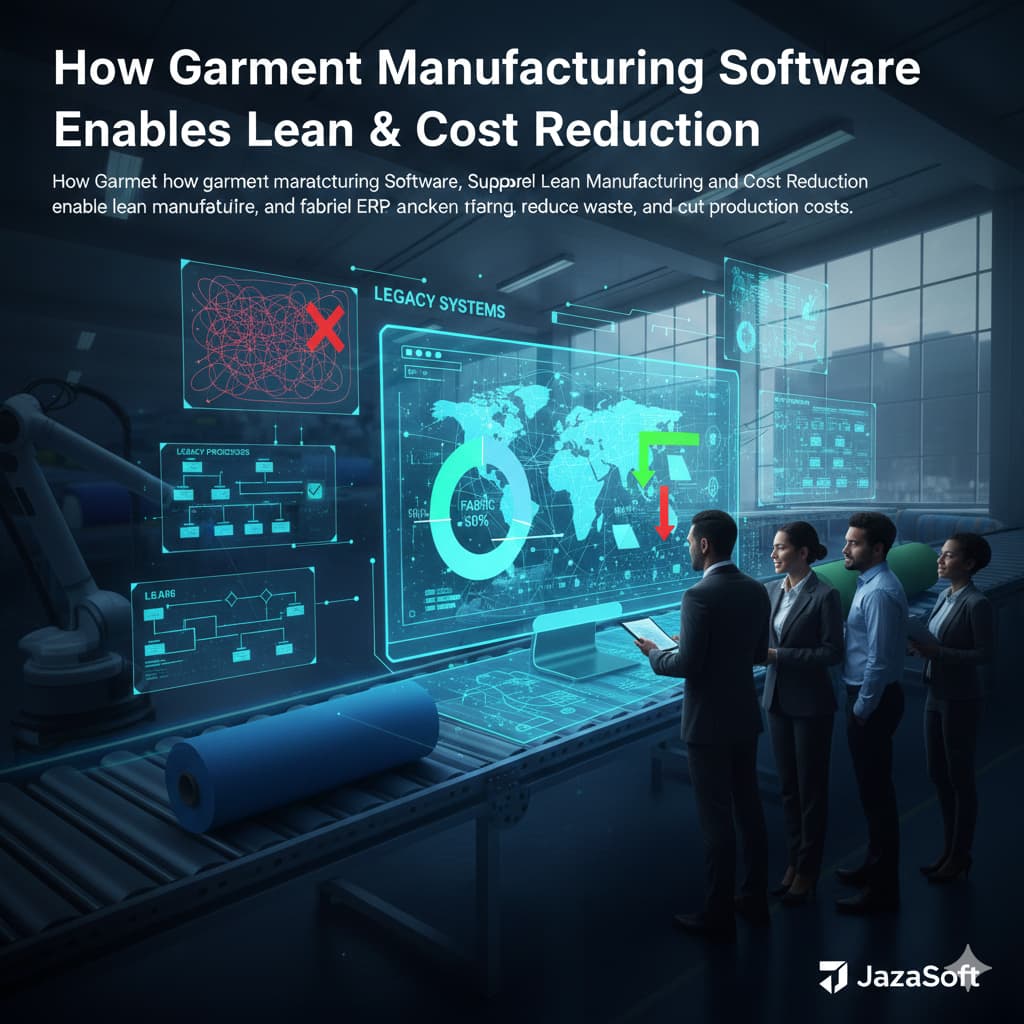
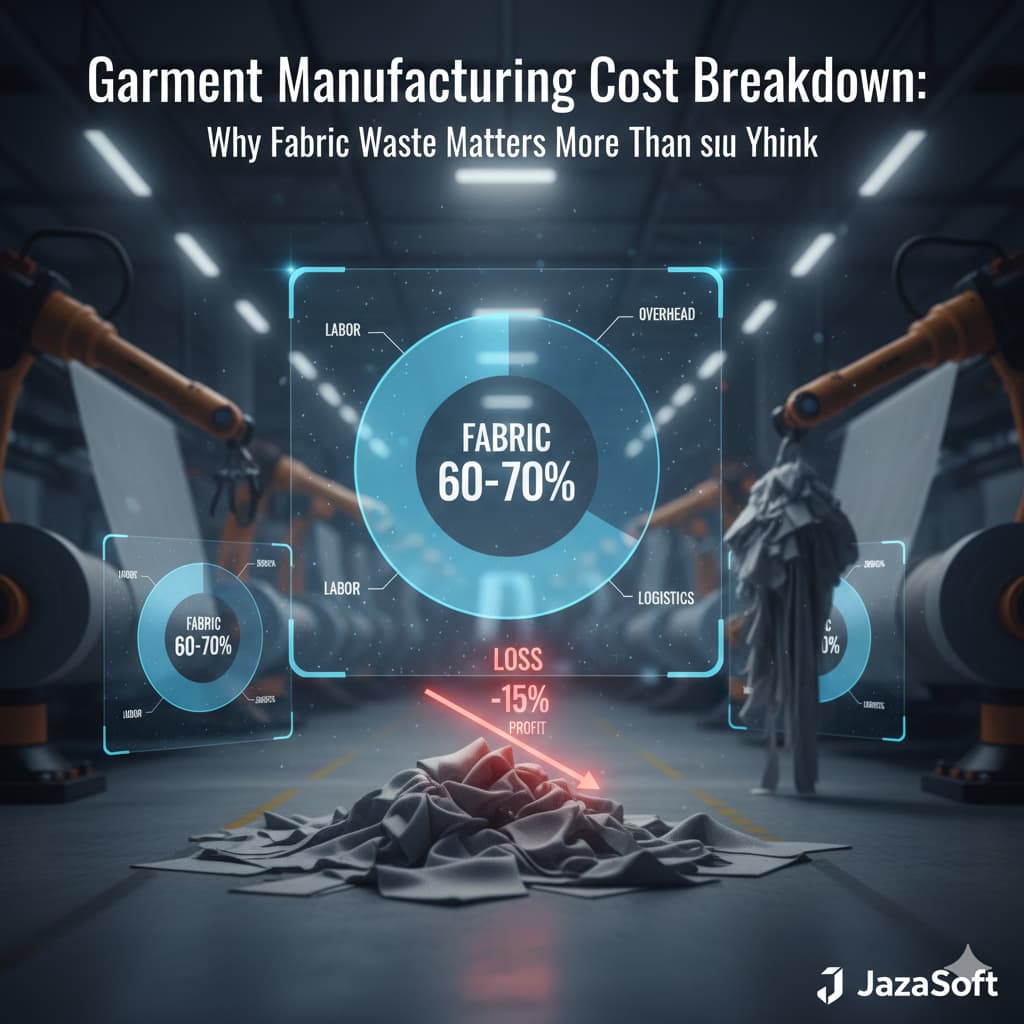
Fabric accounts for the largest share of garment production costs. Labor expenses continue to increase across major manufacturing regions. Even minor inefficiencies in planning or execution significantly impact margins.
Common financial pain points include:
Overconsumption of fabric
Excessive end-bits and marker waste
Idle labor time
Production rework
Inventory shrinkage
Digital tools such as Fabric Efficiency Software and Fabric Utilization Software provide the control needed to minimize these losses.
3.2 Global Competition & Compliance
Brands demand shorter lead times, ethical production standards, and full supply chain transparency. Manufacturers must respond quickly while maintaining cost competitiveness.
Digitized factories can:
Track production progress in real time
Provide accurate delivery forecasts
Maintain compliance records
Monitor sustainable material usage
3.3 Operational Gaps in Traditional Factories
Factories relying on manual systems face:
Spreadsheet-based cut planning
Poor coordination between departments
Lack of real-time shop floor data
High dependency on individual expertise
Without digitization, scaling operations becomes risky and inefficient.
🔷 STEP-BY-STEP IMPLEMENTATION GUIDE
Step 1: Digitizing Fabric Planning & Consumption Control
4. Fabric Planning & Optimization Layer
Fabric planning is the foundation of cost control. Accurate estimation prevents over-purchasing and reduces fabric waste.
Core Modules Include:
Fabric Planning Software
Fabric Cut Plan Software
Fabric Utilization Software
These tools calculate precise consumption requirements based on order size, size ratio, and marker efficiency. They eliminate guesswork and reduce dependency on manual calculations.
4.1 Fabric Efficiency Through Intelligent Planning
Marker efficiency directly affects fabric cost per garment. Intelligent systems use historical performance data and algorithm-driven optimization to maximize fabric usage.
Fabric Efficiency Software provides:
Real-time analytics dashboards
Consumption variance tracking
Waste benchmarking reports
Predictive material requirement planning
This data-driven approach reduces material loss and improves purchasing accuracy.
Step 2: Modernizing Cutting Room Operations
5. Cutting Room Digitization Strategy
The cutting room is where planning turns into physical execution. Manual cutting processes often lead to:
Measurement errors
Inconsistent marker alignment
Excess fabric waste
Rework due to inaccuracies
Digitization introduces precision and automation.
Core Solutions:
Garment Cutting Software
Garment Marker Software
Garment Cutting Management systems
These solutions automate marker placement, track cutting performance, and integrate directly with fabric planning modules.
5.1 Marker Optimization & Waste Reduction
AI-driven marker placement minimizes unused fabric areas and reduces end bits. When integrated with Fabric Cut Plan Software, cutting operations become synchronized with planning intelligence.
Benefits include:
Higher marker utilization percentage
Reduced fabric waste
Faster cut planning
Improved production throughput
Step 3: Implementing Apparel Production Control Systems
6. Production Planning & Shop Floor Integration
Once fabric is cut, seamless integration with sewing and finishing operations becomes critical.
Modern Apparel Production Software enables:
Automated production scheduling
Real-time order tracking
Work-in-progress monitoring
Digital production tickets
For factories evaluating Garment Manufacturing Software India, production control capability is a decisive factor.
6.1 Real-Time Production Visibility
Digital shop floor monitoring enables:
Line balancing
Bottleneck identification
Operator efficiency tracking
Performance-based incentives
Live dashboards replace manual reporting, improving managerial control and response time.
Step 4: Connecting Data Across the Factory Ecosystem
7. Building an Integrated Digital Apparel Factory
True digitization requires connecting all systems into a unified ecosystem.
An integrated Apparel Manufacturing Software platform creates a single source of truth across:
Fabric planning
Cutting
Production
Inventory
Reporting
Whether cloud-based or on-premise, modern Clothing Manufacturing Software solutions offer API integrations that connect departments and eliminate data silos.
Step 5: Data Analytics, Reporting & Continuous Improvement
8. Using Production Intelligence for Strategic Decisions
Digitized factories leverage analytics to drive improvement.
Key analytics include:
Cost per garment analysis
Fabric consumption variance tracking
Production efficiency reports
Order profitability analysis
Performance benchmarking
Smart factory analytics and manufacturing intelligence transform raw production data into strategic insights.
9. Benefits of Factory Digitization in Apparel Manufacturing
9.1 Financial Benefits
Reduced fabric waste
Lower labor inefficiencies
Improved margin control
Reduced rework costs
9.2 Operational Benefits
Faster production cycles
Higher on-time delivery rates
Improved production accuracy
Reduced dependency on manual tracking
9.3 Strategic Benefits
Scalability for growing orders
Competitive differentiation
Sustainable manufacturing practices
Improved brand reputation
10. Key Features to Look for in Apparel Manufacturing Software
To compete with established ERP platforms in the apparel sector, your solution must include:
Fabric Planning Software
Fabric Cut Plan Software
Garment Cutting Software
Garment Marker Software
Apparel Production Software
Real-time dashboards
Cloud scalability
Industry-specific configuration
Choosing a specialized platform ensures higher ROI and long-term operational stability.
11. Implementation Roadmap for Indian & Global Manufacturers
Phase 1: Factory Audit & Process Mapping
Evaluate current workflows and identify inefficiencies.
Phase 2: Modular Deployment
Start with planning modules, then cutting, followed by production integration.
Phase 3: Staff Training & Change Management
Provide hands-on training to operators and supervisors.
Phase 4: Optimization & Performance Monitoring
Use analytics to continuously refine processes.
Manufacturers searching for Garment Software India should prioritize phased implementation for smoother digital transition.
12. Future of Apparel Factory Digitization
The future includes:
AI-driven fabric forecasting
IoT-enabled cutting machines
Predictive maintenance systems
Digital twin simulations
Full Industry 4.0 integration
Factories adopting these technologies will gain resilience and long-term competitiveness.
13. Conclusion: Building a Smart, Digitally Connected Apparel Factory
Factory digitization is not a luxury—it is a strategic necessity. A step-by-step approach ensures manageable transformation while delivering measurable ROI.
By investing in integrated Apparel Manufacturing Software, manufacturers gain complete operational visibility, improved cost control, and higher production efficiency. Advanced Clothing Manufacturing Software forms the backbone of future-ready garment factories, enabling sustainable growth in an increasingly digital world.
The apparel factories that embrace digital transformation today will lead the global market tomorrow.
Frequently Asked Questions (FAQs)
1. What is factory digitization in apparel manufacturing?
Factory digitization in apparel manufacturing refers to the end-to-end digital transformation of garment production processes, including fabric planning, cut planning, cutting room management, shop floor tracking, and performance analytics. It involves implementing Apparel Manufacturing Software and Clothing Manufacturing Software to create a connected, data-driven production environment.
2. Why is Apparel Manufacturing Software important for garment factories?
Apparel Manufacturing Software helps factories reduce fabric waste, improve production planning, monitor shop floor performance, and control operational costs. It replaces manual spreadsheets with real-time dashboards, improving decision-making and overall factory efficiency.
3. How does Clothing Manufacturing Software improve fabric utilization?
Clothing Manufacturing Software integrates tools like Fabric Planning Software, Fabric Cut Plan Software, and Fabric Utilization Software to optimize fabric consumption. It uses marker optimization and planning intelligence to reduce end bits, minimize over-cutting, and improve material efficiency.
4. What is the difference between basic ERP and Apparel Production Software?
Basic ERP systems focus mainly on accounting, inventory, and finance. In contrast, Apparel Production Software is production-focused and manages cut planning, marker making, shop floor tracking, and garment execution processes. It provides real-time production visibility rather than just financial reporting.
5. How does Garment Cutting Software reduce fabric waste?
Garment Cutting Software automates marker placement, improves layout accuracy, and integrates with fabric planning systems. Combined with Garment Marker Software, it ensures optimal fabric usage, reduces manual errors, and lowers material consumption costs.
6. What features should I look for in Garment Manufacturing Software in India?
When selecting Garment Manufacturing Software India, look for:
Fabric Planning Software integration
Fabric Cut Plan Software
Real-time production dashboards
Garment Cutting Management tools
Cloud scalability
Industry-specific customization
These features ensure long-term efficiency and competitive advantage.
7. How does Fabric Efficiency Software improve profitability?
Fabric Efficiency Software tracks consumption variance, analyzes marker performance, and identifies waste patterns. Since fabric accounts for the largest share of garment cost, even a small improvement in efficiency directly increases profit margins.
8. What is Garment Cutting Management in digital factories?
Garment Cutting Management refers to the digital control of cutting room operations, including marker execution, fabric tracking, ply management, and waste monitoring. It ensures accuracy, reduces rework, and improves production flow.
9. How long does it take to implement Apparel Manufacturing Software?
Implementation timelines vary depending on factory size and complexity. Most factories adopt a phased approach:
Fabric planning digitization
Cutting room automation
Production and shop floor integration
Analytics and optimization
A structured rollout ensures minimal disruption and faster ROI.
10. Can small and mid-sized garment factories benefit from factory digitization?
Yes. Small and mid-sized factories benefit significantly from digital tools. Even modular solutions like Fabric Planning Software or Garment Cutting Software can deliver measurable improvements in cost control and operational efficiency without large infrastructure investments.
11. How does factory digitization support sustainable manufacturing?
Digital systems reduce fabric waste, improve material planning, and optimize resource usage. By integrating Fabric Utilization Software and Apparel Production Software, factories minimize environmental impact while maintaining profitability.
12. What is the ROI of implementing Apparel Manufacturing Software?
The ROI typically comes from:
Reduced fabric waste (1–3% improvement can significantly impact margins)
Lower labor inefficiencies
Improved order accuracy
Faster production cycles
Reduced rework
Most apparel factories recover their investment within 12–24 months depending on scale.
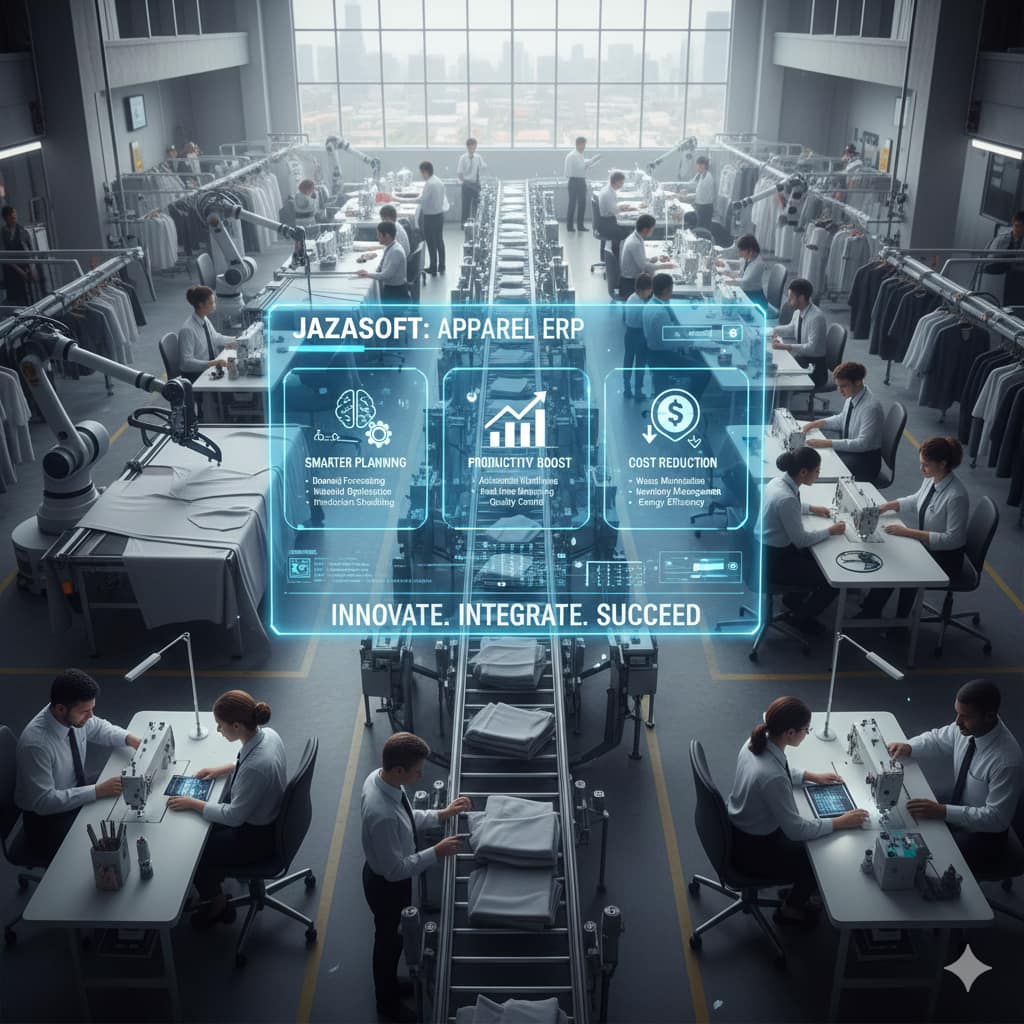


Are you searching for Best Apparel Management Software in India?
You are in the right place.
It is user-friendly and has a clean design structure.
It has complete architecture and modules which cover all the operations of your enterprise.