

Introduction
Every vehicle on the road carries an identity. That identity decides whether enforcement works, whether traffic data stays accurate, and whether road safety systems actually protect people. Most drivers never think about this. They see vehicle registration plates as a legal formality. Authorities see something else entirely. They see data, traceability, and control.
This gap creates real problems. Fake plates fuel vehicle theft. Poor-quality plates confuse Automatic Number Plate Recognition (ANPR) systems. Inconsistent reflectivity breaks the camera's readings. Weak materials allow tampering. Each failure chips away at enforcement accuracy and public safety.
This is exactly why governments mandate High Security Registration Plate (HSRP) compliance. The goal goes far beyond legality. Compliance enforces engineering discipline. It standardises plate behaviour across millions of vehicles. It enables machine readability at speed and scale. It builds trust in digital vehicle identity networks that power modern traffic governance.
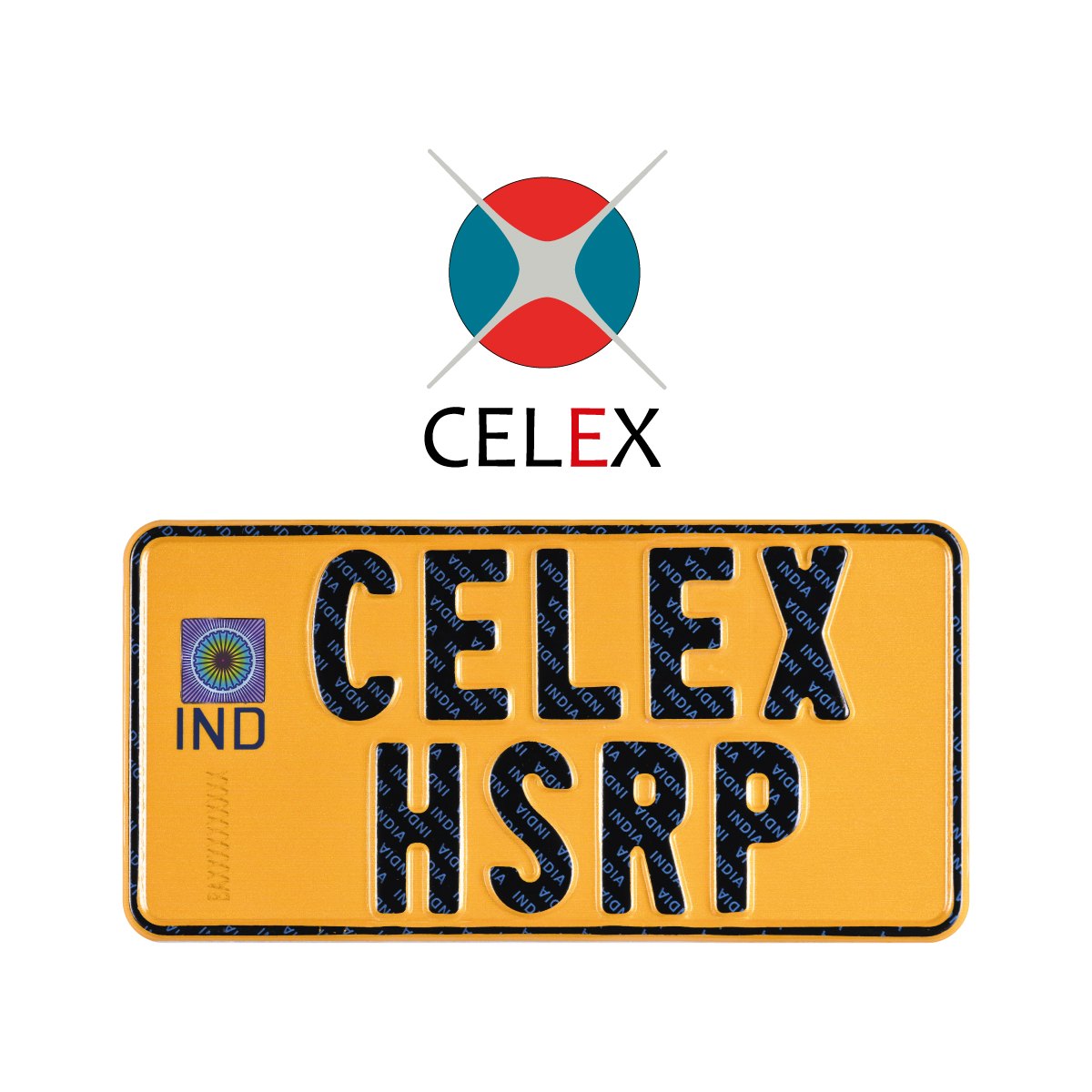
A government-approved HSRP manufacturer does not just produce plates. It produces certainty. Approval from regulatory authorities ensures adherence to vehicle registration plate standards, certified materials, traceable production, and secure identity layers. That approval becomes the backbone of smart enforcement and safety analytics.
This guide opens the hood on compliance. It explains how certified manufacturing standards influence intelligent transportation systems (ITS), road safety data analytics, and crime prevention. It also shows how trusted producers like CELEX elevate plate reliability nationwide, making enforcement smarter and roads safer.
Stay with it. Compliance shapes technology more than most people realise.
The Crucial Link Between Compliance and Road Safety Tech
Compliance drives trust. Road safety technology depends on reliable inputs. High Security Registration Plate (HSRP) compliance ensures those inputs behave predictably.
Governments mandate HSRPs to support enforcement, surveillance, and traffic governance. Every compliant plate follows uniform specifications. These include reflectivity thresholds, font geometry, material durability, and secure identifiers. This uniformity enables Automatic Number Plate Recognition (ANPR) systems to function at high accuracy.
Non-compliant plates introduce chaos. Cameras misread characters. Enforcement systems miss violations. Databases collect fragmented data. Studies from smart traffic deployments show recognition accuracy drops by over 25% when plates lack standard reflectivity or consistent fonts.
Approval from regulatory frameworks tied to CMVR and ARAI certification ensures plates meet technical and legal benchmarks. Approved manufacturers align production processes with these mandates. They test materials, validate reflectivity, and audit traceability.
A government-approved HSRP manufacturer like CELEX builds plates that serve both law and technology. Each plate supports road safety data analytics, vehicle tracking, and automated enforcement. Compliance transforms plates into functional components of road safety systems rather than passive identifiers.
Government Approval Standards: What Makes a Plate Certified
Certification demands precision. Authorities define strict vehicle registration plate standards to protect system reliability.
Approved HSRPs must meet reflectivity benchmarks to support camera visibility at night and high speed. Research across highway monitoring projects shows compliant reflectivity improves capture rates by up to 30% during low-light conditions.
Materials matter. Certified plates use approved substrates that resist bending, corrosion, and wear. Secure fastening systems prevent removal without visible damage. Each plate carries a Laser-etched Permanent Identification Number that links directly to backend records.
Integration with information systems like the VAHAN database ensures traceability. Each plate maps to a unique vehicle record. This linkage enables fast lookups and cross-agency verification.
Non-compliant plates fail on multiple fronts. They reduce ANPR accuracy. They complicate enforcement. They create legal ambiguity during disputes.
CELEX adheres to certified specifications through audited manufacturing processes and quality checks. That adherence uplifts road safety technology by guaranteeing consistency at the national scale.
The Engineering Behind HSRP Compliance and Machine Readability
Engineering defines performance. Reflectivity and machine readability sit at the heart of HSRP design.
Retroreflective films reflect light toward the source. Cameras capture plates clearly, even at high speeds. Laboratory tests show compliant films maintain visibility at angles exceeding 30 degrees, crucial for urban surveillance setups.
The Laser-etched Permanent Identification Number adds permanence. Etching penetrates the material surface. It resists abrasion and tampering. Holographic overlays enhance visual authentication.
Anti-tamper plate engineering uses snap rivets and adhesives calibrated to fracture upon forced removal. This design prevents reuse and cloning.
Machine readability thrives on consistency. Uniform fonts, spacing, and alignment boost OCR confidence. Compliant plates consistently achieve ANPR recognition rates above 95% under controlled conditions.
CELEX applies materials science expertise and automated quality inspection to maintain these standards. Precision engineering ensures plates support intelligent transportation systems (ITS) without introducing data noise.
ANPR and Road Enforcement: How Certified Plates Improve Accuracy
ANPR converts images into actionable data. Plate quality determines success. Certified plates improve Automatic Number Plate Recognition (ANPR) performance through consistent reflectivity and geometry. Uniform designs reduce false negatives and misclassification.
Cities deploying compliant plates report enforcement processing speed improvements of over 40%. Automated systems flag violations faster. Manual checks decline.
Font uniformity plays a key role. Algorithms train on standard patterns. Deviations disrupt recognition confidence. Government-approved plates eliminate such variance.
CELEX manufactures plates with strict dimensional tolerance. This precision enhances enforcement outcomes and supports smarter transportation networks built on reliable identification.
Smart Cities and Data Networks: Plates as Nodes in Road Safety Tech
Smart cities do not run on guesswork. They run on verified data. At the centre of this data ecosystem sits something surprisingly small but powerful: vehicle registration plates. In a digitally governed city, every compliant plate becomes a live identity node inside digital vehicle identity networks.
Government-approved plates feed trusted data into smart city traffic infrastructure. Cameras capture plate reads. Automatic Number Plate Recognition (ANPR) converts those reads into usable intelligence. Systems then analyse movement patterns, congestion clusters, and violation hotspots using road safety data analytics. None of this works without standardisation.
Certified High Security Registration Plate (HSRP) compliance ensures every plate behaves the same under surveillance. Uniform reflectivity improves night-time reads. Consistent fonts stabilise OCR accuracy. Laser PIN traceability allows authorities to audit events long after they occur. This reliability turns traffic from chaos into computation.
Cities that rely on compliant plate data report measurable results. Studies from large ITS deployments show up to 15% reduction in intersection-level accidents once analytics-driven interventions replace manual traffic control. That improvement directly ties back to data quality.
A government-approved HSRP manufacturer like CELEX strengthens this ecosystem by delivering plates engineered for traceability and system integration. Precision manufacturing reduces data noise, allowing smart city platforms to make confident decisions in real time.
Anti-Tamper Design: Preventing Fraud and Enhancing Legal Integrity
Road safety collapses when identity collapses. Fraudulent plates enable stolen vehicles, violation evasion, and criminal anonymity. This threat explains why anti-tamper plate engineering forms a non-negotiable pillar of government approval.
Certified HSRPs use shear-resistant snap rivets, specialised adhesives, and embedded security layers that destroy the plate if removal is attempted. The Laser-etched Permanent Identification Number remains permanently bonded to the substrate, resisting abrasion, repainting, or replacement.
These features directly support anti-clone vehicle identity protection. Cloned plates fail under scrutiny because the physical plate no longer matches backend records. Enforcement agencies rely on this mismatch detection to stop organised fraud rings.
Data from traffic enforcement units shows a significant decline in plate-related fraud after nationwide HSRP implementation. Automated systems flag anomalies faster. Legal cases strengthen because evidence ties to a secure identity chain.
Manufacturing discipline matters here. A compliant RTO authorised plate supplier ensures that security features remain consistent across millions of units. CELEX applies controlled production processes that uphold legal integrity across the entire vehicle lifecycle.
Vehicle Registration Ecosystems: Syncing Plates with VAHAN and RTO Databases
A plate means nothing if it lives in isolation. Modern governance connects physical identity to digital authority. VAHAN database integration makes that connection effortlessly seamless.
Each government-approved plate links directly to backend records containing ownership, registration status, and compliance history. This linkage reduces mismatches, speeds up lookups, and improves inter-agency coordination.
Enforcement officers benefit immediately. A single scan pulls verified data from RTO systems. Automated checks validate tax status, insurance coverage, and legal compliance in seconds. Vehicle registration plate standards ensure the system recognises plates across states without recalibration.
This integration strengthens digital vehicle identity networks. Authorities trace vehicle histories accurately. Data analysts evaluate policy impact over time. Disputes resolve faster because identity chains remain intact.
A compliant manufacturer supports this ecosystem through traceable production logs and quality audits. CELEX maintains disciplined manufacturing records that align physical plates with digital governance frameworks, reducing administrative friction and enhancing road safety outcomes.
The Future of Road Safety Tech: Beyond Compliance to Connectivity
Compliance sets the foundation. Connectivity builds the future. Next-generation road safety systems already integrate AI-driven analytics, predictive congestion modelling, and V2I communication. These systems still depend on reliable vehicle identity as the starting point. Government-approved HSRP manufacturer standards ensure that identity remains trustworthy as systems evolve.
Future intelligent transportation systems (ITS) will combine plate data with sensor feeds, vehicle telemetry, and adaptive signal control. AI engines will predict risk zones before accidents occur. Emergency response systems will locate incidents faster using verified plate reads.
Plates will no longer act as passive identifiers. They will serve as stable reference points inside dynamic mobility networks. That evolution requires manufacturing precision that respects both regulation and innovation.
CELEX positions itself to support this shift by aligning compliance with forward-looking engineering. Its focus on OEM compliance and plate quality ensures readiness for connected, data-driven transportation ecosystems without compromising legal integrity.
Conclusion
Compliance does more than satisfy regulations. It enables technology. Government-approved HSRP manufacturers shape road safety by enforcing consistency, security, and machine readability across millions of vehicles. Certified plates support Automatic Number Plate Recognition (ANPR), strengthen enforcement accuracy, and feed clean data into smart governance platforms.
Robust engineering prevents fraud. Database integration accelerates enforcement. Standardisation stabilises analytics. Each outcome traces back to disciplined High Security Registration Plate (HSRP) compliance.
Manufacturers like CELEX elevate road safety by treating plates as engineered systems rather than metal tags. Their precision enables smarter enforcement, safer roads, and scalable digital mobility.
Modern transportation does not fail because of a lack of technology. It fails when identity breaks. Government-approved HSRPs ensure identity stays intact, reliable, and future-ready.
Frequently Asked Questions
1. Why does government approval matter for HSRP manufacturers?
Approval ensures plates meet legal, technical, and safety standards essential for enforcement and analytics.
2. How do compliant plates improve ANPR accuracy?
Uniform reflectivity and fonts boost OCR confidence and reduce misreads.
3. Can non-compliant plates affect road safety?
Yes. Poor plates weaken enforcement, analytics, and fraud prevention.
4. How do HSRPs integrate with digital databases?
Unique identifiers sync with VAHAN and RTO systems for traceability.
5. Are government-approved HSRPs future-ready?
Yes. They support evolving ITS, AI analytics, and connected mobility systems.