


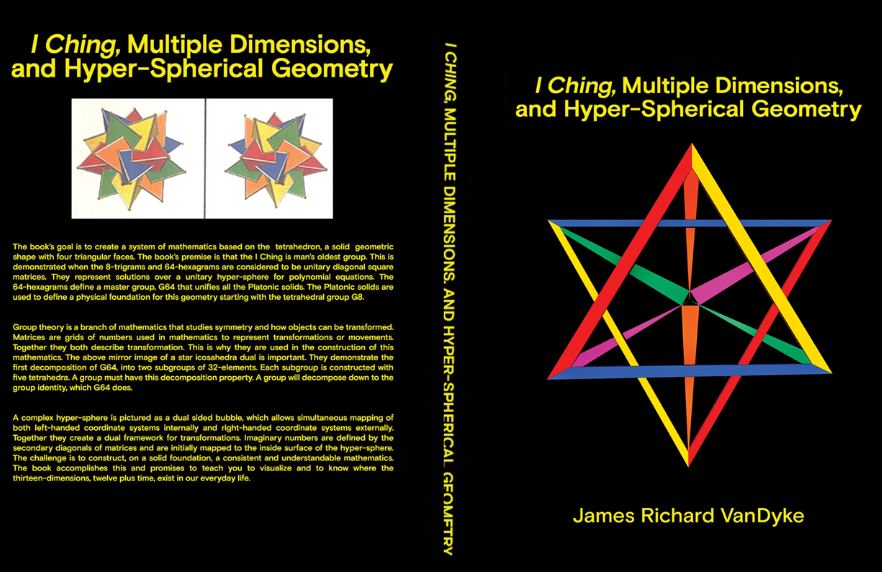
" I Ching, Multiple Dimensions, and Hyper-Spherical Geometry" presents a bold and original perspective on the nature of reality, weaving together threads from neuroscience, quantum physics, and ancient philosophy. At a time when science is delving into the mysteries of consciousness, entanglement, and multidimensional space, this work proposes that the mind itself is deeply intertwined with the universe's geometry. The book offers a vision that is at once intellectually rigorous and profoundly inspiring, challenging conventional notions of reality, perception, and human experience.
At the heart of the author’s exploration is the idea that consciousness is not merely a product of the brain, but a fundamental aspect of a multidimensional geometric framework underlying the universe. Drawing upon advanced concepts in quantum mechanics, the book suggests that thoughts, intentions, and awareness are not confined to three-dimensional space. Instead, they exist within higher-dimensional structures that mirror the spatial symmetries and patterns found throughout nature. This insight reframes age-old philosophical questions, proposing that human cognition is intimately connected to the structure of reality itself.
One of the most compelling features of the book is its innovative use of geometry to model consciousness. By mapping mental processes onto multidimensional shapes, the author demonstrates how cognitive phenomena such as intuition, creativity, and insight can emerge naturally from these spatial patterns. These geometric models provide a striking way to visualize the unseen processes of the mind, offering both scientists and philosophers a framework to explore consciousness in a measurable and meaningful way. The work also bridges this modern scientific perspective with ancient symbolic systems, revealing surprising parallels with mandalas, sacred geometry, and even the I Ching. These connections suggest that civilizations long ago intuitively grasped principles of symmetry and multidimensionality that modern science is only beginning to formalize.
Quantum mechanics plays a central role in this exploration. The book carefully explains how the indeterminacy, entanglement, and superposition of quantum states are mirrored in consciousness, suggesting a deep resonance between the physics of the cosmos and the workings of the mind. In this model, thought is not a passive reflection of reality but an active participant in shaping it. By aligning mental patterns with the geometric architecture of the universe, the author proposes that consciousness can interact with physical and non-physical dimensions in profound ways. This idea challenges traditional scientific boundaries and opens the door to entirely new approaches to understanding human potential and the nature of reality.
What makes “ I Ching, Multiple Dimensions, and Hyper-Spherical Geometry” particularly striking is its synthesis of science and philosophy without subordinating one to the other. The book does not attempt to claim that quantum physics explains spirituality, nor that spiritual traditions replace the rigor of mathematics. Instead, it presents a unifying vision in which both language systems—scientific and symbolic—describe the same underlying truths. Ancient symbols, geometric forms, and sacred structures are shown to encode deep mathematical and physical principles, revealing that the universe is far more orderly, symmetrical, and multidimensional than we typically imagine.
The author's personal journey also adds a profoundly human dimension to the work. From early encounters with meditation and altered states of consciousness to formal study in physics and mathematics, the author's quest to understand mind and matter infuses the narrative with authenticity and passion. The book shares moments of insight and revelation, demonstrating how curiosity, disciplined inquiry, and open-minded exploration can converge to produce transformative understanding. This combination of rigorous scholarship and lived experience makes the work both accessible and intellectually compelling.
“ I Ching, Multiple Dimensions, and Hyper-Spherical Geometry” is more than a theoretical treatise—it is an invitation to rethink the boundaries of knowledge. Readers are encouraged to consider the universe as an interconnected, multidimensional system in which consciousness, geometry, and physical law are inseparable. Imaginary numbers, higher-dimensional shapes, and symbolic systems are reframed not as abstract curiosities, but as essential elements of reality. The book inspires a vision of the cosmos in which the human mind is both participant and observer, capable of navigating a landscape defined by symmetry, order, and hidden dimensions.
For anyone intrigued by the mysteries of mind, matter, and the hidden structures of existence, this book offers a bold and inspiring path forward. It challenges us to expand our thinking, explore new conceptual territories, and recognize the profound connections between science, philosophy, and consciousness. With its combination of cutting-edge theory, ancient wisdom, and personal insight, “ I Ching, Multiple Dimensions, and Hyper-Spherical Geometry” stands as a landmark work that redefines what it means to understand the universe—and our place within it.
I am a Vietnam veteran. My 60 years of combat trauma haven't killed me yet. I found healing through The Headstrong Project’s free, confidential PTSD treatment. Headstrong’s thirty free therapy sessions gave me hope, and I’m donating 50% of my book profits so more veterans can access this life-changing care. Suicide remains a real concern, but with support, veterans can triumph over trauma. My book is about a near-death experience where I learned the mathematics that I present in the book. It brings ancient mathematics into the modern world. Support veterans by buying my book:

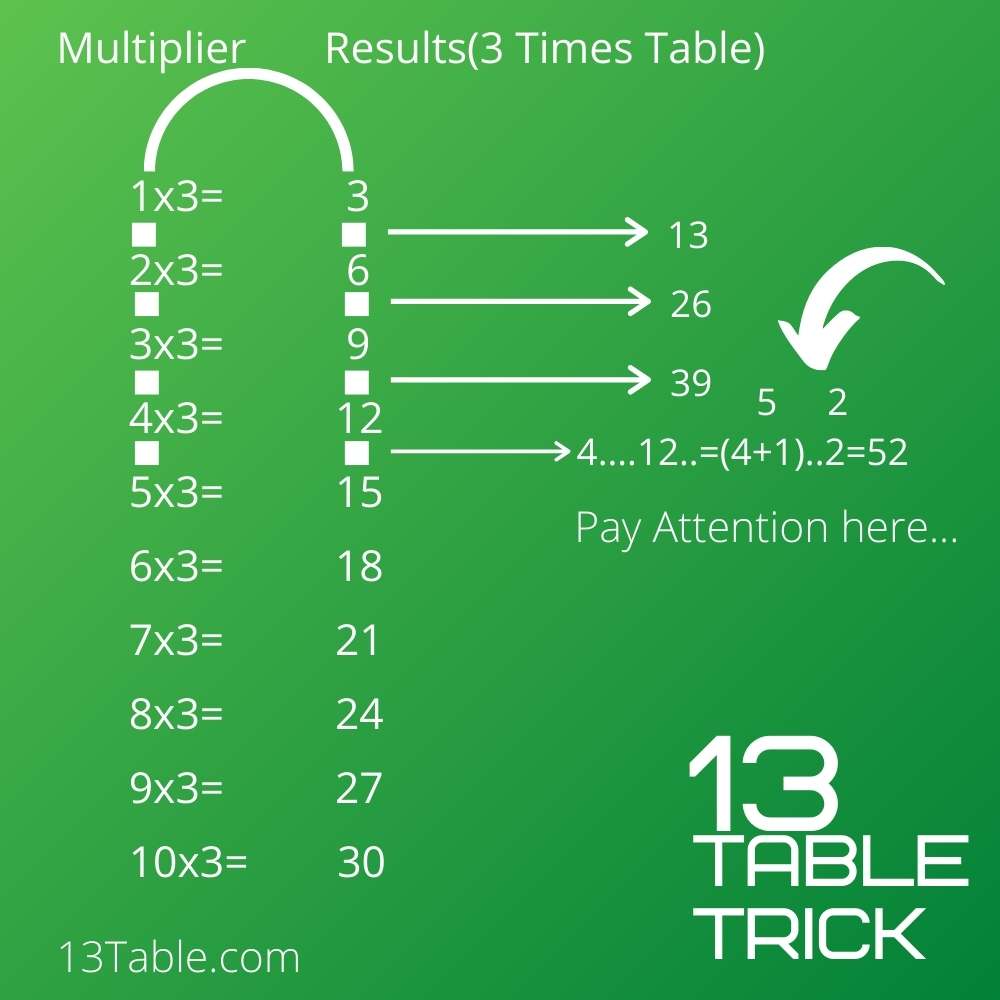
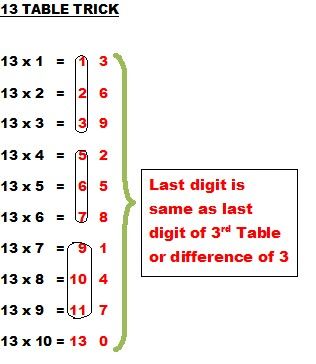
There can be numerous models of the real world, each dependent on math, however they can't all be correct.table of 13 is a cosmology is a valid example.
The expression "yet the science works" signifies literally nothing.
Since math predicts the chance of some sort of design and substance, or some law, relationship or rule that the Cosmos may have, doesn't of need make it so.
A perfect representation where the math worked however the Cosmos didn't come for the ride was the specially appointed heaping on those epicycles upon epicycles to clarify the movement of the planets.
It at last got so clumsy that the child was tossed out with the bathwater and another infant considered, that being that the Earth was simply one more planet and not at the focal point of life, the Universe and everything.
Whenever it was hypothesized that the Earth circumvented the Sun, planetary movement became all-good - numerically into the right spot also.

A Global Research Report on the Additive Manufacturing with Metal Powders Market has been published by Reports and Data to help readers engaged in the industry and new entrants understand the market.
To understand the structure of the market, the report also includes reliable data on local consumption and global consumption.
The report also mentions details about the leading industry players along with information like the company profiles, product offering, and specifications, price, capacity, cost of production, latest technologies, revenue share, contact information, and others.The market report also includes details of the major segments of the Additive Manufacturing with Metal Powders Market.
The report also consists of geographic analysis of the global Additive Manufacturing with Metal Powders market.
The coronavirus pandemic has greatly affected every aspect of the worldwide industry.
The rapidly changing market scenario and the initial and future assessment of the impact are covered in the research report.