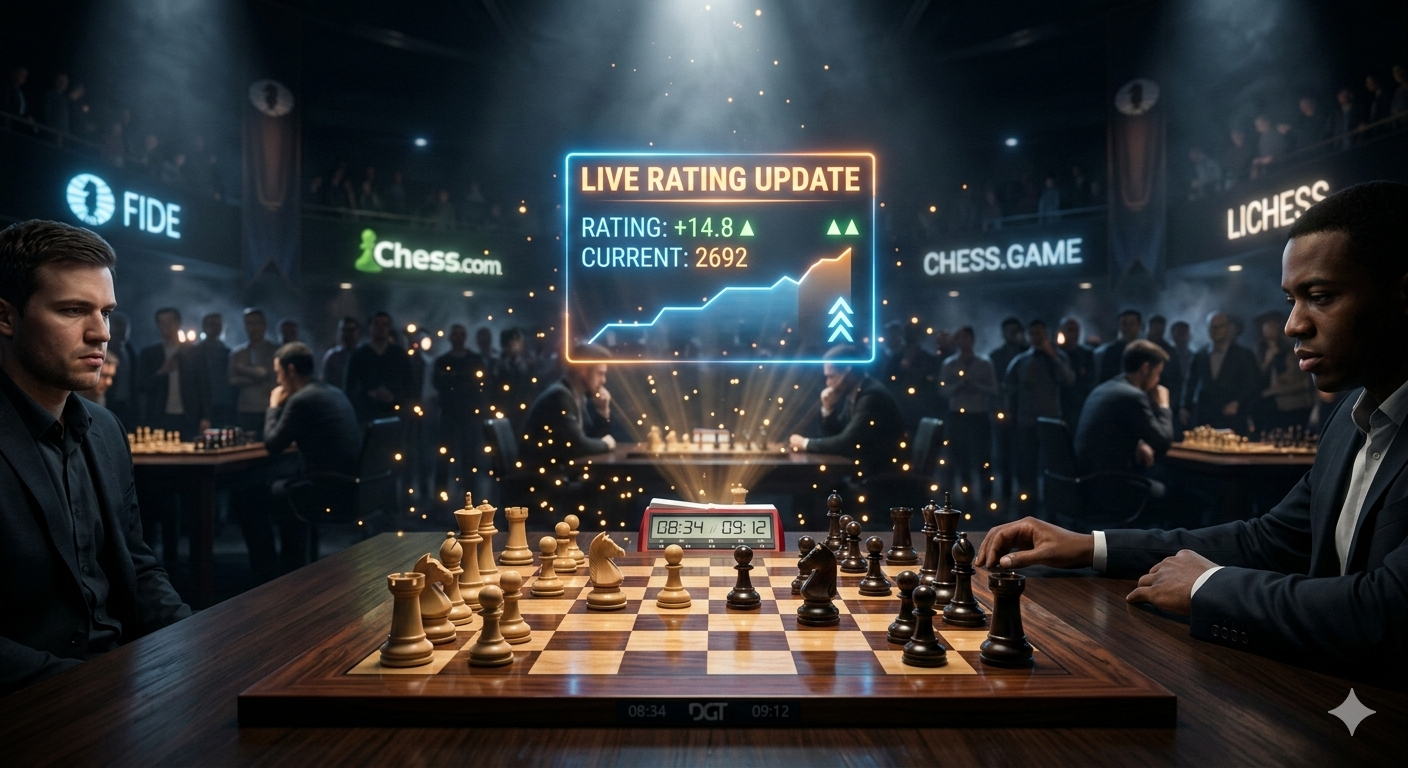
If you’ve been searching for how to improve chess rating fast, you’re definitely not alone. Every ambitious player wants steady progress reflected in their chess rating. Whether you play official tournaments rated by FIDE or compete online on Chess.com, Lichess, or Chess.game, your rating becomes a visible measure of growth.
But real chess improvement doesn’t come from shortcuts or memorizing endless opening lines. It comes from improving your decision-making, reducing mistakes, and training in a structured way. When you follow the right priorities, rating growth becomes much more consistent.
Let’s break it down clearly.
Why Do Most Players Struggle to Improve Their Chess Rating?
Many players searching for how to increase chess rating for beginners put in effort but still feel stuck. They play daily games, consume chess content, and experiment with new openings — yet their rating barely changes.
The core issue is misdirected focus.
The Real Cause of Rating Plateaus
At beginner and club levels, games are rarely decided by deep strategy. Instead, they are decided by recurring practical mistakes such as:
- Hanging pieces in one move
- Missing simple tactical combinations
- Ignoring opponent threats
- Rushing moves under time pressure
If your goal is truly how to improve chess rating fast, you must start identifying patterns in your losses. After each defeat, ask yourself where the position changed significantly. Most of the time, it won’t be due to opening theory — it will be a tactical oversight.
Even elite players like Magnus Carlsen rely heavily on strong fundamentals. Their strength lies in consistency and accuracy rather than flashy tricks.
Improvement begins when you fix recurring errors instead of changing openings repeatedly.
How Can You Reduce Blunders and Improve Chess Rating Quickly?

If you want the best way to improve chess rating quickly, reducing blunders should be your number one priority. At amateur levels, eliminating just one major mistake per game can dramatically change your results.
The 3-Second Safety Habit
Before every move, pause briefly and scan the position carefully. This quick routine helps prevent careless errors.
Your mental checklist should include:
- What is my opponent threatening?
- Are any of my pieces undefended?
- Does my move allow checks or captures?
This simple habit builds stability into your play. Strong players consistently apply this thinking process.
If you play online chess game regularly on Chess.com, Lichess, or Chess.game, applying this safety check alone can noticeably improve your performance within weeks.
Why This Leads to Fast Chess Improvement
Consistency wins games at club level. When you reduce obvious blunders, your results become steady rather than unpredictable. That stability directly increases your chess rating.
If you’re serious about learning how to improve chess rating fast, mastering this simple pause rule is one of the fastest improvements you can make.
What Is the Best Way to Improve Chess Rating Quickly?
When players ask for the best way to improve chess rating quickly, the answer comes down to correct training priorities. For most players, improvement should follow this order:
- Tactics
- Endgames
- Chess Openings
This structure ensures maximum rating gain for the time invested.
1. Tactics: The Foundation of Chess Improvement
Tactics decide the majority of games below master level. Forks, pins, skewers, discovered attacks, and mating patterns appear constantly in real games.
Attacking legends like Mikhail Tal and Garry Kasparov became famous because of their tactical awareness. While you don’t need their aggressive style, you must build strong pattern recognition.
A simple tactical training routine includes:
- Solving puzzles daily
- Calculating variations fully before moving
- Reviewing incorrect solutions
- Gradually increasing difficulty
Daily tactical practice is one of the most reliable answers to how to increase chess rating for beginners.
Over time, you’ll begin spotting combinations faster during real games, which directly leads to better results.
2. Endgames: The Hidden Rating Booster
Endgames are often ignored, but they provide a major competitive advantage. Strong endgame knowledge allows you to convert small advantages and defend difficult positions confidently.
Champions like Anatoly Karpov and Magnus Carlsen built their reputations on precise technique in simplified positions.
Instead of studying rare theoretical positions, focus on essential foundations such as:
- King and pawn vs king fundamentals
- Opposition and triangulation
- Basic rook endings
- Fundamental checkmate techniques
Mastering these positions strengthens your overall chess improvement and gives you confidence in simplified games.
3. Openings: Keep Them Simple and Practical
Openings matter, but they should not dominate your training time. If you’re trying to learn how to get better at chess so you can increase your rating, focus on principles instead of memorization.
Strong opening play is built on understanding:
- Control of the center
- Efficient piece development
- King safety
- Healthy pawn structure
Choose one reliable system as White and one or two consistent defenses as Black. Familiar positions reduce confusion and improve middlegame confidence.
Whether you compete on Chess.com, Lichess, or Chess.game, keeping your opening repertoire simple will improve consistency and support faster rating growth.
How Should You Practice for Long-Term Chess Improvement?

Playing games is necessary, but structured analysis is what produces lasting results.
After each serious game:
- Review it without an engine first
- Identify the critical turning point
- Understand what you calculated during key moments
- Then verify with computer analysis
Also, prioritize longer time controls such as 10+5 or 15+10 when training. Blitz games on Chess.game or other platforms are entertaining, but rapid formats build stronger habits and deeper calculation skills.
Consistency in training matters more than intensity.
How Long Does It Take to Improve Your Chess Rating?
Improvement speed varies, but beginners often see noticeable growth once they properly understand how to increase chess rating for beginners — mainly by reducing blunders and strengthening tactical awareness.
As your rating climbs, progress becomes slower because mistakes become subtler. However, the formula never changes. Strong fundamentals always produce stronger results.
Conclusion: The Real Path to Fast Chess Improvement
If you truly want to master how to improve chess rating fast, focus on fundamentals instead of shortcuts. The best way to improve chess rating quickly is clear:
- Reduce blunders
- Train tactics consistently
- Strengthen endgame knowledge
- Keep openings simple
- Analyze your games honestly
Your chess rating reflects your decision-making quality. Improve your habits while playing on Chess.com, Lichess, and Chess.game, and steady chess improvement becomes inevitable.
There’s no magic trick — only disciplined practice and structured effort. Follow the process, and your rating will rise naturally.