





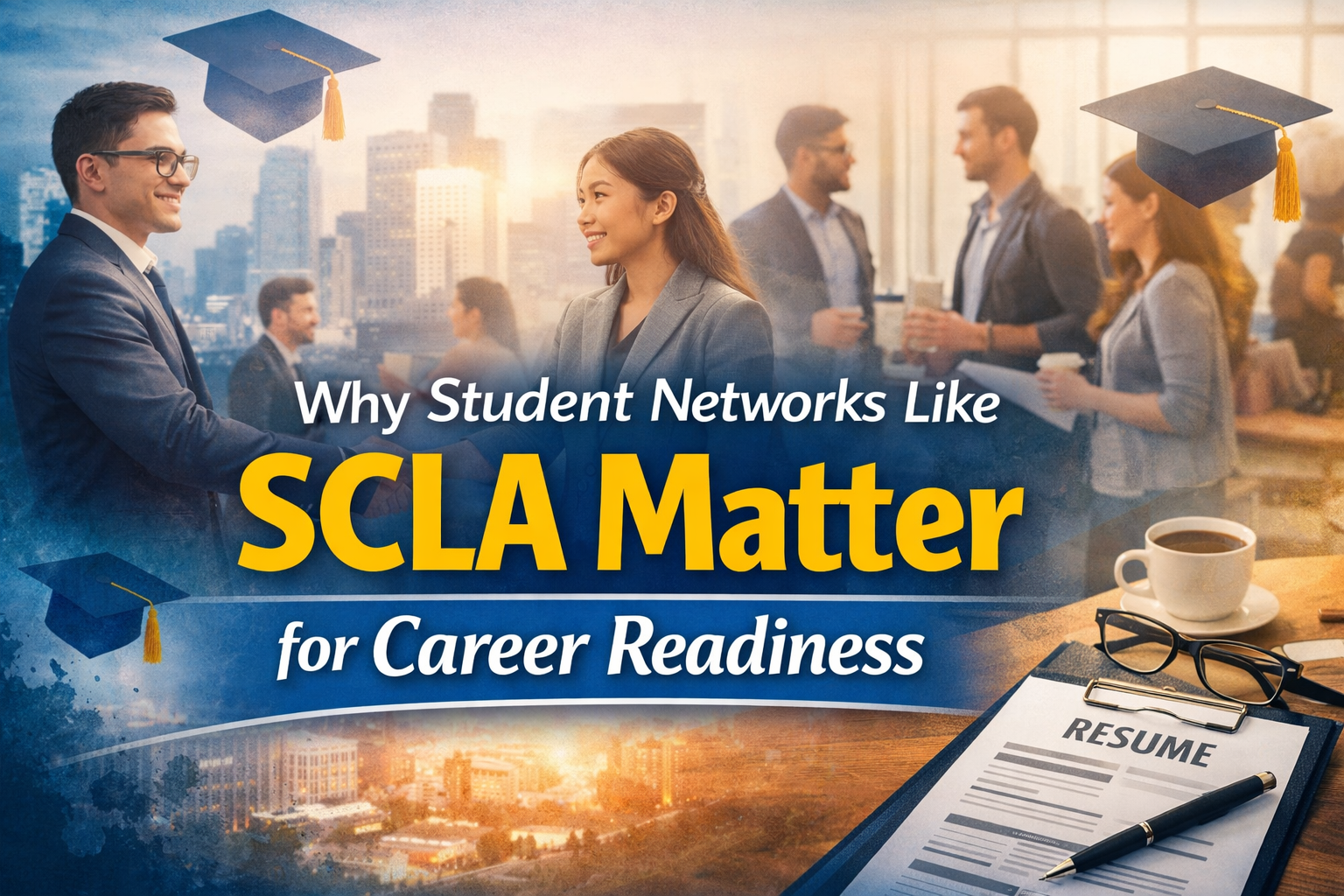
Bridging the Gap Between Academics and the Professional World
For many students, academic success does not automatically translate into career readiness. While classrooms provide theoretical knowledge, professional environments demand communication skills, leadership abilities, adaptability, and practical experience. Student networks like SCLA play an important role in closing this gap by creating opportunities that connect academic learning with real-world expectations. Through structured programs and collaborative environments, students gain exposure to professional standards long before they enter the workforce.
Student networks encourage individuals to apply what they learn in meaningful ways. Whether through leadership activities, peer collaboration, or guided development programs, students begin to understand how knowledge functions beyond exams and assignments. This early exposure helps them develop confidence and clarity about their future career paths.
Building Essential Professional Skills
Career readiness depends heavily on skills that are often developed outside traditional coursework. Communication, teamwork, problem-solving, and time management are qualities employers consistently value. Student communities such as SCLA provide a space where these competencies can grow naturally through participation and engagement.
By organizing events, working on group initiatives, or contributing to student-led discussions, members practice responsibility and collaboration. These experiences help students learn how to express ideas clearly, manage commitments, and work with diverse perspectives. Over time, such involvement strengthens both personal and professional growth, preparing students to adapt to workplace environments.
Expanding Professional Networks Early
Networking is often associated with experienced professionals, but building connections during student years can be equally valuable. Student networks create environments where individuals interact with peers, mentors, and professionals who share similar goals. These connections can lead to mentorship opportunities, career guidance, and exposure to different industries.
Early networking also helps students understand professional expectations and emerging career trends. Conversations within these communities often provide insights that are not found in textbooks, helping students make informed decisions about internships, specializations, and long-term goals. A strong network built during college can continue to support career growth well after graduation.
Encouraging Leadership and Initiative
Leadership development is another key element of career preparation. Student organizations give members opportunities to take initiative, manage projects, and contribute to community goals. Even small leadership roles can help students develop decision-making skills and accountability.
Participating in leadership activities allows students to experience challenges in a supportive environment. They learn how to organize tasks, motivate teams, and handle responsibilities—skills that translate directly into professional settings. These experiences also help students discover their strengths and areas for improvement, encouraging continuous self-development.
Supporting Confidence and Career Direction
Many students struggle with uncertainty about their career paths. Student networks offer guidance through shared experiences, discussions, and developmental resources that help individuals better understand their interests and abilities. Exposure to different perspectives often inspires students to explore new opportunities and refine their goals.
Confidence grows when students feel supported by a community that values growth and achievement. By participating in programs focused on development and recognition, students begin to see themselves as capable contributors to their future professions.
Preparing Students for Long-Term Success
Career readiness is not achieved through academic achievement alone; it is shaped by experience, relationships, and personal growth. Student networks like SCLA contribute to this preparation by combining learning, leadership, and community engagement. They help students transition from learners to professionals by providing practical experiences that complement education.
As industries continue to evolve, students who actively engage in supportive networks are better prepared to face professional challenges. Through skill development, networking, and leadership opportunities, student communities play a meaningful role in shaping confident, capable, and career-ready graduates.



As an investor, you already know that some investment opportunities succeed while many fail.
Are there common causes that turn a deal sour?
Are there “deal killers” that prospective investors tend to overlook?Taking it one step further, what should investors look for in the investment firm that offers these deals?
We put these and related questions to Paul Daneshrad, CEO of StarPoint Properties, the billion-dollar investment firm located in California but serving a nationwide market.
Daneshrad is a recognized expert and pre-eminent thought leader in commercial real estate investment.To know more visit: https://www.econotimes.com/Paul-Daneshrad-on-Why-Details-Matter-The-Success-Failure-Differential-1600115

Why do search ad extensions matter by using extensions, you can display pertinent information that helps users figure out if what you offer is aligned with their needs and interests.
Why do search ad extensions matter your CTR is one of the main metrics you should focus optimizing ads.Our goal in this blog is to explain what a Pareto chart is, why it is useful to manufacturers, and how it is used in manufacturing analysis to help identify and fix problems at the factory.
We will also use a specific example of a SensrTrx dashboard to show how you can use data collected from a bottling line to find bottlenecks.The cumulative line on the Pareto chart runs diagonally down through the chart.
It is used to add the percentage values of each bar, starting with the top bar.
This allows us to see which values bring the most impressions, and also how much of the total contribution it represents down the road.