

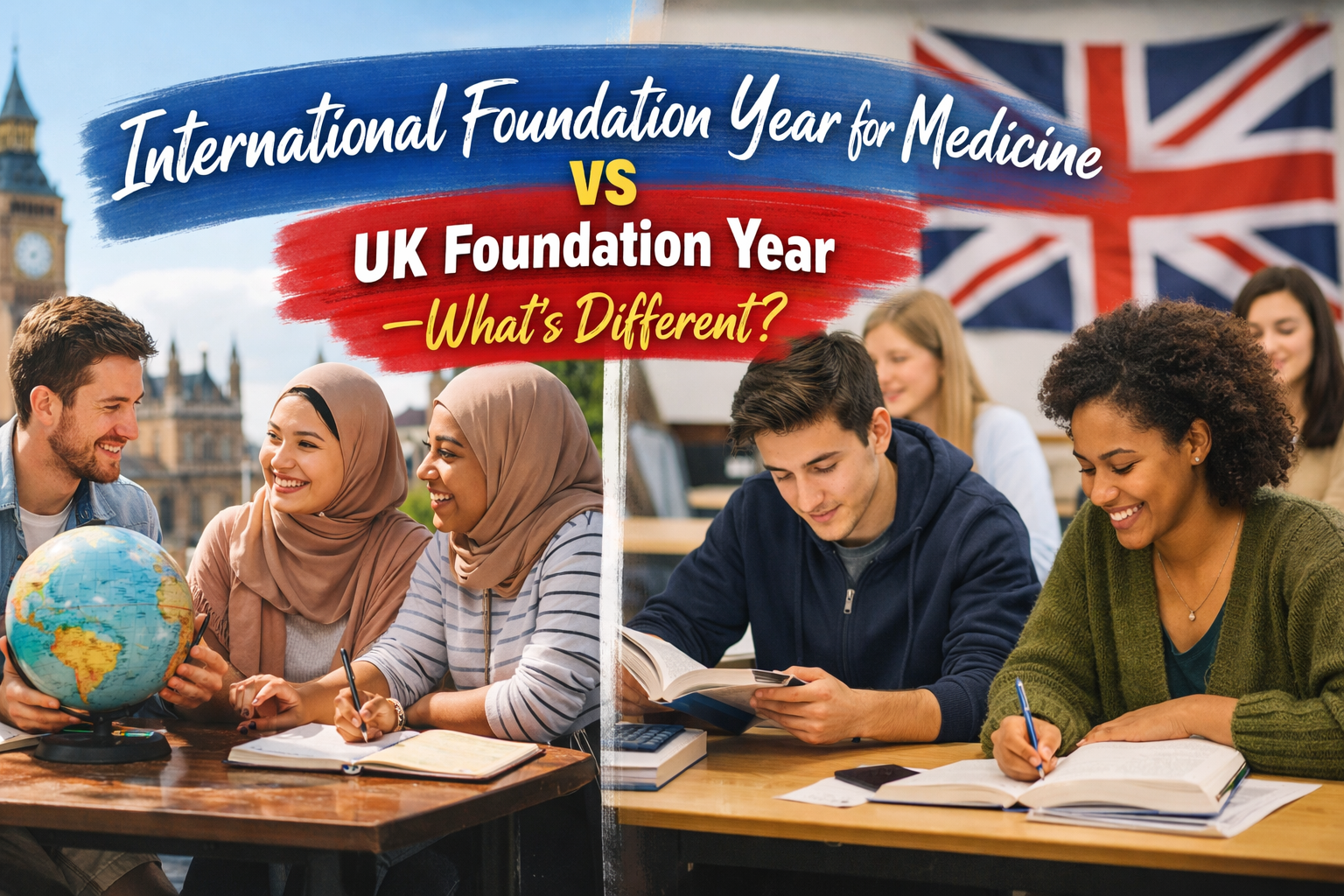
The journey to becoming a doctor is a long and demanding one. For many students, an important first step is completing a medicine with foundation year course. Foundation years are designed to help students who may not meet the traditional entry requirements for medical school. There are two main types of foundation years: the UK foundation year and the international foundation year. Both serve similar purposes, but the routes differ in key areas like eligibility, structure, and entry requirements. This article will compare these two options, explaining their differences and helping prospective medical students decide which is best for them.
What Is a Foundation Year in Medicine?
A foundation year in medicine is a preparatory program designed for students who wish to study medicine but do not meet the entry requirements for direct admission into medical school. This course is often seen as a stepping stone that provides essential knowledge and skills, preparing students for the challenges of medical school. Typically, it includes a mix of science subjects, medical knowledge, and practical skills.
The foundation year serves as a bridge for students who may have non-traditional backgrounds or who need additional support to meet the academic standards of medical degrees. By completing this year, students are given the opportunity to progress to the main medical degree course, usually taking an additional five years of study.
Understanding the Two Key Pathways
There are two primary pathways to consider: the UK foundation year and the international foundation year. Each pathway has its own structure and set of requirements.
The UK foundation year is mainly designed for students from the UK who may not have the necessary qualifications to enter medical school directly. The international foundation year, on the other hand, is tailored for students from overseas whose qualifications don’t align with UK standards. Let’s break these down further.
UK Foundation Year
The UK foundation year is often called the Gateway to Medicine or Access to Medicine. It is available at a number of UK universities and is specifically aimed at students who want to pursue a medical degree but have not met the standard entry requirements.
Students who undertake a UK foundation year generally progress directly into a five-year medical degree upon successful completion of the foundation year. The program includes subjects like biology, chemistry, and physics, with a particular focus on subjects relevant to medicine. The goal is to bring students to the level needed to succeed in medical school.
One of the advantages of the UK foundation year is that it guarantees progression to the medical degree, provided students meet the required academic standards. In other words, students do not need to apply separately to medical schools after completing the foundation year, making the process more straightforward.
International Foundation Year
The international foundation year is specifically designed for students who come from educational systems that do not align with UK entry requirements. This course acts as a bridging program to help students gain the knowledge and skills required to study medicine in the UK.
Unlike the UK foundation year, which often guarantees progression into medical school, the international foundation year usually requires students to apply separately for the medical degree. Although completing the foundation year provides students with the necessary preparation, it does not automatically secure a place on a medical degree program.
The international foundation year typically includes a curriculum that covers science subjects such as biology, chemistry, and physics, alongside English language support and academic writing skills. Students will also receive training in adapting to the UK education system, as this can differ significantly from their home countries.
Key Differences Explained
While both foundation years are designed to help students prepare for medical school, there are notable differences between the UK and international foundation years. Understanding these differences is crucial for choosing the right path.
Admission Criteria
The UK foundation year is generally only available to domestic students or those who meet the criteria for widening participation programs. The entry requirements are typically lower than for direct entry to medical school but still demand strong GCSE and A-Level results.
On the other hand, the international foundation year is open to students from overseas who may not have the qualifications needed to apply directly for UK medical schools. The entry requirements for international students are often based on their secondary school qualifications and English language proficiency.
Progression to Medical School
A major difference lies in the progression to medical school. With the UK foundation year, students usually progress automatically into the medical degree, provided they pass the foundation year with satisfactory grades. However, the international foundation year typically requires students to submit a separate application to medical schools after completing the program. This adds an extra layer of complexity and uncertainty for international students.
Language Support
Students entering the international foundation year often come from non-English speaking countries. As a result, the program includes more robust language support, with students receiving English lessons and training in academic writing. This is not typically a focus in the UK foundation year, as students are expected to already have a strong command of the English language.
Program Structure and Content
The UK foundation year focuses more on helping students catch up with the science subjects that are necessary for medical school. In contrast, the international foundation year also includes significant elements of cultural and academic adjustment, helping students acclimatize to the UK educational system.
Who Should Choose Which Pathway?
Choosing the right foundation year depends largely on your background, qualifications, and future goals.
UK Foundation Year
This is the ideal path for students from the UK who want to pursue a medical career but don’t meet the entry requirements for medical school. It is also suitable for students from the UK who have non-traditional qualifications or who want to enhance their academic standing before starting their medical degree.
International Foundation Year
If you are an international student and your qualifications do not align with UK entry standards, the international foundation year is likely your best option. This pathway is perfect for students from overseas who want to study medicine in the UK but need additional support in areas such as English language, science subjects, and UK academic culture.
Pros and Cons of Each Pathway
Each pathway has its own advantages and disadvantages.
UK Foundation Year
Pros
- Direct progression into medical school
- Support for widening access students
- No need to reapply to medical school
Cons
- Limited availability to domestic students
- Competitive entry requirements
International Foundation Year
Pros
- Designed for students from overseas
- Provides necessary academic and language support
- Can lead to medical study in the UK
Cons
- Does not guarantee automatic entry into medical school
- Requires a separate application to medical school after completion
Conclusion
Choosing between the UK foundation year and the international foundation year depends on your background, qualifications, and future goals. The UK foundation year is ideal for domestic students who want a clear route into medical school, while the international foundation year is tailored for students from overseas who need extra support in adjusting to the UK education system. By understanding the differences and weighing the pros and cons, you can make an informed decision about which pathway is right for you.




On Wednesday April 3rd, Roy Miller III visited his hometown killeen Texas to do some work for his foundation The Accumulative Advantage Foundation.
Miller and his foundation hosts a quarterly bbq meeting to discuss the Camp and combine he hosts in Killeen which is going into its 10th year.
While in town Miller donated $1,000 dollars to the Kids University facilities putting his stamp of support to it’s after school program.
“When i was in Killeen there wasn’t much us kids could do so many kids of us got into trouble or sports.
I would like to provide an opportunity to others like football provides for me.
I have been busy playing football for the last 13 years of my life, at this point it is all about the next generation.” Miller plans to make donations in the near future to his community.