

Accurate coding is one of the most critical components of healthcare revenue cycle management. Even small coding errors can lead to claim denials, delayed reimbursements, or compliance issues. This is why healthcare providers increasingly rely on certified professionals who specialize in Medical Coding Services to ensure accuracy and efficiency in the billing process.
Certified coders bring specialized knowledge of coding standards, regulatory requirements, and payer guidelines. Their expertise helps healthcare practices maintain compliance while maximizing reimbursement opportunities. As healthcare systems grow more complex in 2026, the role of certified coding professionals has become more valuable than ever.
Understanding Medical Coding in Healthcare
Medical coding is the process of translating clinical documentation into standardized codes used for billing and insurance claims. These codes represent diagnoses, procedures, and services performed during patient care.
Healthcare providers rely on several coding systems, including:
ICD-10 for diagnosis coding
CPT for medical procedures and services
HCPCS for additional healthcare services and supplies
Accurate coding ensures that insurance companies clearly understand the services provided and can determine appropriate reimbursement.
Why Certification Matters in Medical Coding
Certification demonstrates that a coding professional has the training and knowledge required to apply coding standards accurately. Certified coders undergo rigorous examinations and continuing education to maintain their credentials.
Common coding certifications include:
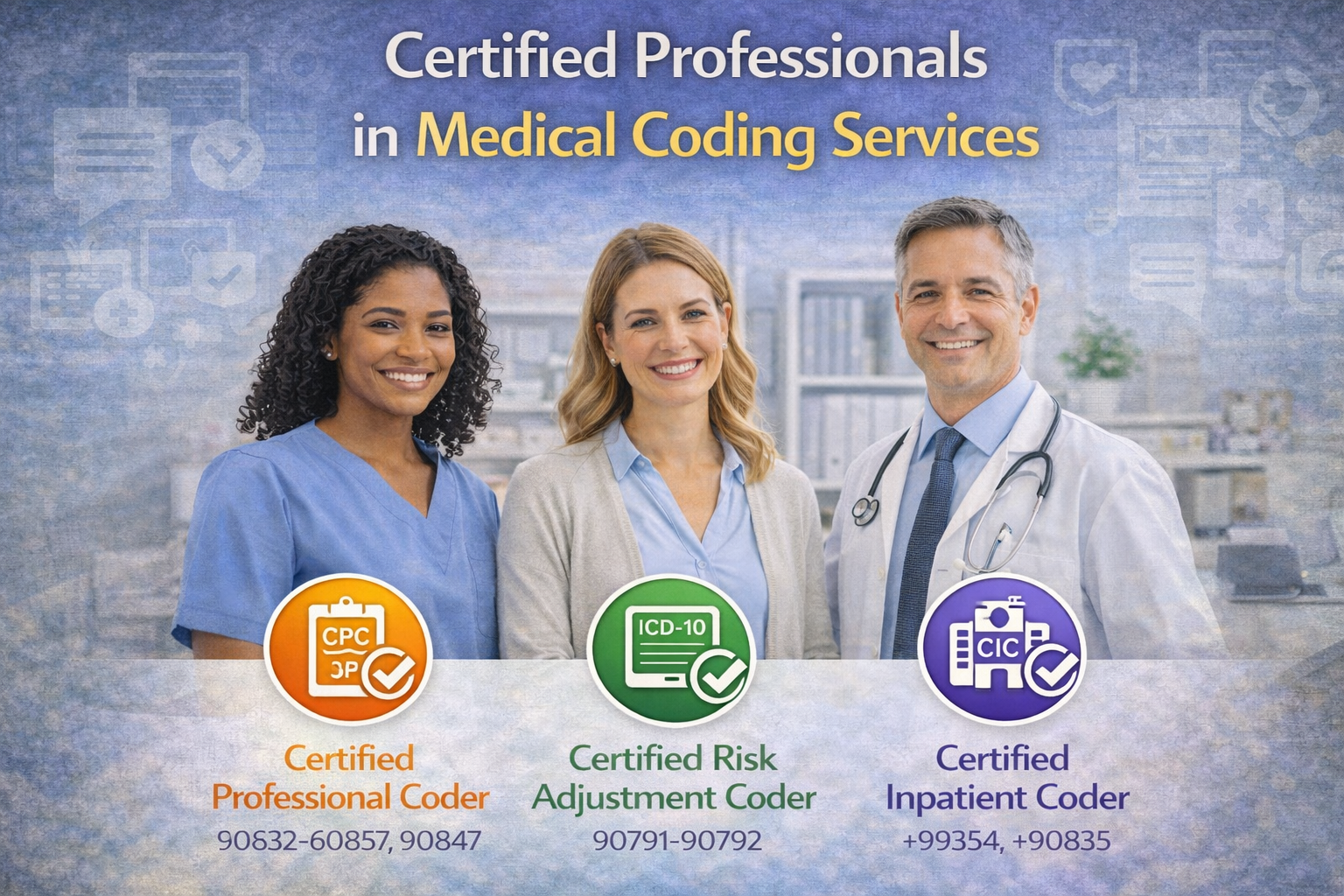
Certified Professional Coder (CPC)
Certified Coding Specialist (CCS)
Certified Inpatient Coder (CIC)
Certified Outpatient Coder (COC)
These credentials verify that the coder understands complex coding guidelines, compliance regulations, and payer requirements.
Improving Claim Accuracy
One of the most significant benefits of working with certified coding professionals is improved claim accuracy. Certified coders review medical documentation carefully to ensure that:
Diagnosis codes match patient conditions
Procedure codes accurately reflect services performed
Modifiers are used correctly
Documentation supports medical necessity
When claims are coded correctly the first time, practices experience fewer rejections and faster reimbursement.
Reducing Claim Denials
Claim denials are often the result of coding mistakes or incomplete documentation. Certified coding professionals help minimize these problems by reviewing records and identifying potential issues before claims are submitted.
Their expertise helps prevent:
Incorrect code selection
Missing modifiers
Inconsistent diagnosis and procedure codes
Billing for unsupported services
Reducing denials saves time and improves overall revenue cycle efficiency.
Supporting Compliance and Regulatory Standards
Healthcare billing must comply with strict regulations and payer guidelines. Certified coders are trained to follow industry standards and maintain accurate coding practices.
Their responsibilities often include:
Monitoring coding updates and policy changes
Ensuring documentation supports billed services
Maintaining audit-ready records
Identifying potential compliance risks
By maintaining compliance, practices reduce the likelihood of audits, penalties, or legal complications.
Enhancing Revenue Cycle Performance
Professional Medical Coding Services play a key role in strengthening the entire revenue cycle. Accurate coding ensures that claims reflect the full scope of services provided, preventing underbilling or missed reimbursement opportunities.
When coding processes are optimized, practices benefit from:
Higher clean claim rates
Faster payment processing
Improved financial predictability
Reduced administrative rework
These improvements contribute directly to the financial health of healthcare organizations.
Managing Complex Medical Specialties
Certain specialties require particularly detailed coding knowledge. Fields such as cardiology, orthopedics, mental health, and geriatrics often involve complicated procedures and documentation requirements.
Certified coding professionals understand these complexities and apply the correct codes for specialized services. Their expertise helps ensure that even complex procedures are billed accurately and in compliance with payer guidelines.
Staying Updated With Coding Changes
Medical coding standards change regularly. Updates to ICD-10 codes, CPT guidelines, and payer policies occur each year, requiring continuous education for coding professionals.
Certified coders stay informed through:
Continuing education programs
Industry conferences and training
Professional certification renewal requirements
Staying current with coding updates ensures that healthcare providers remain compliant and avoid outdated billing practices.
Reducing Administrative Burden
Accurate coding requires careful attention to detail and extensive knowledge of billing regulations. For many healthcare providers, managing this process internally can place a heavy burden on staff.
By relying on professional coding support, practices can:
Reduce administrative workload
Minimize coding errors
Improve operational efficiency
Allow clinical staff to focus on patient care
This shift allows healthcare organizations to operate more effectively while maintaining accurate billing processes.
Improving Documentation Quality
Certified coders often collaborate with providers to improve documentation practices. When documentation is clear and complete, coding accuracy improves significantly.
Coders may help providers by:
Identifying missing documentation elements
Clarifying clinical terminology
Ensuring diagnosis details support treatment decisions
Better documentation not only improves billing accuracy but also enhances patient care records.
Strengthening Audit Preparedness
Healthcare audits can occur when payers suspect billing errors or compliance violations. Certified coding professionals help practices remain audit-ready by maintaining proper coding standards and documentation.
Their role includes reviewing coding accuracy, identifying potential issues, and ensuring that claims align with payer policies. This proactive approach helps practices avoid costly penalties and reputational damage.
Long-Term Value for Healthcare Practices
The value of certified coding professionals extends beyond simple code assignment. Their expertise supports compliance, financial stability, and operational efficiency across the entire revenue cycle.
Healthcare providers that invest in professional coding support often experience:
Improved reimbursement rates
Reduced claim denials
Stronger compliance practices
More efficient billing workflows
These long-term benefits contribute to sustainable practice growth.
Conclusion
Certified professionals play an essential role in delivering reliable Medical Coding Services for healthcare organizations. Their specialized knowledge, attention to detail, and commitment to compliance ensure that claims are accurate and supported by proper documentation.
As healthcare regulations and payer requirements continue to evolve, practices benefit greatly from experienced coding support. Partnering with a trusted Medical billing company can further strengthen revenue cycle performance, reduce administrative burdens, and ensure that healthcare providers receive accurate reimbursement for the services they deliver.