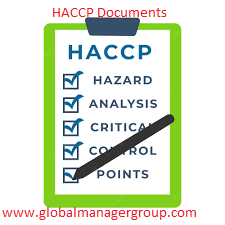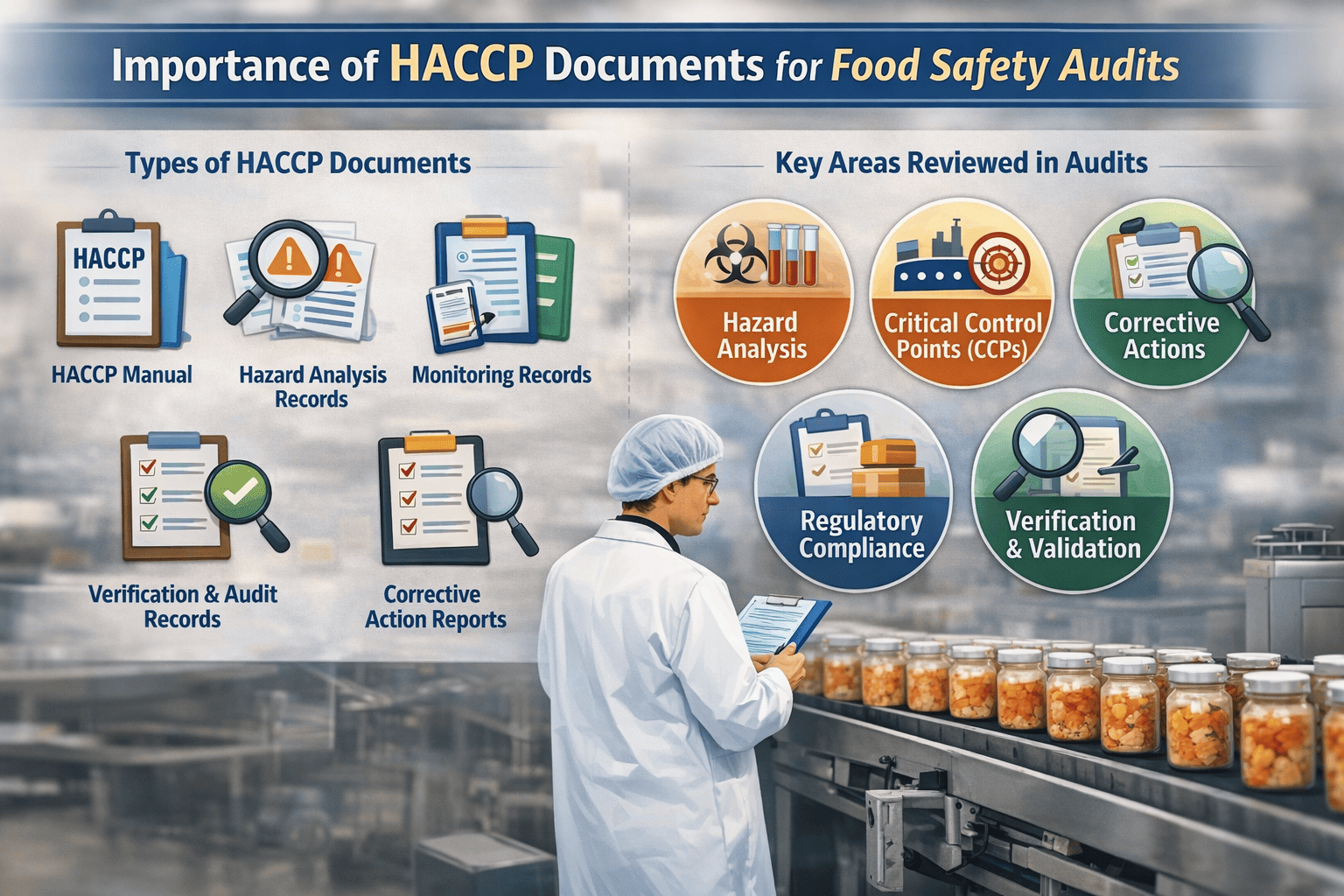
Food safety audits play an important role in ensuring that food manufacturers, processors, exporters, and catering organizations follow proper safety standards. The audits are conducted by certification bodies, regulatory authorities, or internal audit teams to ensure that food safety systems operate effectively. One of the most important elements examined during these audits is documentation. Proper HACCP documents help in ensuring that food hazards are identified, controlled, and monitored during food production.
Role of HACCP Documents in Food Safety Audits
Food safety audits are largely dependent on HACCP documents to assess the effectiveness of an organization’s food safety management systems. The HACCP documents offer clear proof that the identified food safety risks are effectively monitored and controlled in the food production processes.
In an audit process, the HACCP documents are used to assess various aspects, such as:
• Implementation of hazard analysis and risk assessment
• Identification and monitoring of critical control points (CCPs)
• Compliance with established critical limits
• Corrective actions taken
• Verification and validation
In the absence of such documentation, an organization is not in a position to prove that the food safety procedures are being observed.
Types of HACCP Documents Reviewed During Audits
During the audit for food safety, several important HACCP documents are reviewed to ensure that the food safety management system is effectively implemented. These documents provide proof that the identification, control, and monitoring of food safety hazards are effective within the food production process.
HACCP Manual
The HACCP manual is a document that describes the overall structure of the food safety management system. It usually contains information such as the company’s policies, the role of the HACCP team, the product’s description, and the process flow diagram.
Hazard Analysis Records
Hazard analysis records provide information about the biological, chemical, and physical hazards that could occur within the food production process. It also contains information about the measures that the company takes to prevent such hazards.
Monitoring Records
Monitoring logs document measurements taken at critical control points, such as temperature, pH, or time limits. These records confirm that production processes remain within safe limits.
Corrective Action Reports
When monitoring indicates that a critical limit has exceeded, corrective action reports detail what occurred, how it was corrected, and how future problems will be prevented.
Verification and Audit Records
Verification activities, including equipment calibration, internal audits, and system reviews, verify that the HACCP system is continuing to function as expected.
Benefits of HACCP Documentation for Audit Readiness
Keeping HACCP documents in a well-organized manner has several benefits in terms of food safety audit readiness.
The first benefit of HACCP documents is that they ensure transparency in the food production process. This means that the auditors will be able to see the process of identifying, monitoring, and controlling the food hazards.
The second benefit of HACCP documents is that they ensure traceability in the food supply chain. This means that in case of a food safety issue, the affected batches of the products will be easily identified.
The third benefit is that they ensure regulatory compliance. This is because many food safety regulations and standards require that the auditors be able to see the records of the processes that have been put in place.
The fourth benefit of documents is that they ensure that the processes of the company are improved. This is because the records will help the company in identifying the areas that need improvement.
Improvement of Food Safety Systems Through Documentation
It is important to note that food safety documentation is not only a requirement but also a vital component of an effective food safety management system. This ensures that employees adhere to standardized procedures while performing their duties. Furthermore, it ensures that the food safety system remains effective over time.
Well-maintained HACCP documentation also helps organizations demonstrate accountability, protect consumer health, and maintain trust in the food industry.
Conclusion
Food safety audits require reliable evidence that food safety systems are functioning correctly. Properly maintained HACCP documentation provides this evidence by recording hazard analysis, monitoring activities, corrective actions, and verification procedures. These records not only support regulatory compliance but also strengthen operational control and traceability.
For organizations aiming to pass food safety audits and maintain high standards of product safety, maintaining comprehensive HACCP documents is essential for building a reliable and compliant food safety management system.