Kanban has quietly moved from manufacturing floors to Jira boards, from logistics companies to product teams at fintech startups. If you manage work, deadlines, or people in 2026 and haven't yet taken a Kanban Framework Course Online, there's a real possibility your team is slower than it needs to be and you may not be able to see exactly why
From Factory Floors to Software Sprints: Kanban's Real Rise
Most people associate Kanban with sticky notes on a wall. That's a surface-level reading of a much deeper system.
Toyota developed Kanban as a pull-based production model work only moved forward when there was actual capacity to handle it, not just because a schedule said it should. That single idea turned out to be extraordinarily portable. It didn't matter whether the "product" was a car door or a software feature. The underlying problem too much work queued up, not enough visibility, people busy but not productive was the same.
By 2026, Kanban isn't a productivity fad. It's a recognized workflow discipline with formal certifications, global adoption across industries, and a growing body of data showing what it does to delivery speed when implemented properly.
What Is the Kanban Framework and How Does It Work?
Kanban operates on a few core mechanics, none of which are complicated in isolation. The challenge is applying them consistently.
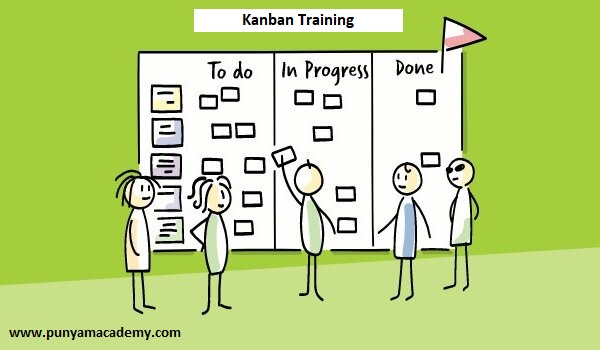
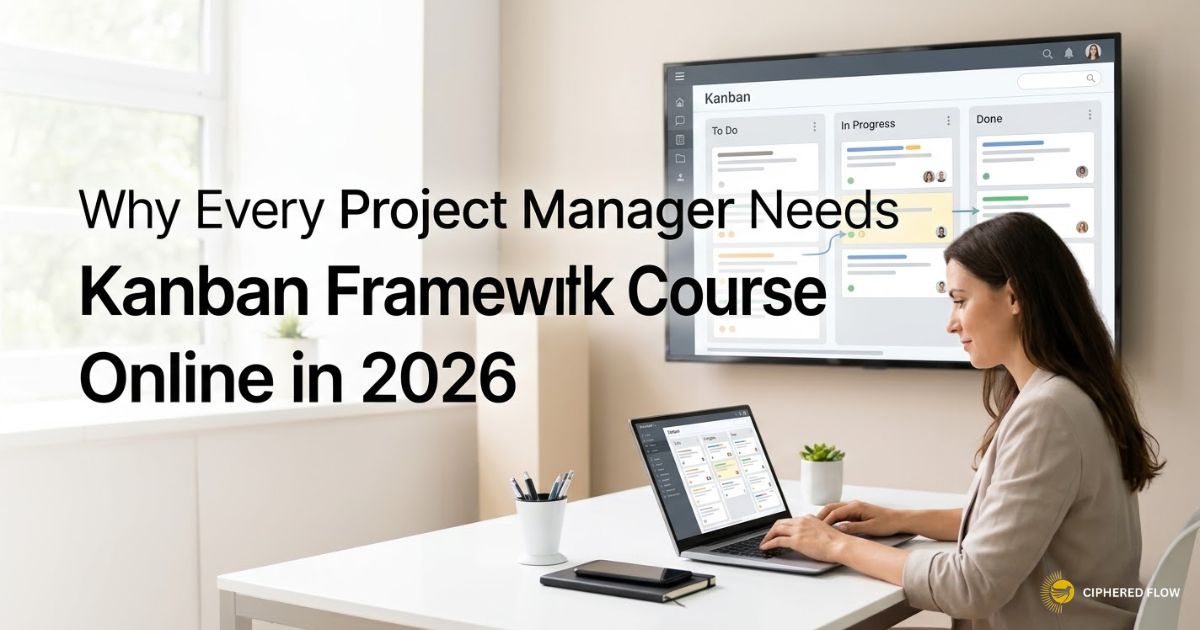
Work items are visualized on a board typically as cards moving through columns like To Do, In Progress, and Done. But the real control mechanism is WIP limits: explicit caps on how much work can be active at any stage. When a column hits its limit, the team stops pulling new work and focuses on finishing what's already moving. This sounds counterintuitive. It works because it forces bottlenecks into the open rather than letting them hide behind busy-looking progress.
Flow metrics cycle time, throughput, cumulative flow turn that visual board into a data-driven system. Teams stop guessing when things will be done and start measuring it.
Kanban vs. Scrum: Key Differences and When to Use Which
This comparison comes up constantly, and the answer is less binary than most people expect.
Scrum runs on fixed time-boxes called sprints usually one to four weeks with defined ceremonies: planning, standup, review, retrospective. Work is committed in batches. Velocity is tracked. It works well when the work is reasonably predictable and the team benefits from rhythm and accountability checkpoints.
Kanban has no fixed iterations. Work flows continuously, pulled through the system as capacity opens up. There's no sprint planning meeting, no velocity commitment. This fits better when work arrives unpredictably support queues, maintenance teams, ops workflows, or any environment where interruptions are routine rather than exceptional.
Some teams run a hybrid, sometimes called Scrumban, borrowing ceremonies from Scrum and flow discipline from Kanban. Neither approach is categorically better. The question is which one fits the type of work your team actually does.
Who Benefits Most From Learning Kanban?
Project managers are the obvious answer. Less obvious: anyone who coordinates work between people, even without a formal PM title.
Product owners dealing with backlog chaos. Engineering leads whose teams are perpetually context-switching. Operations managers running support pipelines. Marketing teams managing content calendars across multiple channels. HR teams handling onboarding workflows. The Kanban framework applies wherever work has stages, handoffs, and the risk of invisible bottlenecks.
Industries where Kanban adoption is accelerating fastest right now include IT services, healthcare operations, e-commerce logistics, and financial services all environments where the cost of delays is measurable and high.
Core Principles Covered in a Kanban Framework Course Online
A well-structured Kanban Framework Course Online doesn't just teach you to draw a board. It covers the reasoning behind each practice:
- Visualizing work not just showing tasks, but making flow, blockers, and dependencies visible at a glance
- Limiting WIP understanding why less concurrent work produces faster delivery, not slower
- Managing flow using cycle time and throughput data to make decisions, not intuitions
- Making policies explicit defining what "done" means at each stage so handoffs stop creating ambiguity
- Feedback loops building cadences for review that don't require everyone in a room at the same time
- Collaborative improvement treating the system as something the team evolves together, not something imposed from above
These aren't abstract concepts. A good course runs them through real scenarios IT backlogs, ops workflows, product roadmaps so they land practically, not theoretically.
How Kanban Reduces Bottlenecks and Improves Team Output
Here's something most teams discover only after implementing Kanban properly: their slowest stage was never where they thought it was.
Without WIP limits, work piles up invisibly. A developer finishes their part and moves on, while code review sits untouched for three days. The board looks active. The delivery is still slow. Kanban surfaces this by making queue depth visible and giving the team a mechanism to act on it pull from upstream, reassign capacity, or restructure the workflow.
Teams that implement Kanban with proper WIP limits consistently report shorter cycle times within the first four to six weeks. Not because people work harder, but because the system stops hiding where time actually goes.
Real-World Kanban Use Cases in IT and Software Teams
A few scenarios where Kanban is particularly effective in practice:
Bug triage and support queues Kanban handles unpredictable inflows far better than sprint-based systems. Issues are pulled when capacity exists, prioritized visibly, and tracked through to resolution without the overhead of sprint ceremonies.
DevOps and release pipelines Continuous delivery environments benefit directly from flow metrics. Teams can see exactly where deployments slow down code review, QA, staging approvals and target improvement efforts precisely.
Cross-functional product work When a feature requires design, engineering, content, and QA in sequence, Kanban boards make handoff delays visible immediately rather than at the end of a sprint retrospective.
What Kanban Certification Adds to Your Resume in 2026
Two certifications carry real weight in hiring conversations: the Team Kanban Practitioner (TKP) for those new to the framework, and the Kanban Management Professional (KMP) for practitioners ready to lead implementation at an organizational level.
Neither is a box-ticking exercise. Hiring managers in IT project management and Agile delivery roles now look for evidence that candidates understand flow-based systems, not just task tracking. A Kanban certification, backed by practical application, signals that you can diagnose delivery problems instead of just reporting them.
How to Get Started With a Kanban Framework Course Online
The right starting point is a course that teaches Kanban as a system, not a tool. Learning to set up a Jira board is not the same as understanding why WIP limits work or how to read a cumulative flow diagram.
A Kanban Framework Course Online through a platform like Ciphered Flow connects the theory to real team scenarios, which is where the learning actually sticks. If you manage any kind of work projects, products, support, operations understanding Kanban in 2026 isn't optional.
Visit Our Website - https://cipheredflow.com/courses/kanban-framework/