





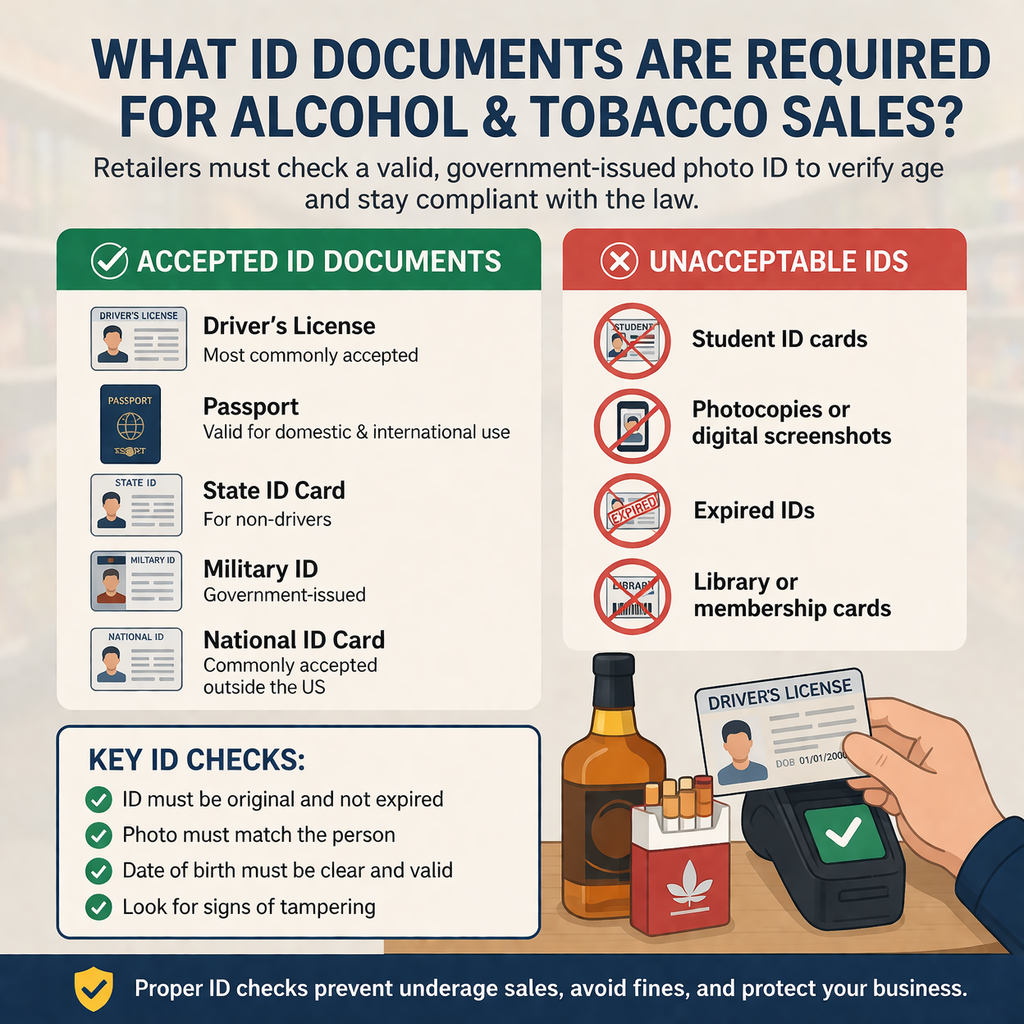
Selling alcohol and tobacco comes with strict legal rules. One of the most important steps is checking valid identification. Businesses must verify age before completing a sale. This helps prevent underage access and keeps the business safe from fines.
In this guide, you will learn about the ID documents required for alcohol and tobacco sales, accepted ID types, and how to stay compliant. The goal is to make the process simple and clear for retailers, staff, and managers.
Why ID Verification Matters in Age-Restricted Sales?
Age verification is not just a formality. It is a legal duty.
Many countries and states require retailers to check ID for anyone who looks under a certain age. In the United States, for example, the legal age is 21. In India, it varies by state but is usually 18 to 25.
Key reasons to verify ID:
- Prevent underage sales
- Avoid legal fines and penalties
- Protect business reputation
- Ensure staff accountability
According to the CDC, underage drinking causes thousands of deaths each year. This shows why strict ID checks are important.
ID Documents Required for Alcohol and Tobacco Sales
Retailers must accept only valid and government-approved IDs. These IDs must include a photo, date of birth, and security features.
Accepted ID Documents
Here is a simple table to understand the most common acceptable IDs:
- Driver’s License: Government-issued and the most commonly used ID for age verification
- Passport: Government-issued and valid worldwide
- State ID Card: Issued by the government for non-drivers
- Military ID: Government-issued and accepted in many regions
- National ID Card: Commonly used outside the United States for identification
Important Checks:
- ID must not be expired
- Photo must match the person
- Date of birth must be clear
- ID must be original, not a copy
Unacceptable Forms of Identification
Not all documents are valid for age verification.
Do not accept:
- Student ID cards
- Photocopies or digital screenshots
- Expired IDs
- Library cards or membership cards
These documents lack proper security features and can be easily misused.
How to Check ID Documents Properly
Staff should follow a simple process when checking IDs.
Step by Step ID Verification:
- Ask for ID politely
- Hold the ID and inspect it
- Check the date of birth
- Compare the photo with the person
- Look for tampering signs
Common Signs of Fake IDs:
- Blurry text or image
- Uneven edges
- Mismatch in font or spacing
- Missing holograms
Training staff regularly can reduce errors and improve compliance.
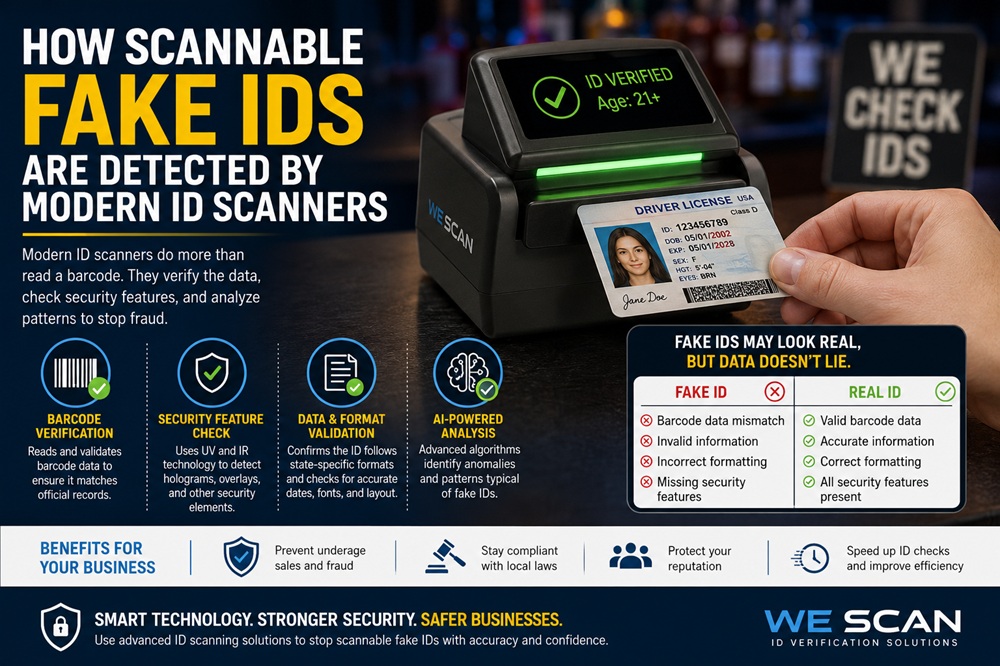
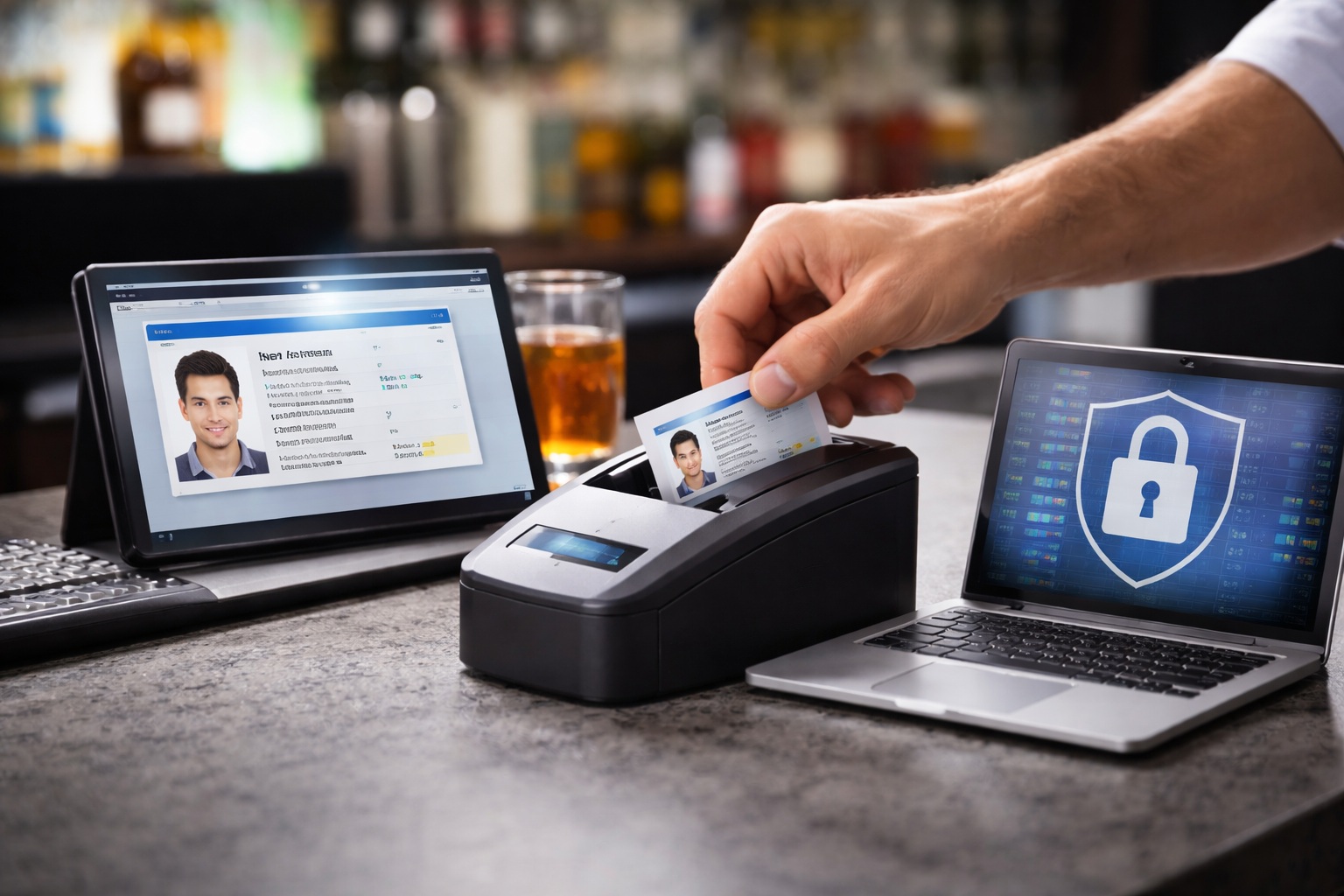
Role of ID Scanners in Retail Compliance
Manual checks are useful but not always perfect. This is where technology helps.
Benefits of ID Scanning:
- Faster verification
- Accurate age calculation
- Detects fake IDs
- Reduces human error
- Keeps digital records
Retailers that use scanning tools often report fewer compliance issues.
Legal Penalties for Non-Compliance
Failing to verify ID can lead to serious consequences.
Possible penalties include:
- Heavy fines
- License suspension
- Permanent business closure
- Legal action
In some regions, fines can exceed thousands of dollars per violation. Repeat offenses can lead to stricter punishment.
Best Practices for Retailers
Following best practices can make compliance easy.
Tips for Better ID Verification:
- Train employees regularly
- Use ID scanning tools
- Display age restriction signs
- Check ID for anyone who looks under 30
- Keep records of ID checks if required
Consistency is key. Every customer should go through the same process.
Statistics That Show the Importance of ID Checks
- Over 60 percent of underage buyers succeed when ID is not checked properly
- Businesses using ID scanners reduce fake ID acceptance by up to 80 percent
- Regular staff training can cut compliance violations by 50 percent
These numbers highlight the need for strict ID policies.
FAQ Section
1. What ID is required to buy alcohol or tobacco?
A valid government-issued ID such as a driver’s license, passport, or national ID card is required.
2. Can expired IDs be accepted?
No. Expired IDs are not valid for age verification.
3. Are digital IDs accepted?
It depends on local laws. Some regions accept digital IDs, while others require physical copies.
4. What should I do if an ID looks fake?
Do not proceed with the sale. Politely refuse and inform your manager if needed.
5. Is it mandatory to check ID for every customer?
Not always, but many businesses follow a policy to check anyone who looks under a certain age, usually 25 or 30.
Conclusion
Understanding the ID documents required for alcohol and tobacco sales is essential for every retailer. It protects your business, ensures legal compliance, and promotes responsible selling.
Clear policies, trained staff, and the right tools can make ID verification simple and effective. By following best practices, you reduce risks and build trust with customers.
For businesses that want a reliable and modern solution, WE SCAN offers advanced ID scanning tools that help verify documents quickly and accurately while keeping your operations compliant.
Original Source:- https://shorturl.at/muTZG


The dream of pursuing a Master’s degree or any advanced program abroad is electrifying. But before you book your flight, there’s one monumental task: gathering the mandatory documents for masters a