




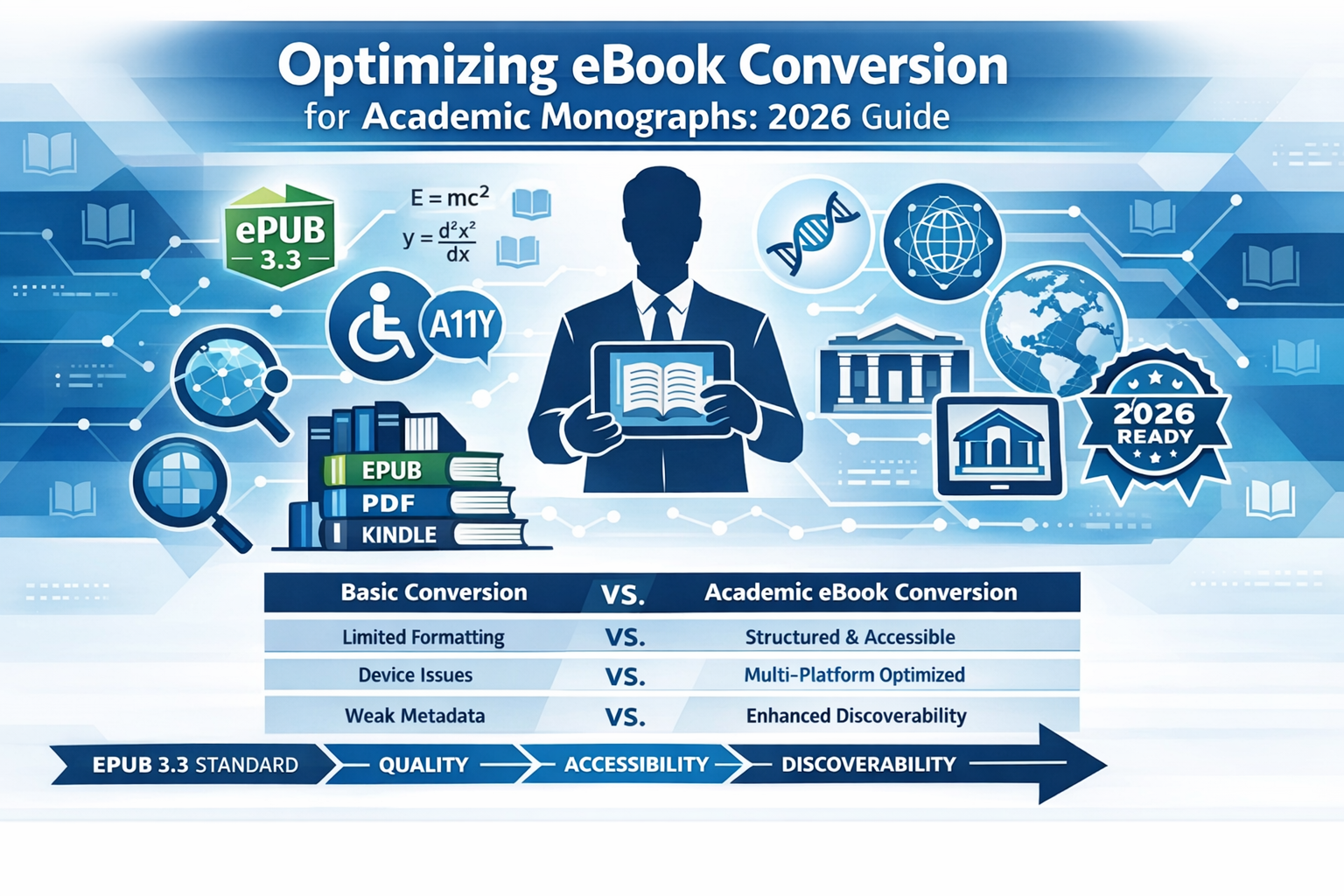
In 2026, academic ebook conversion is no longer just about changing a print file into a digital format. Academic publishers now need eBooks that are structured, accessible, discoverable, and ready to perform across different reading platforms. EPUB 3.3 remains the key modern standard, with W3C continuing to position it as the foundation for high-quality digital publishing.
For academic monographs, this matters even more. These titles often include chapter hierarchies, footnotes, citations, tables, images, bibliographies, and sometimes complex layouts. If conversion is rushed or handled with a basic workflow, the result can feel broken to readers. Navigation may become confusing, formatting may shift between devices, and important scholarly elements may lose clarity.
That is why, in 2026, publishers are moving toward smarter conversion workflows that focus on both usability and long-term digital value. A good academic eBook should not only look clean on screen, but also support accessibility, metadata quality, and platform compatibility. This has become increasingly important as accessibility expectations rise across publishing markets, especially after the European Accessibility Act began applying from 28 June 2025.
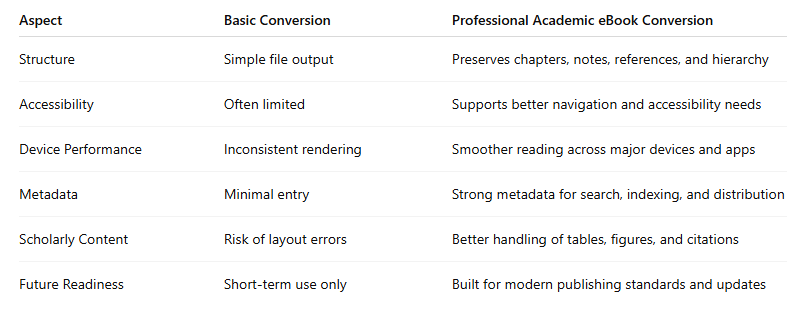
Here is a simple comparison to show the difference:
Another clear 2026 trend is the growing focus on accessibility-first publishing. EPUB standards now place strong importance on semantic structure and accessible reading experiences, and fixed-layout content also needs careful treatment to avoid navigation and reading-order problems. For academic monographs, this means conversion teams must think beyond appearance. They need to make sure the content is readable, searchable, and usable for a wider academic audience.
Publishers are also paying more attention to discoverability. A well-converted monograph is easier to distribute through digital libraries, publisher platforms, aggregators, and institutional systems. When metadata, internal navigation, and structure are handled properly, the book becomes easier to find and easier to use.
In simple terms, academic ebook conversion in 2026 is about quality, compliance, and reader experience. For academic monographs, the goal is not just to digitize content but to prepare it for modern scholarly consumption. A professional conversion process helps publishers protect content integrity, improve accessibility, and deliver a better product across today's digital publishing ecosystem.
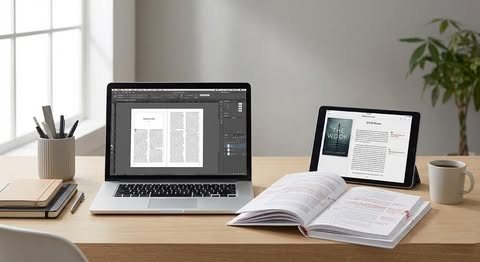

Ebook conversion and formatting services definitely can help you soar as an author, but the height of your success purely depends on the quality of the Indian eBook conversion partner that you opt for.

Imagine writing a cult book like ‘To Kill A Mockingbird’ being written today.
Where do you think will you be able to pick up a copy?