Confined space entry is statistically one of the highest-risk activities in Industrial and Oil & Gas operations. The hazard isn't always visible — residual vapour in a cleaned storage tank, hydrogen sulphide pocketed in a sump, or methane accumulation inside a pipeline inspection section. What workers bring in with them matters as much as what they find. That includes their lighting.
What "Intrinsically Safe" Actually Means
The term is often used loosely, but its technical definition is precise. Intrinsic safety as a protection concept — defined under IEC 60079-11 — limits the electrical and thermal energy within a circuit to levels that cannot ignite a specified explosive atmosphere under normal or fault conditions. A intrinsically safe flashlight doesn't contain a spark; it prevents one from being energetically possible in the first place.
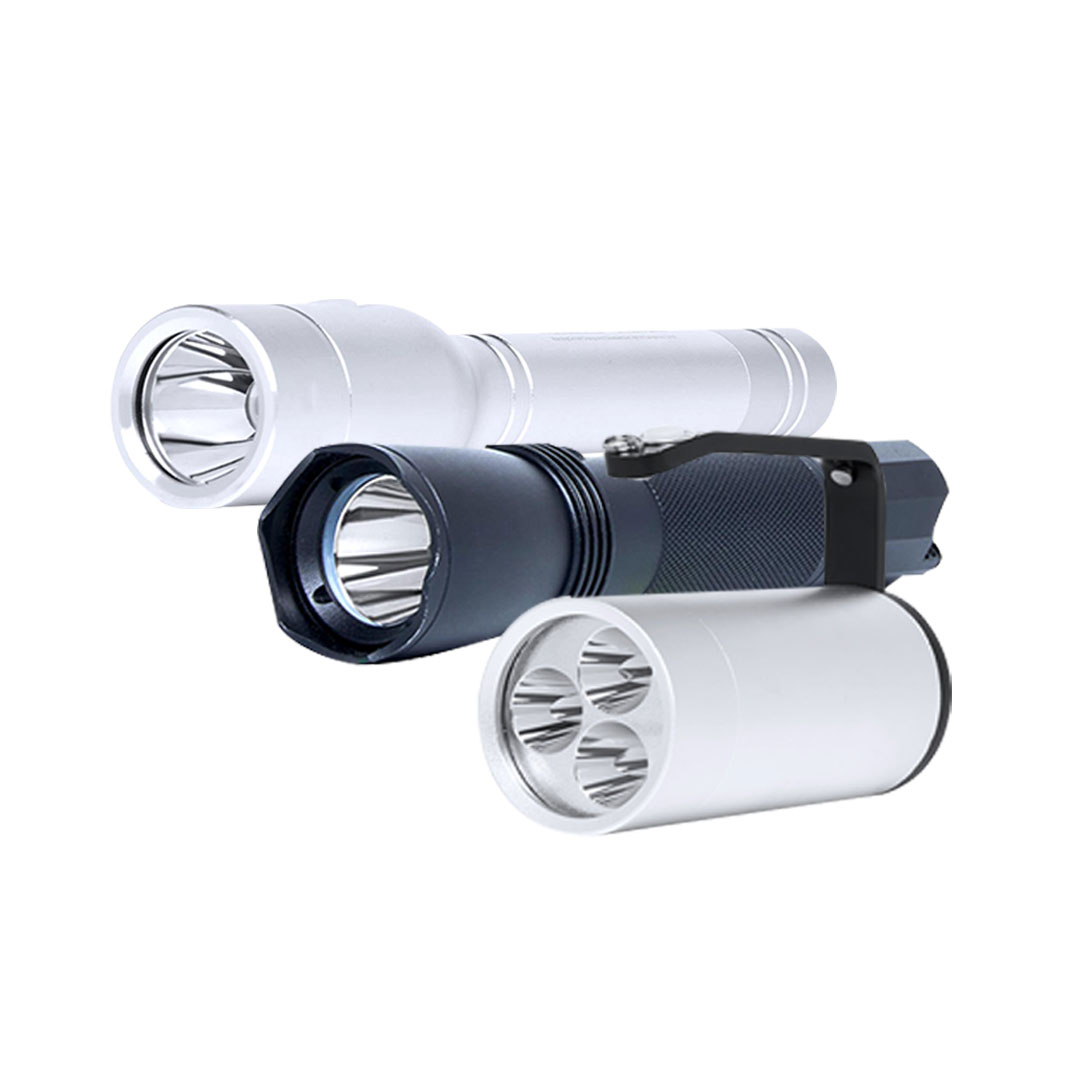
This is fundamentally different from a flameproof enclosure approach. Where an explosion proof flashlight relies on containing any ignition event inside a robust housing, an intrinsically safe design eliminates the ignition potential entirely — making it the preferred choice for environments where enclosure failure, however unlikely, is considered unacceptable risk.
Protection concept comparison
Intrinsic safetyLimits circuit energy below ignition threshold — no spark can form. Standard: IEC 60079-11. Suitable for Zone 0, 1, 2.
Flameproof (Ex d)Contains ignition inside a certified enclosure. Standard: IEC 60079-1. Primarily Zone 1 and Zone 2 applications.
Key distinctionIntrinsic safety prevents ignition at source; flameproof manages the consequence of one. Both are valid — the choice depends on Zone and task type.
Where These Units Are Doing Real Work
Zone 0 · Gas
Crude oil storage tanks
Internal inspections of floating-roof tanks where vapour is continuously present. Only intrinsically safe lighting qualifies — no exceptions under ATEX Zone 0 classification.
Zone 1 · Gas
Natural gas pipeline internals
In-line inspection access points and pig receivers in gas transmission lines. Residual pressure and vapour concentration make this a demanding Zone 1 environment.
Zone 1–2 · Gas
Refinery sump and drain systems
Sumps accumulate heavier-than-air vapours that standard ventilation doesn't fully clear. Workers entering for cleaning or repair operate in an effectively undeclared Zone 1 condition.
Zone 2 · Gas
Chemical storage loading bays
Solvent and chemical storage facilities in Industrial zones across UAE and Kuwait where vapour release is possible during tank changeovers or valve maintenance.
LED Technology Strengthens the Safety Case
Pairing intrinsic safety with LED technology creates a compounding safety benefit. An explosion proof LED flashlight running on modern solid-state optics generates minimal heat — well within T-class limits — while delivering the high-lumen output needed to properly assess weld conditions, corrosion patterns, or liquid levels inside darkened vessel interiors. For maintenance crews working under permit-to-work systems in Abu Dhabi or Kuwait's downstream facilities, that combination reduces task time and thermal risk simultaneously.
Certification Scope Matters for Gulf Operations
Not all certified products are equal in scope. Ex proof flashlights carry certifications that specify gas groups, temperature classes, and approved Zones — and those parameters must align with the atmosphere classification documented in your site's area classification drawings. An ATEX flashlight bearing the correct EPL (Equipment Protection Level) marking for your Zone removes ambiguity during permit-to-work approvals and simplifies the paperwork burden on both entry teams and safety officers.
Specification checklist — confined space entry lighting
Zone suitability Zone 0 requires EPL Ga (intrinsic safety only). Zone 1 accepts EPL Gb. Zone 2 accepts EPL Gc.
Gas group Match to site's highest-risk substance. IIC covers hydrogen and acetylene — the broadest coverage available.
Temperature class Verify against the auto-ignition temperature of substances present. T6 (85°C surface limit) provides maximum margin.
IP ratingIP67 minimum for confined spaces where water ingress, cleaning fluids, or condensation is likely.
Conclusion: Intrinsic safety as a protection concept delivers the highest level of assurance for confined space entry lighting — not because it manages ignition better than other methods, but because it removes the ignition pathway entirely. For operators in the UAE and Kuwait running active maintenance programmes across tanks, pipelines, and processing units, specifying the right certified lighting is a decision that sits squarely within your duty of care obligations. To take this understanding further across your facility's complete lighting infrastructure, read our comprehensive guide: https://sharpeagle.com/blog/hazardous-area-led-lighting-ultimate-safety-guide-with-10-key-benefits