


In the current US commercial AEC landscape, tight schedules and rising labor costs have made the Weekly BIM Coordination Meeting the single most critical hour of the project week. As projects move toward high-density Mechanical, Electrical, and Plumbing (MEP) systems, the complexity of "spatial negotiations" has reached an all-time high. A recent report by Dodge Construction Network found that 72% of contractors credit BIM for improved schedule performance, but that efficiency is entirely dependent on how teams communicate during the "Virtual Design and Construction" (VDC) phase.
We are no longer just building 3D models; we are orchestrating a digital dress rehearsal of the physical build. When an Architect, Structural Engineer, and MEP sub-contractors sit down for a coordination session, they aren't just resolving clashes—they are protecting the project's bottom line. For the modern AEC firm, the goal is to shift from a reactive "finding clashes" mindset to a proactive "collaborative problem-solving" culture.
Section 1: Pre-Meeting Hygiene The "Signal vs. Noise" Strategy
The most productive meetings are those where the "boring" work has already been automated. A common failure in AEC is using the live meeting to find new clashes for the first time. This wastes the time of high-level project leads on minor interferences that software could filter out.
The Mandatory Model Upload Deadline
Industry best practice, often codified in the BIM Execution Plan (BEP), requires a "Model Freeze" or upload deadline at least 24 to 48 hours before the meeting. This allows the VDC Coordinator to run federated clash tests in Autodesk Navisworks and "triage" the results.
Clash Triaging and Grouping
By using Clash Detective rules, coordinators should filter out "false positives" (like pipes correctly passing through sleeves) so the meeting focuses only on "Critical Path" issues. Research from McKinsey indicates that firms that perform advanced clash triaging before the weekly meeting see a 25% increase in issue resolution speed. When you present a trade partner with five grouped, high-impact issues rather than 500 individual dots, engagement skyrockets.
Section 2: Facilitation Excellence Navigating the "Conflict Zones"
A BIM Coordination meeting is essentially a series of high-speed spatial negotiations. The facilitator must act as a "digital referee," ensuring that no one trade "owns" a plenum at the expense of another.
Establishing a Clear Hierarchy
Who moves first? A robust BEP should establish a Coordination Hierarchy. Generally, gravity-fed systems (plumbing) and large structural elements have priority, while flexible conduits and smaller pipes must navigate around them. According to the Journal of Computing in Civil Engineering, projects with a defined priority matrix resolve disputes 30% faster than those using a "first-come, first-served" modeling approach.
Real-Time Resolution vs. Homework
The meeting should be for decision-making, not modeling. If a resolution requires a complete redesign of a structural bay, it becomes "homework." However, for minor shifts, real-time "Virtual Design" using Revit or Navisworks can be highly effective. The key is to document the decision immediately in a Common Data Environment (CDE) like Autodesk Construction Cloud (ACC) to ensure accountability.
Section 3: Leveraging Cloud-Based Issue Tracking for Accountability
The days of the "Static PDF Clash Report" are over. Modern AEC firms have transitioned to dynamic issue tracking to bridge the gap between the coordination room and the design desk.
Closing the Feedback Loop
Using platforms like Revizto or the ACC Issues plugin, a coordinator can "pin" a clash directly in the 3D environment and assign it to a specific stakeholder with a due date. This creates a transparent audit trail. When a trade partner opens their Revit model, they see exactly where the conflict is located without hunting through a 100-page report.
Data-Driven Meeting Metrics
Sophisticated firms track the "Age of an Issue." If a specific clash has remained unresolved for three weeks, it is automatically escalated. Quantitative analysis by Autodesk shows that projects using centralized, cloud-based issue tracking reduce their Total RFIs by up to 34%, as questions are answered in the digital twin long before they reach the field.
Actionable Takeaways for AEC Leaders
To transform your weekly coordination from a technical hurdle into a competitive advantage, implement these four best practices:
•Enforce the 48-Hour Upload Rule: No upload, no coordination. This protects the team's time from "stale" data.
•Rotate the "Lead" Trade: Encourage different trades to lead the discussion on specific levels. This fosters a sense of ownership over the federated model.
•Focus on "Soft" Clashes: Spend at least 15 minutes of each meeting on clearance clashes. These are the silent margin killers.
•End with a "Clash Count" Trend: Display a simple graph of the total open issues over time. A downward trend is the most powerful morale booster for a stressed project team.
Learn more- https://www.bimservicesindia.com/blog/navigating-bim-coordination-clash-detection-in-us-commercial-projects/

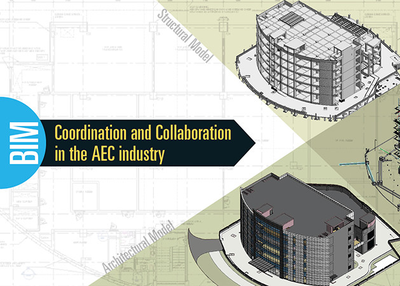
BIM is the future trend in AEC industry. Adoption of the BIM modeling in construction project improved the project coordination, better building design, project sequencing & scheduling, and get better cost-estimation. Want to know how the BIM services collaborate in AEC industry?