

Every construction project starts with a perfect vision. But the reality on the job site is rarely perfect. Changes happen constantly. Materials get swapped out due to unexpected supply chain issues. Unforeseen structural clashes force sudden redesigns in the field. If you manage commercial or residential building projects, you know precise documentation is your only lifeline when things get complicated. Two specific types of documentation carry the heaviest weight in the AEC industry. You guessed it: shop drawings and as-built drawings. Mixing them up can cost you thousands of dollars in rework. It can also cause massive scheduling delays that completely derail your timeline. We need to clear the air. What exactly separates these two vital record sets?
What Are Shop Drawings?
Think of shop drawings as the ultimate instruction manual for your specialized fabricators. They are born long before the first hammer swings on the job site. Architects and engineers provide the initial design intent through their standard construction documents. Then, general contractors, specialized subcontractors, and off-site manufacturers step in to take over the next phase. They translate those broad blueprints into incredibly precise, highly actionable diagrams.
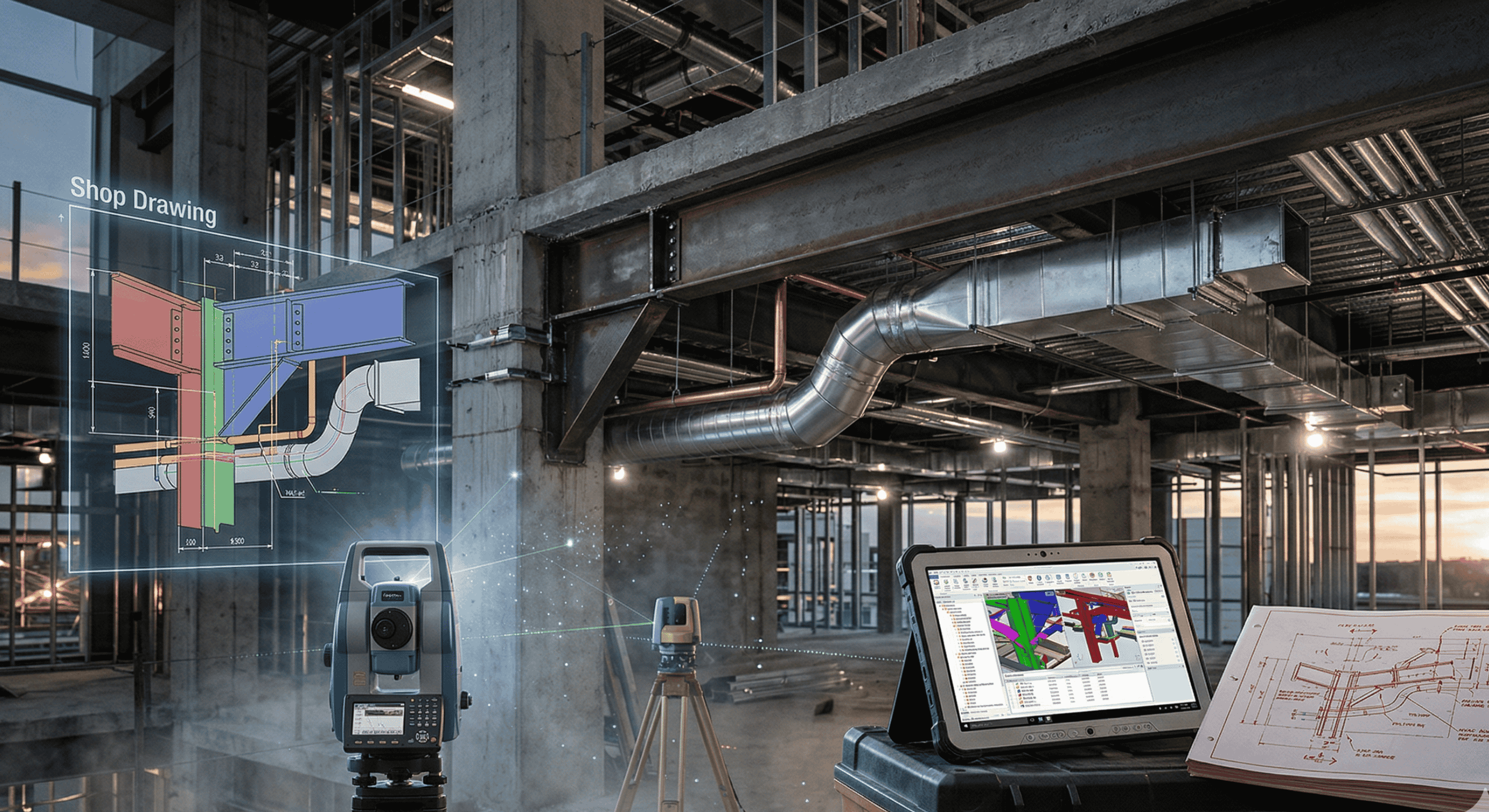
Shop drawings show exactly how a specific building component will be manufactured, assembled, and installed. We are talking about exact measurements, detailed material specifications, and granular connection methodologies. This intense focus applies to everything from structural steel framework and pre-cast concrete panels to custom millwork and complex HVAC ducting.
The Primary Function of Shop Drawings
The absolute main goal here is pre-emptive problem solving. A metal fabricator desperately needs to know if a custom ventilation duct will actually fit around the load-bearing structural I-beams. The shop draws figures that are out in the digital realm or on drafting paper long before anyone starts cutting expensive sheet metal. It strongly protects the original design intent while ensuring physical constructability. This rigorous review process forces the entire team to verify real-world field dimensions against theoretical architectural plans.
What Are As-Built Drawings?
Now fast forward to the very end of the project lifecycle. The building is fully standing. The dust is finally settling. Are you looking at the exact building the architect originally drew on day one? Absolutely not. Field modifications are an unavoidable, guaranteed reality of the construction industry.
As-built drawings meticulously document the final, constructed reality of the building. They capture every single deviation, minor tweak, and major relocation that occurred during the active construction phase. If a major plumbing line was shifted two feet to the left to avoid an undocumented concrete footing, the as-built drawing completely reflects that specific change. They show the unquestionable truth of the physical space.
The Primary Function of As-Built Drawings
These specific drawings are not really meant for the builders. They are primarily generated for the property owners, facility managers, and future maintenance teams. A highly accurate set of as-builts makes future maintenance, renovations, and facility expansions incredibly smooth. Without them, future contractors are completely flying blind. They risk striking hidden electrical conduits, rupturing undocumented water pipes, or accidentally compromising structural elements that were moved during the initial build.
The Core Differences: A Head-to-Head Breakdown
We must draw a clear line in the sand to avoid costly workflow confusion. When comparing shop drawings and as-builts https://www.teslaoutsourcingservices.com/blog/what-is-the-difference-between-architectural-construction-drawings-shop-drawings-and-as-built-drawings/ , you will immediately notice three massive operational differences that govern how they are actively handled.
Project Phase and Timing
Timing dictates everything in construction management. Shop drawings are highly proactive by nature. They exist strictly in the pre-construction and early procurement phases. Subcontractors must submit them to the general contractor and design team for official approval before any manufacturing or fabrication begins. As-built drawings are entirely reactive. They are created during and immediately after the construction process. They serve as a permanent historical record of what actually happened on the site.
Authorship and Responsibility
Who actually holds the pen? For shop drawings, it is usually the specialized subcontractors, vendors, or off-site manufacturers. They hold the micro-level, specialized expertise needed for exact fabrication tolerances. General contractors carefully review them for coordination, but the subcontractors actually create them from scratch.
As-builts totally shift the core responsibility. The general contractor usually maintains a master red-line drawing set directly on the job site. They consistently mark up daily field changes in red ink. Once the project officially wraps up, the architect or a dedicated CAD specialist updates the original design models using those red-lined field notes to create the final, polished as-built package.
Scope and Level of Detail
Shop drawings zoom way in. They might detail the exact welding specifications, specific bolt sizes, and structural load tolerances for a single steel staircase. They ignore the rest of the building completely because their focus is microscopic and highly targeted.
As-builts zoom way out. They show the entire building system in its completed, holistic state. They do not care about the microscopic welding specifications of the interior stairs. They only care about where that staircase is permanently located in exact relation to the surrounding walls, electrical panels, and emergency fire exits.
Why Both Are Crucial for Project Success
You simply cannot skip either of these critical steps. Trying to cut corners on project documentation is a guaranteed recipe for financial disaster.
Shop drawings act as your absolute first line of defense against incredibly costly fabrication errors. If you manufacture custom architectural glass panels based purely on the architect’s broad concept sketches, you will likely end up with expensive glass that simply does not fit the physical window frames. Shop drawings force everyone to verify field dimensions first, saving incredible amounts of wasted material, labor, and time.
Conversely, as-builts act as your long-term operational insurance policy. Handing over a newly constructed building without accurate as-builts is exactly like selling a complex vehicle without the owner’s manual. Facility managers desperately need highly accurate records to maintain the physical asset efficiently over its multi-decade lifecycle.
Modernizing the Process with Technology
The old days of unrolling massive, coffee-stained blueprints on the hood of a dusty pickup truck are fading fast. The AEC industry is currently embracing rapid, sweeping digital transformation.
Building Information Modeling (BIM) has completely revolutionized how we handle critical structural documentation. Now, shop drawings and as-builts live inside a dynamic, fully coordinated 3D model. When a mechanical subcontractor updates a shop drawing, the automated clash detection software immediately flags any physical conflicts with other trades, such as plumbing or electrical routing.
Furthermore, modern construction management platforms allow remote teams to heavily utilize cloud integration for construction drawings https://tesla-outsourcing-services-llc.neocities.org/how-cloud-cad-collaboration-is-revolutionizing-construction-drawings . This powerful capability means the field superintendent can mark up a sudden as-built change on a rugged tablet right on the active site. The lead architect sitting in a corporate office three states away sees that precise update instantly. This real-time collaboration effectively eliminates dangerous information silos. It prevents field teams from accidentally working off outdated drawing versions. It keeps the entire project lifecycle flowing smoothly from groundbreaking to final handover. The rising integration of modern reality capture tools, like laser scanning and drone photogrammetry, is also making modern digital as-builts more accurate than ever before.
Conclusion: Mastering Your Documentation Strategy
Total clarity is your best tool on any chaotic construction site. You absolutely need to deeply understand the unique, critical roles of your documentation. Shop drawings proactively tell you exactly how to build the individual components. As-built drawings actively tell you what you actually built in the end.
They seamlessly represent the alpha and the omega of your project execution strategy. Treat both crucial processes with the immense respect they inherently deserve. Invest heavily in the right software technology to manage them securely. Train your field teams to prioritize daily reporting accuracy. When you finally master your drawings, you master your projects entirely. You will consistently deliver better buildings, faster, and with significantly fewer operational headaches.

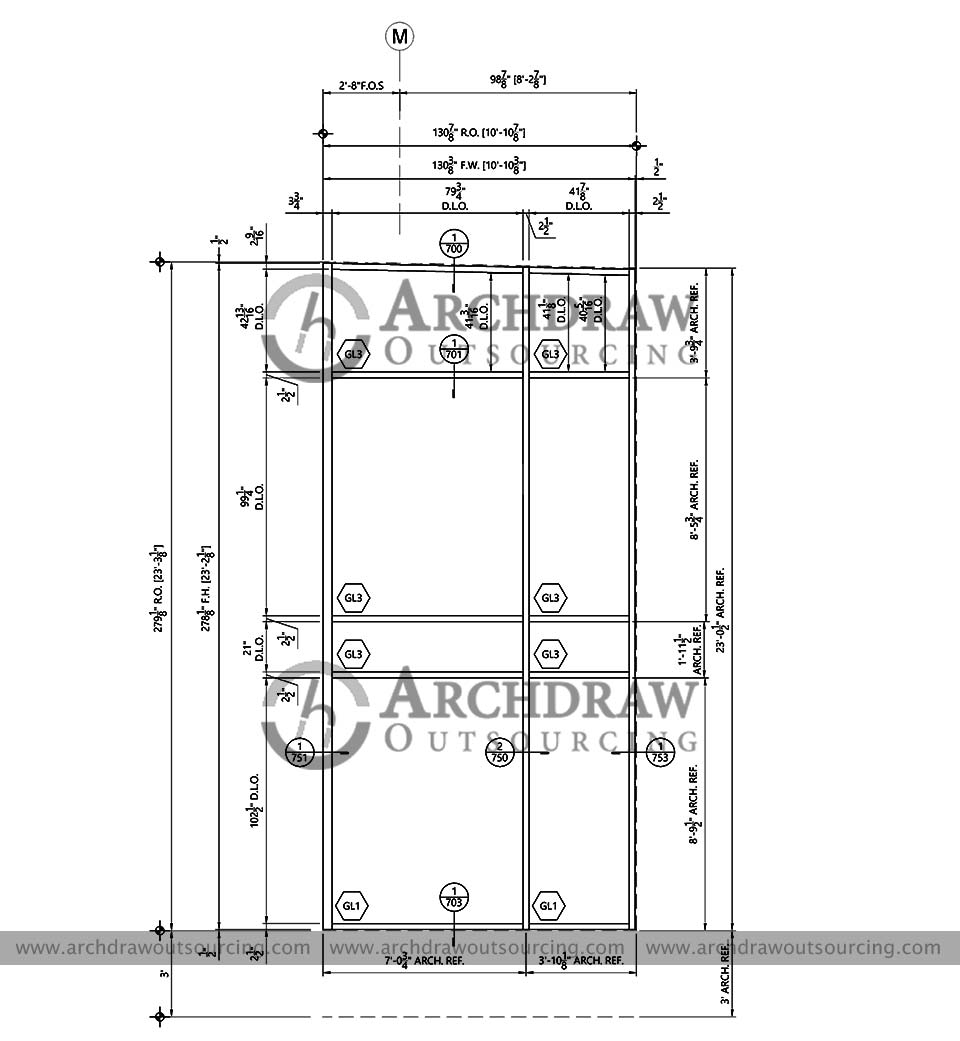
Archdraw Outsourcing providing Construction Shop Drawings services across the globe.
Construction Shop Drawings are a kit of all manufactured and fabricated to the described physical structure in the area.
Our shop drawings add more items of fabrication and erection.