


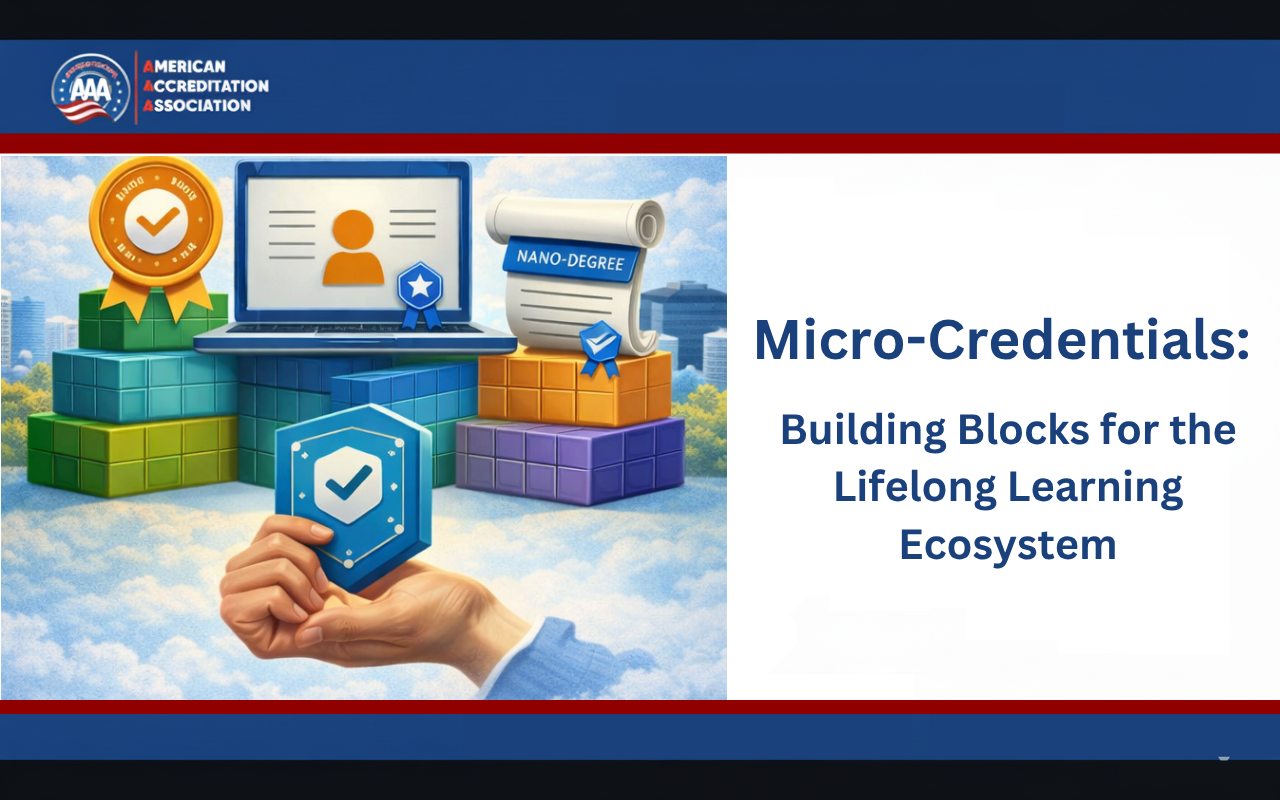
Introduction: The Modular Future of Education and Employability
The traditional model of education as a front-loaded, degree-based endeavor is giving way to a more fluid paradigm of continuous skill development. Micro-credentials—targeted, verifiable certifications of specific competencies are emerging as essential currency in this new economy of lifelong learning. These compact learning packages offer agile responses to rapidly evolving workforce needs while challenging established quality assurance frameworks.
Understanding the Micro-Credential Ecosystem
Definition and Diversity: Micro-credentials encompass digital badges, nano-degrees, certificates of competency, and other focused certifications. What unites them is their specific focus, relatively short duration, and direct alignment with demonstrable skills.
Drivers of Growth:
• Accelerating skill obsolescence in technical and professional fields
• Employer demand for precise, verifiable competencies
• Learner preference for flexible, career-relevant education
Digital platforms enabling scalable delivery and verification
Quality Assurance in a Decentralized Landscape
The very flexibility that makes micro-credentials appealing also creates quality challenges:
Recognition and Transfer: Without standardization, the value of micro-credentials varies dramatically between issuers, limiting their portability and stacking potential.
Assessment Integrity: Verifying skill mastery in compact formats requires particularly robust assessment strategies resistant to credential inflation.
Provider Proliferation: Corporations, professional associations, individual experts, and traditional institutions all issue micro-credentials, creating a complex marketplace without consistent quality signals.
The Accreditation Imperative for Micro-Credentials
Accreditation bodies play several crucial roles in maturing the micro-credential ecosystem:
Validation Frameworks: Developing standards that ensure micro-credentials represent meaningful learning with appropriate rigor, regardless of provider type.
Recognition Pathways: Creating transparent mechanisms for stacking micro-credentials into larger certifications or applying them toward traditional degrees.
Quality Signaling: Providing learners and employers with reliable indicators of which micro-credentials meet established standards.
Equity Assurance: Ensuring micro-credential opportunities don’t create new barriers for underrepresented populations through cost, access, or recognition disparities.
Strategic Integration for Traditional Institutions
Forward-thinking universities and colleges are developing comprehensive micro-credential strategies that:
Conclusion: Micro-Credentials as Educational Innovation Catalysts
Rather than displacing traditional degrees, micro-credentials are expanding the educational landscape, offering targeted, flexible options for skill development throughout life and career. With thoughtful quality assurance and strategic integration, they represent a powerful mechanism for making education more responsive, accessible, and relevant in a rapidly changing world. The institutions that embrace this evolution while maintaining rigorous standards will lead in developing the lifelong learning ecosystems of tomorrow.
To Know More: https://aaa-accreditation.org/



AAA Intergalactic Investments GroupAAA Intergalactic Investments Group is the first independent mainstream platform that promotes various futuristic intergalactic infrastructures such as green satellites for weather observation.https://www.aaa-intergalactic-investments.com/aaa-intergalactic-investments-group.php#loaded