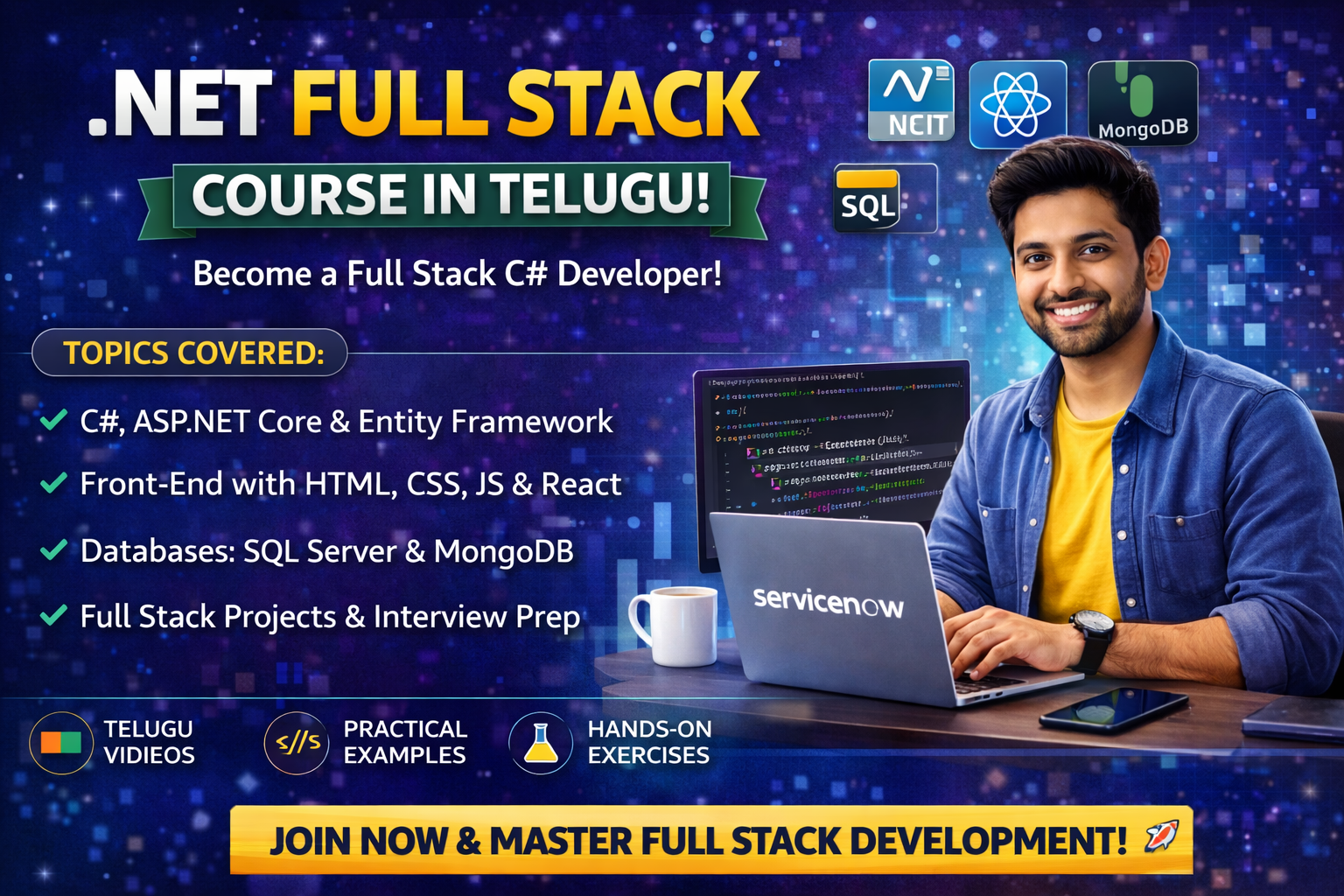
In today’s software development world, building scalable and maintainable web applications is a top priority. For aspiring developers, learning MVC (Model-View-Controller) and Web API using ASP.NET Core is an essential step in becoming a successful .NET Full Stack Developer. These two concepts form the backbone of backend development and are widely used in real-world applications. With Telugu-friendly learning, even beginners can easily understand and master these technologies.
What is MVC Architecture?
MVC stands for Model-View-Controller. It is a design pattern used to organize code in a structured way. This pattern separates the application into three main components:
Model: Represents the data and business logic of the application
View: Displays data to the user (UI)
Controller: Handles user input and connects Model and View
This separation makes the application easier to develop, test, and maintain.
Why Learn MVC in .NET?
ASP.NET Core MVC is one of the most popular frameworks for building web applications. It provides:
Clean and organized code structure
Separation of concerns
Easy maintenance and scalability
Support for modern web development practices
By learning MVC, developers can create dynamic web applications with better performance and flexibility.
Understanding Web API
A Web API (Application Programming Interface) allows different applications to communicate with each other. In .NET Full Stack development, Web APIs are used to connect the frontend with the backend.
For example:
A user submits a form on a website
The frontend sends a request to the Web API
The API processes the request
It interacts with the database
Sends the response back to the frontend
Web APIs use HTTP methods such as:
GET (retrieve data)
POST (create data)
PUT (update data)
DELETE (remove data)
MVC vs Web API
Both MVC and Web API are important, but they serve different purposes:
MVC is used for building web applications with UI (views)
Web API is used for building services that return data (usually JSON)
In modern applications, Web APIs are often used with frontend frameworks like Angular or React, while MVC is used for server-side rendering.
Key Concepts in MVC Training
In a .NET Full Stack course, MVC training includes:
Routing and URL mapping
Controllers and action methods
Views and Razor syntax
Models and data binding
Form handling and validation
Layouts and partial views
These concepts help you build structured and interactive web applications.
Key Concepts in Web API Training
Web API training focuses on:
Creating RESTful services
Handling HTTP requests and responses
Routing in APIs
Model binding and validation
Exception handling
Securing APIs using authentication and authorization
These skills are essential for building modern applications that communicate across platforms.
Working with Entity Framework Core
Both MVC and Web API use Entity Framework Core (EF Core) to interact with databases. It simplifies database operations by using C# code instead of writing complex SQL queries.
You will learn:
Database context and models
CRUD operations
Migrations
LINQ queries
EF Core helps developers work efficiently with databases in real-world projects.
Real-Time Application Flow
Here’s how MVC and Web API work together in a .NET Full Stack application:
User interacts with the frontend (View or Angular/React UI)
Request is sent to the Controller or API
Business logic is applied
Data is fetched or stored in the database
Response is returned to the frontend
This structured flow ensures smooth communication and better performance.
Benefits of Telugu-Friendly Learning
Learning MVC and Web API in Telugu offers several advantages:
Easy understanding of complex concepts
Clear explanation with real-life examples
Better retention for beginners
Comfortable and faster learning
Even though the coding language is English, Telugu explanations make the learning journey smoother.
Hands-On Projects
Practical experience is crucial to mastering MVC and Web API. Some project ideas include:
Student Management System
E-commerce backend APIs
Blog management system
User authentication system
These projects help you understand how to apply your knowledge in real-world scenarios.
Tools You Will Use
During training, you will work with industry-standard tools:
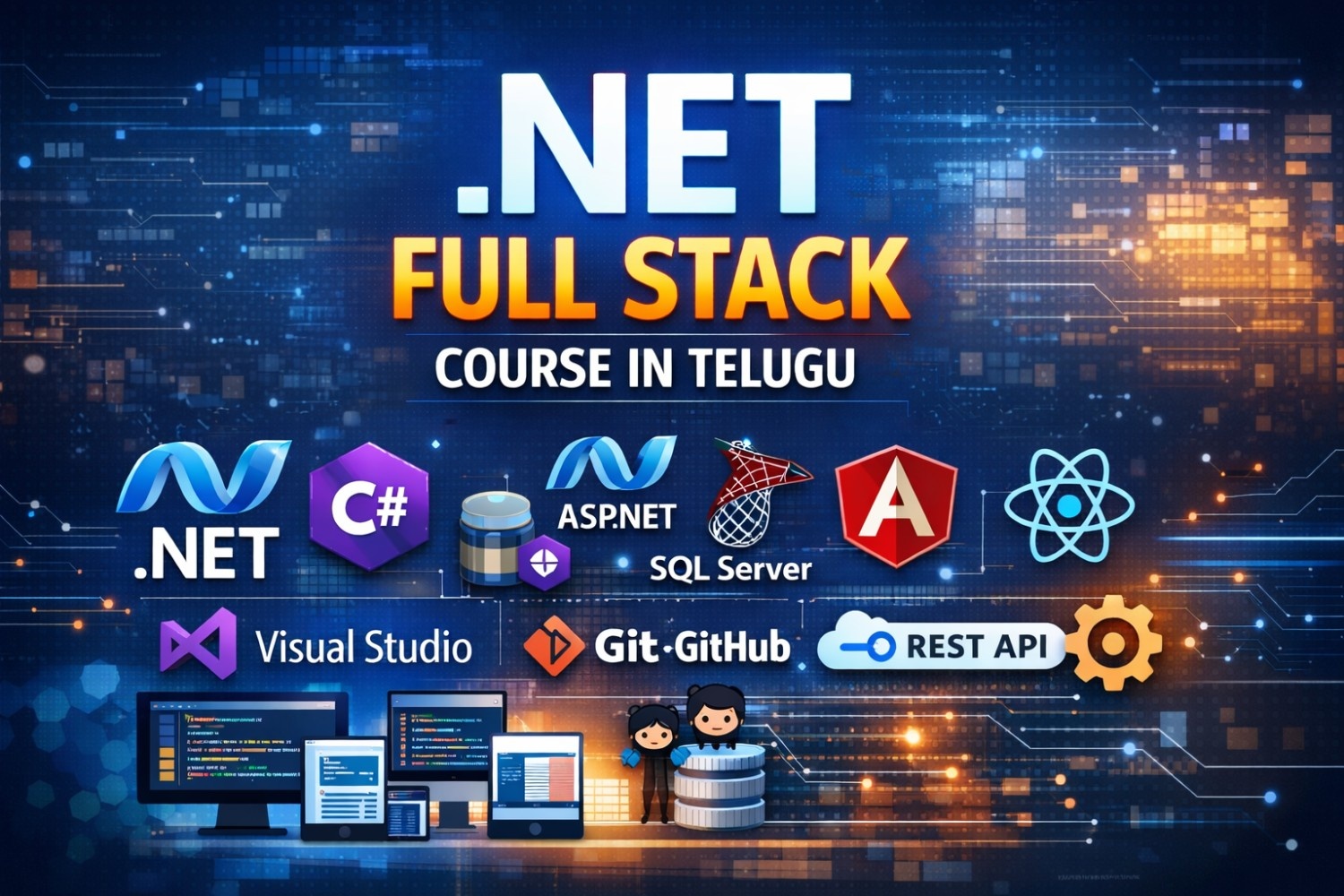
Visual Studio for development
Postman for API testing
SQL Server Management Studio (SSMS)
GitHub for version control
These tools are widely used in professional environments.
Career Opportunities
After completing MVC and Web API training, you can apply for roles such as:
.NET Developer
Backend Developer
Full Stack Developer
API Developer
With experience, you can advance to roles like Senior Developer or Solution Architect.
Conclusion
MVC and Web API are essential components of .NET Full Stack development. They help you build structured, scalable, and efficient web applications. By mastering these technologies, you can become a skilled developer ready for real-world challenges.
With Telugu-friendly learning, even complex backend concepts become easy to understand. Focus on learning step by step, practice regularly, and build real-time projects to gain confidence.
https://courses.frontlinesedutech.com/dot-net-full-stack-course-in-telugu/?utm_source=sireesha&utm_medium=off-page&utm_campaign=article_submission_April26