



Veterans often face unique health challenges after their service. From physical injuries to mental health concerns, their needs are different and sometimes complex. Hahn March, a leader focused on veteran support, highlights how better healthcare systems are making a real difference in their lives. With the right care and support, many veterans are now finding improved health, stability, and a stronger sense of purpose.
Understanding the Healthcare Needs of Veterans
Veterans deal with a wide range of health issues. These may include:
- Physical injuries from active duty
- Chronic pain and mobility problems
- Mental health conditions like PTSD, anxiety, and depression
- Adjustment challenges when returning to civilian life
Hahn March explains that healthcare for veterans must go beyond basic treatment. It should address both physical and emotional well-being in a connected way.
The Importance of Personalized Care
One of the key improvements in veteran healthcare is the shift toward personalized care. Instead of a one-size-fits-all approach, programs are now designed based on individual needs.
Key benefits of personalized care:
- Better diagnosis and treatment plans
- More effective recovery outcomes
- Increased trust between patients and healthcare providers
Hahn March believes that when veterans feel understood, they are more likely to stay engaged in their treatment and recovery process.
Expanding Mental Health Support
Mental health support has become a major focus in recent years. Many veterans struggle silently, but increased awareness is helping break the stigma.
Modern mental health support includes:
- Counseling and therapy sessions
- Peer support groups
- Online mental health services
- Crisis intervention programs
According to Hahn March, easy access to mental health care can significantly improve a veteran’s quality of life. It helps them manage stress, rebuild relationships, and regain confidence.
Access to Essential Services
Healthcare is not just about hospitals and clinics. It also includes access to basic needs that support overall well-being.
Important support services include:
- Affordable housing programs
- Food assistance
- Rehabilitation and wellness programs
- Career and education support
Hahn March emphasizes that when veterans have stable living conditions, their health naturally improves. A safe and supportive environment plays a key role in recovery.
The Role of Technology in Veteran Healthcare
Technology is also helping improve healthcare support. Many veterans now benefit from digital tools that make care more accessible.
Examples of healthcare technology:
- Telehealth services for remote consultations
- Mobile apps for mental health tracking
- Online education and support platforms
These tools are especially helpful for veterans living in remote areas. Hahn March notes that technology is making it easier for them to stay connected with healthcare providers.
Community Support and Connection
Another important factor is community support. Veterans often feel isolated after leaving service, but strong community networks can change that.
Ways community support helps:
- Encourages social interaction
- Provides emotional support
- Builds a sense of belonging
Hahn March highlights that programs connecting veterans with each other create a supportive environment where they can share experiences and learn from one another.
A Positive Path Forward
Healthcare support for veterans is improving, and the results are clear. More veterans are receiving the care they need and are able to lead healthier, more stable lives.
Hahn March continues to advocate for better systems that combine healthcare, education, and community support. His approach focuses on treating the whole person, not just the condition.
Conclusion
Veterans have given a lot in service to their country, and they deserve strong healthcare support in return. With personalized care, improved mental health services, access to essential resources, and the use of technology, their lives are steadily improving.
As Hahn March explains, real progress happens when healthcare is thoughtful, accessible, and focused on long-term well-being. With continued efforts, the future looks more hopeful for veterans everywhere.




Introduction
Supporting veterans is not just about honoring their service on special days—it is about building systems that help them live stable, meaningful lives after returning home. Hah

Fixed Mobile Convergence MarketThe global fixed-mobile convergence (FMC) market is expected to expand at ~14.1% CAGR with USD 6,208.7 million in value by 2025 during the forecast period.Fixed-mobile convergence removes the difference between fixed and mobile networks to provide a seamless experience to consumers across connected devices at home or on the move.
FMC can help telecommunication operators to improve their revenue growth, reduce churn rate, and increase subscriber base.
There has been significant growth in the adoption of FMC services over the past two years.
The growth is due to the consolidation of telecommunication players and various industry challenges such as changing consumer behavior, for instance, the extensive use of video services and social networking services, the accessibility to a number of services and applications via the Internet, and industry consolidation.
The telecom operators and standards groups are taking efforts to develop a common 5G converged core network where services can be delivered over any access network, whether fixed-line, Wi-Fi, Bluetooth, or 3GPP-based access, such as like 4G LTE, or 5G New Radio.
The emergence of 5G is a driving factor for fixed-only telecom operators, as well as MVNO (mobile virtual network operator), to enter the mobile market via their own network.Competitive AnalysisThe major players in the global fixed-mobile convergence market are Ericsson (Sweden), Cisco Systems, Inc.(US), Fujitsu (Japan), Huawei Technologies Co., Ltd (China) Vodafone Group PLC (UK), Orange SA (France), The Proximus Group (Belgium), Turk Telekom (Turkey), Turkcell (Turkey), Ooredoo QSC (Qatar), Nokia (Finland), Deutsche Telekom AG(Germany), Samsung Group (South Korean), and ZTE Corporation (China).Segmental AnalysisBy convergence type — the market is segmented into device convergence, network convergence, and application convergence.By mode — the market is divided into single-mode and dual-mode.By component — service and infrastructure.By end-user — home users and enterprises.Regional AnalysisGeographic analysis of the fixed-mobile convergence (FMC) systems market has been conducted for North America, Europe, Asia-Pacific (APAC), and the Middle East & Africa, and South America.Europe was the largest FMC market in 2017.
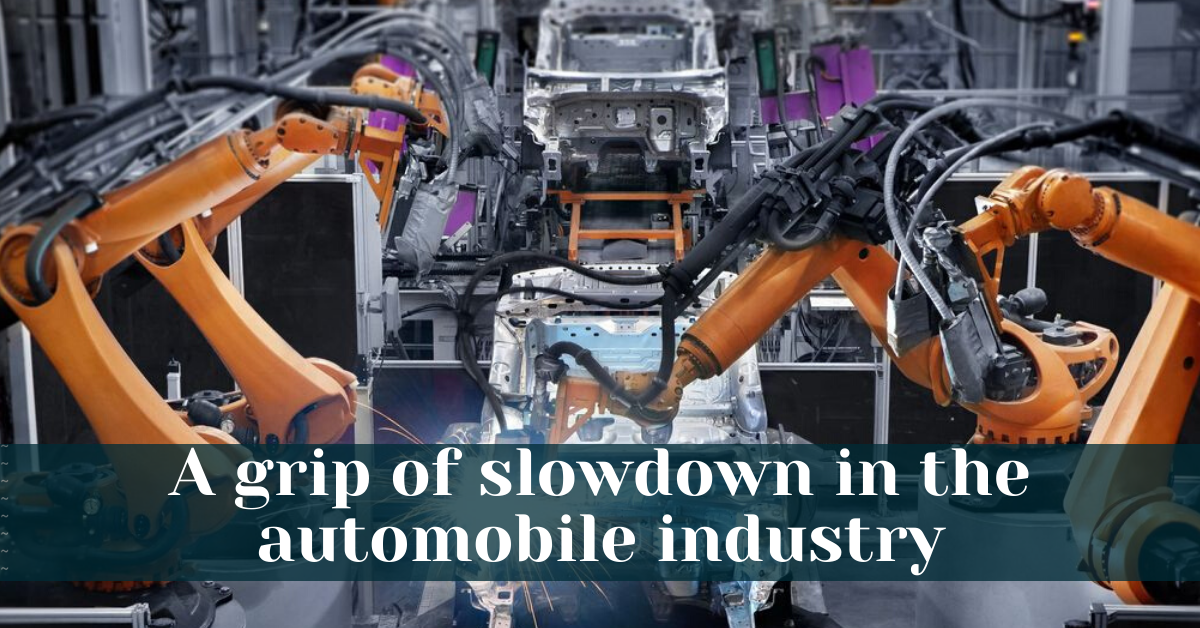
Understanding how automobile industry is going through a downfall during corona-virus pandemicDue to the sudden outbreak of coronavirus in the ‘world’s factory’ to all the other countries, we’ve abruptly taken a step back and entered a constant state of fear and misery.
When most of the people are still figuring out a way to prevent and avoid the consequences of the virus, there are industries that have already started suffering and are now facing losses.
According to experts, it was already predicted that the recession this year would be bigger than that of 2008 but they failed to predict that it would be so soon.
With businesses shutting down and Americans being shut in, it is harder for the economists to foresee the bottom of the upcoming recession and also to know how long will it take to climb back.Read more...For KPMG Lean Six Sigma Training registrations mail to in-fmsixsigma@kpmg.com or call at +91 9555688555, +91 9022033666 or +91 8444011201.