



Table of Content:
- What Is Stablecoin Payment Infrastructure
- Stablecoin Payment Infrastructure vs Traditional Systems
- Why Stablecoin Payment Infrastructure Matters for Businesses
- Core Architecture of Stablecoin Payment Infrastructure
- How Stablecoin Payment Rails Work?
- Use Cases Driving Adoption
- Challenges and Considerations
- How Businesses Can Build Stablecoin Payment Infrastructure
- The Future of Stablecoin Payment Systems
- Wrapping Up
Global payment systems are being pushed to evolve. Cross-border transactions remain slow, expensive, and fragmented. According to the World Bank, remittance costs still average around 6 percent globally, with settlement timelines often ranging from 1 to 5 business days depending on intermediaries and corridors. At the same time, the scale of global payments continues to expand. Industry estimates suggest that cross-border payment flows exceed hundreds of trillions of dollars annually, placing increasing pressure on legacy systems to improve speed, cost efficiency, and transparency.
Stablecoins are emerging as a practical solution to these challenges. Recent reports from firms like McKinsey & Company and Visa indicate that stablecoin transaction volumes have reached trillions of dollars annually, with growing adoption across payments, settlements, and treasury operations. However, the real transformation is not just about using stablecoins. It is about building the systems that enable them. This is where stablecoin payment infrastructure becomes critical.
What Is Stablecoin Payment Infrastructure
Stablecoin payment infrastructure refers to the backend systems, integrations, and operational layers that enable businesses to send, receive, process, and settle payments using stablecoins across global networks. It is not a single tool or application. It is a coordinated system that includes wallet management, transaction orchestration, blockchain settlement, liquidity access, and compliance mechanisms.
This infrastructure allows organizations to move beyond traditional payment networks and adopt a model where value can be transferred directly, quickly, and with greater transparency. For fintech platforms and payment providers, this represents a shift from relying on external networks to building controlled, programmable payment systems.
Stablecoin Payment Infrastructure vs Traditional Systems
Traditional payment systems rely on complex networks and delayed settlement processes.
Stablecoin-based systems offer a different model.
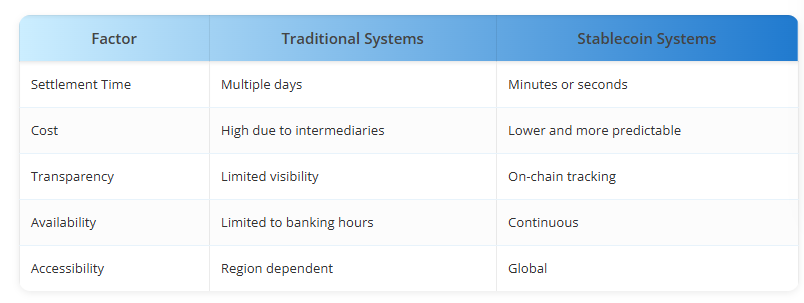
This comparison highlights why businesses are exploring alternative payment systems.
Why Stablecoin Payment Infrastructure Matters for Businesses
Businesses that operate across borders face recurring challenges. Settlement delays can disrupt cash flow. High transaction fees reduce profitability. Currency conversions introduce unpredictability. Limited visibility into transaction status creates operational friction................to be continue...................................
Catch every detail in the full article — read more at:
https://www.antiersolutions.com/blogs/what-is-stablecoin-payment-infrastructure-architecture-components-and-workflow/




An asset-backed stablecoin is an amalgamation of a cryptocurrency and a traditional currency.
They have some kind of collateral that provides them with stability and reduces the volatility of cryptocurrencies.
Develop your own stablecoin for your business with the help of Blockchain App Factory, a leader in cryptocurrency development.