


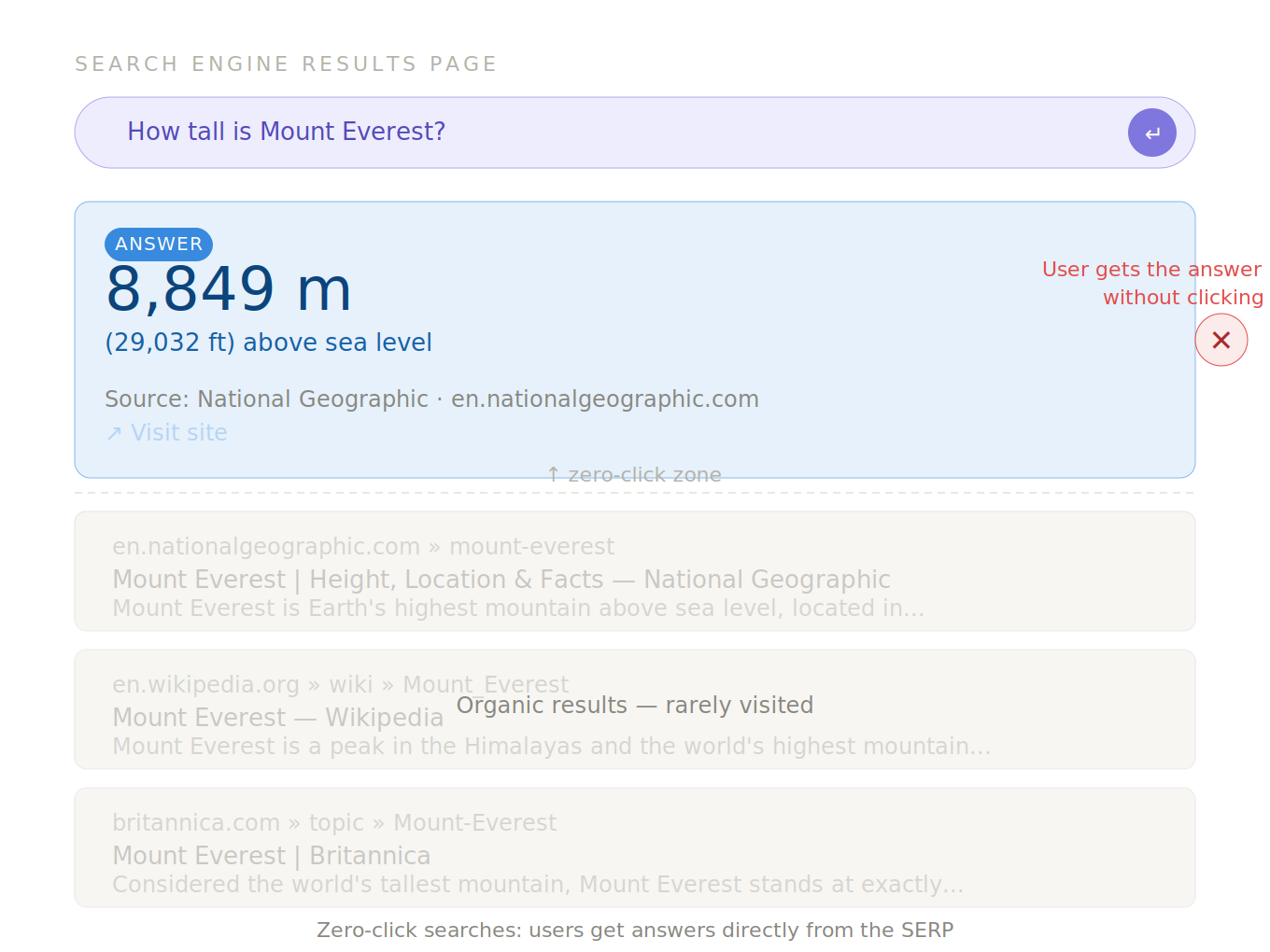
The rules of SEO have changed — and the scoreboard has too. With AI Overviews now accounting for over 60% of search traffic, the click-through model that powered content strategies for over a decade is quietly becoming obsolete. Users are getting their answers directly on the results page, and many never make it to your website at all.
But that doesn't mean brand value is dead in search — it means the way you build it has shifted. The brands winning in 2026 aren't just optimizing for rankings; they're engineering authority, trust, and memorability at the snippet level. We asked 9 thought leaders how they're navigating this new reality, and their answers reveal a clear theme: stop chasing clicks, start becoming the answer.
Become the Answer, Not the Click
Most SEO strategies still measure success by the number of clicks a page gets. That model is breaking. With the fact that AI Overviews now pull answers directly into Google's search results, more than 60% of searches end without even a single click to any website. At my agency, we saw this shift impact our clients' traffic numbers before most people had even begun to talk about it, at agencies.
So we changed our whole approach. No longer are we writing content to get a click, but writing content to be the content that Google pulls from. That means shorter, more to-the-point answers at the top of every page. It means organizing content in a way that Google's AI doesn't have any other option than to make a reference to your brand when building up its overview.
From what I've seen, across our client accounts, the brands that are showing up inside AI Overviews are getting better than clicks. They're being exposed to a brand over and over again at the time someone is looking for an answer. Or if you're running content strategy in 2026 and counting your pageviews as your north star metric, you're measuring the wrong thing. The game now is becoming the answer that Google believes enough to serve in search results, and this takes a different kind of content than most businesses have been accustomed to producing.
Daniel Plumtree, Founder & CEO, Plumtree SEO
-------------------------------------------
Add Schema Markup to Guide AI Crawlers
The primary way we are adjusting our content and our customer's content is including, wherever possible, schema markup. This can be by including an FAQ section within the copy. It can also mean including schema like LocalBusiness, Place, Restaurant, et cetera. This gives Google Gemini and other AI engines the ability to easily crawl and consume the content.
For example, a medical-based content creator can include schema like MedicalCondition, Drug, and MedicalWebPage to distinguish their article from other non-healthcare related content.
Roberto Torres, Owner, The Local Marketer
-------------------------------------------
Lead With Clinical Facts, Win Patient Trust
Zero click search traffic is like a triage system for surgical candidates. Needless to say a search engine will be able to explain the symptoms and not be able to do an ophthalmic exam. Including technical facts in the first few sentences appeases the algorithm while entrenching clinical authority. Patients are still looking for a place they can depend on when it comes to their future medical needs. Most people revert to a practitioner voice after the initial data proves the specifics of an ocular condition.
Clinical accuracy in information dense summaries preserves brand prestige. As it happens, providing specific medical observations which general algorithms might overlook are a must. It is accurate names crafted from years of training that make the difference. A reader will notice when an expert adds some practical wisdom to the generic summation. In the end there is a 12% increase in patient retention when direct answers contain the information of linked-to verified equipment specs.
Dr. Rron Bejtullahu, Medical Doctor & Ophthalmology Specialist, SonderCare
-------------------------------------------
Ditch Blog Traffic, Build Revenue With Email
Right now, most content strategies are still based on using search traffic. I can understand why. For years, being ranked number one in search results provided constant traffic, and constant traffic provided constant revenue. Until the rise of AI, Overviews started providing search results with the answers to the user's question right on the result page, and then no longer were the click-through rates to websites coming through like they used to.
In short, if you are searching for "best natural wine under $30," Google will answer it. So, there is no need for them to go to your website.
I realized this approximately 2 years ago when we noticed our organic blog traffic had significantly decreased, but our email revenue remained constant. (This was all the information I needed to determine the location of our real audience.) So, we decided to stop using our blog as an engine to generate traffic to our site, and instead began to use our email list as the actual business asset.
We publish a weekly newsletter to 110,000 subscribers. That list remains unaffected by all the changes in algorithms, AI Overviews, and zero-click search results. When we write about the specific Barolo producer we just purchased from, or when we write about why we decided to pass on a highly-rated Burgundy vintage, we send that information directly to the reader's inbox. The reader does not have to perform a search.
Beyond that, the content that we send to our email subscribers performs in a manner that far exceeds the performance of the content we published in our blog. Our weekly newsletters have an open rate of 34% and each time we send a breakdown of our trip purchasing a wine and a tasting note email regarding a specific bottle of wine, it generates same-day sales. Search has never produced the type of immediate response that we receive from sending an email to our subscribers.
Jeff Patten, Co-Founder and Wine Industry Expert, Flatiron Wines & Spirits
-------------------------------------------
Publish Exclusive Research to Become the Destination
Focusing on unique, exclusive, and proprietary information and insights will help make your website a destination where people go for information instead of just another source of data that is being scraped by AI tools. The use of high-quality, exclusive case studies and internal research provides an in-depth look at your company or industry that no overview created with artificial intelligence can possibly duplicate. A focus on developing high-value exclusive content forces visitors to come to your website to get the entire story. It also helps you protect your digital footprint.
Evan Tunis, President, Florida Healthcare Insurance
-------------------------------------------
Shift Metrics to Subscribers and Branded Demand
Content teams tend to ask the wrong question. They ask how to bring back their clicks but the real question is how much lower the sale price of their asset is already due to the zero click setup.
When I look at the matter from acquisition view, a buyer, the truth is brutal. Sites that rely on informational traffic lists have high multiples but they sell for 30-40% less of what they are asking. I see sellers use that their traffic is steady but Search Console gives another message. Impressions go up but clicks go down, and that gap is AI Overviews consume content but do not bring viewers back.
The brands that managed to retain their multiples had one thing in common: a list of subscribers ignored by Google, rather than a large content budget. They had an audience that was direct and they didn't need a search result to activate them.
I adjusted the metrics (at first it was not comfortable because session count looks good on deck). We stopped tracking organic sessions and instead started measuring the increase in the number of searches for the brand and the number of email subscriber conversion rate of each article. On four of the sites I did the adjustment, branded search query increased an average of 31% in 90 days.
Mushfiq Sarker, Founder & Lead M&A Advisor, WebAcquisition
-------------------------------------------
Prioritize Memorable Snippets Over Empty Pageviews
Honestly, it wouldn't be difficult to adjust. I would simply flip my focus from traffic-driving pages to memory-driving pages. Pageviews are meaningless in a zero-click world. What matters is if your brand's voice lives on through the snippet and into the brains of your customers for the next day.
Meaning every cornerstone page should have a viewpoint boiled down to 1 or 2 punchy sentences that will read well within an AI snippet. Brands lose value when their content begins to sound generic, even if that content gets found. Brands win when the snippet bleeds a phrase, a benchmark, or a stat that someone can later recall verbatim.
Instead of optimizing for dozens of low-intent visits, I would focus on crafting a handful of sticky takeaways for each cluster of topics. Ideally, each article leaves the reader with one brandable process, one measurable benchmark, and one non-academic takeaway that sounds 100% like you. That way your brand equity continues to build outside of clicks because retention still matters.
Cyrus Kennedy, Chairman & Acting CEO, The Ad Firm
-------------------------------------------
Engineer Second Clicks With Buried Original Insights
The biggest change we've made is creating "second-click content." With over 60% of searches now ending with zero clicks, the brand featured in the AI Overview sentence may win the impression race... but the brand that gets the second click wins the customer race. We now build every article around either a proprietary data point, unique stat, or an original framework buried towards the end of the page. The AI grabs the surface level answer, and the inquisitive reader clicks to learn more.
It's safe to say this has been revolutionary for our clients. We rewrote 35 blog posts for one client with this tactic in mind and after just 60 days their click-through rate from AI Overview mentions increased 22%. What's more, their time on page rose from 1 minute 45 seconds to 3 minutes 10 seconds because users were landing on their site with true intent. The key to success in the zero-click era is giving AI something quotable while holding the best stuff just past its grasp, so to speak.
Patrick Beltran, Marketing Director, Ardoz Digital
-------------------------------------------
Target Buyer-Ready Queries to Double Conversions
Our focus has switched from driving traffic towards our pages to driving brand preference by getting people to search specifically for the Pathfinder name instead of just digital marketing agencies. This has had an impact on how we create content strategies for all our SME clients.
AI Overviews began absorbing request-based content with an extensive content audit across 23 client accounts where we were able to categorize every page based on actual conversions from forms and calls. What we clearly discovered is that approximately 80% of pages that were losing traffic, were providing general how-to type answers that Google has now taken away from websites by providing its own answers in the SERP. Along with that, almost all of the pages that were stable were written to an already salesperson-ready audience. We rebuilt our content briefs based on the gaps identified above. Instead of writing about "how to increase your website performance," we wrote about "the reasons why businesses in Perth change agencies after their first Google Ads campaign" and "what to expect in the first month of working with a digital marketing agency." These pages are not only surviving zero-click, the exact type of person ready to buy is also coming through these pages. The number of form submissions across these accounts doubled in the two months that followed the build of the content, without any increase of ad spend or traffic.
David Toby, Managing Director | Digital Marketing Specialist, Pathfinder Marketing
The through line across all 9 perspectives is clear: visibility has decoupled from traffic, and brand value now lives in trust, authority, and direct audience relationships. Whether that means engineering second-click curiosity, building an email list that Google can't touch, or structuring content so AI has no choice but to cite you — the winners are those who stopped fighting the algorithm and started building around it.
Zero-click isn't the end of content marketing. It's the end of lazy content marketing.
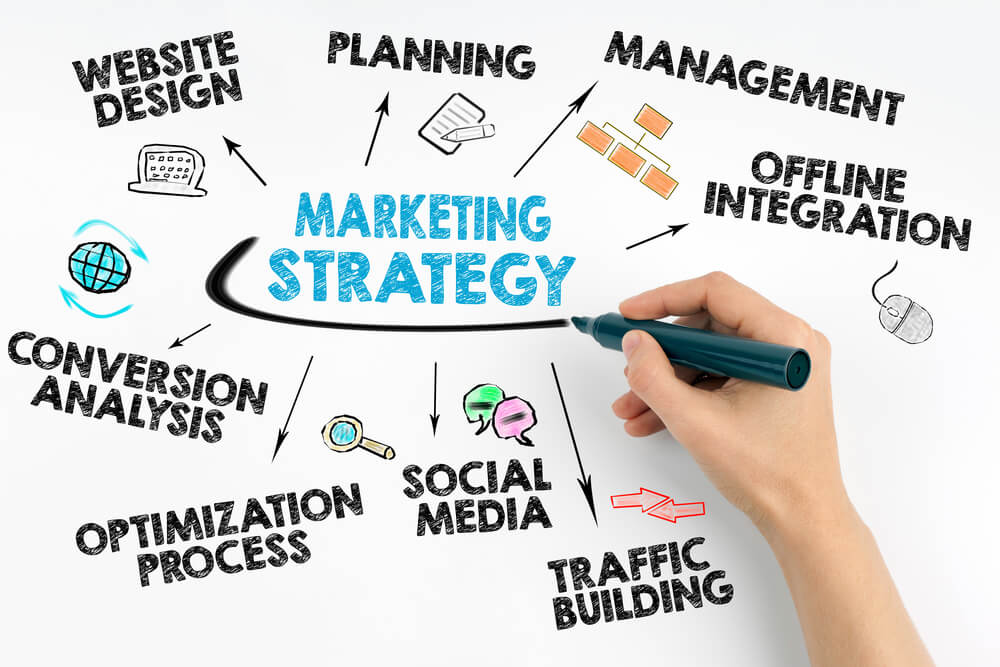


Gcs4u - Seo training in Ludhiana – Digital marketing course is a classroom training program that covers all facets of web marketing ie.

Inovies is Topmost SEO Agency Hyderabad.
SEO stands for Search Engine Optimization, which is the practice of increasing the quantity and quality of traffic to your website through organic search engine results.
We provide the best services SEO, PPC, SMO, SMM, Email marketing and many more.
Visit our website and make an appointment.website: https://www.inovies.com/digital-marketing-company/