A CRM should not just store data. It should enforce process discipline, eliminate revenue leaks, and give leadership real visibility into pipeline health.
Yet most implementations fail because they are treated as software deployments, not revenue systems.
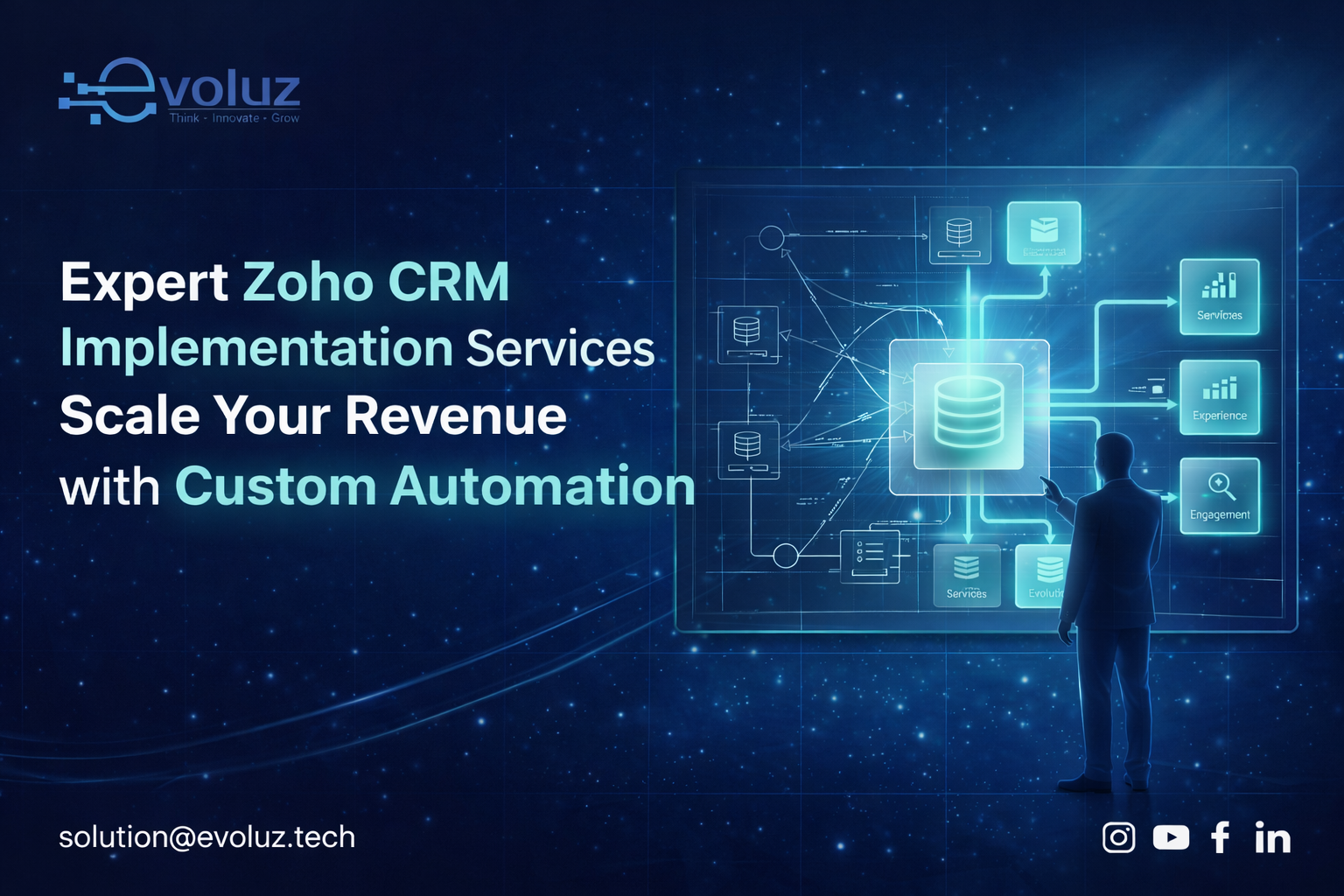
This is where a structured Zoho CRM implementation service becomes a growth investment.
The Problem: Why CRM Implementations Fail
Most CRM failures are not technical. They are operational. And the cost is not theoretical.
A 2026 analysis backed by Gartner shows that 55% of CRM implementations fail to meet their original business objectives. Not because the platform is wrong, but because the system is never aligned with how the business actually sells.
The Hidden Cost of Dirty Data
Poor data quality is not just inconvenient. It is expensive.
Research from IBM and Gartner estimates that U.S. businesses lose an average of $12.9 million per year due to inaccurate or incomplete data. At a macro level, that translates to a $3.1 trillion problem.
Inside your CRM, this shows up as:
- Duplicate accounts distorting pipeline value
- Incomplete lead records breaking attribution
- Inconsistent data formats killing forecast accuracy
When leadership cannot trust the data, they stop using the system to make decisions.
The Adoption Gap That Kills ROI
Even with clean data, most systems still fail. Over 50% of CRM breakdowns are directly tied to low user adoption, as highlighted by Radin Dynamics.
When sales teams do not see immediate value, they revert to:
- Spreadsheets
- Personal trackers
- Disconnected tools
This creates a silent failure:
- Deals are tracked outside the system
- Pipeline visibility disappears
- Forecasting becomes guesswork
The Operational Breakdown Across Lead-to-Cash
This is where revenue actually leaks. In most organizations, critical steps are still manual:
- Leads sit unassigned for hours or days
- Quotes are created outside the CRM
- Sales, finance, and support operate in silos
The result is slower deal cycles, inconsistent customer experience, and lost revenue that never gets tracked.
In most CRM audits, we find that 20–30% of pipeline value is duplicated, stale, or unqualified. That is revenue distortion at scale.
We do not install CRM. We engineer systems that eliminate these gaps and align technology with business goals.
The Framework: A Proven 3-Step Implementation Roadmap
A successful Zoho CRM implementation service is structured, measurable, and outcome-driven.
According to Nucleus Research, every $1 invested in a properly implemented CRM returns an average of $8.71. That return only happens when the implementation follows a disciplined roadmap.
Step 1: Discovery & Business Process Mapping
We start by understanding how your revenue engine actually operates.
Key activities:
- Stakeholder workshops across Sales, Marketing, Finance, and Operations
- Mapping your lead-to-cash automation workflow
- Identifying bottlenecks, delays, and manual dependencies
- Defining reporting requirements and KPIs
Outcome:
A blueprint that aligns CRM architecture with your revenue model.
Step 2: Architecture Design & CRM Data Migration
This is where strategy becomes system design.
What we build:
- Custom modules aligned with your sales cycle
- Structured data architecture with strong data governance policies
- Clean, validated CRM data migration from legacy systems
- Role-based access controls and audit-ready systems
For U.S.-based firms, compliance is non-negotiable:
- SOC2-aligned data handling and audit controls
- Alignment with CCPA/CPRA data privacy requirements for customer data protection
- Secure data storage, encryption, and access governance
- Controlled API integrations with full audit visibility
Result:
A CRM that leadership can trust and teams can rely on.
Step 3: Custom Development & Automation
This is where Zoho becomes a competitive advantage.
Advanced Zoho Automation Strategy
- Lead scoring and instant routing
- Deal-stage automation and SLA enforcement
- Approval workflows for pricing and discounting
Deluge Scripting (Zoho’s Native Language)
- Custom logic tailored to your workflows
- Automated validations and calculations
- Process enforcement at every stage
Zoho Flow & Custom API Development
- Integration with external platforms
- Real-time synchronization across systems
- Scalable architecture for future expansion
Zoho Analytics for Leadership Visibility
- Pipeline velocity tracking
- Revenue forecasting dashboards
- Conversion performance insights
User Adoption Framework (The Missing Layer)
Technology does not fail. Adoption does.
We design systems that sales teams actually use by embedding guidance directly into their workflow:
- Contextual in-app guidance that shows reps exactly what to do at each deal stage
- Personalized video documentation tailored to your CRM setup
- Role-based dashboards that surface only what matters
- Automation that removes manual entry so reps see immediate value
Without automation, the average sales rep spends only 28% of their time actually selling. With structured CRM systems, that number can exceed 60%, as reported by
Salesforce and Gartner.
Outcome:
More selling time. Faster deal cycles. Higher revenue per rep.
The Ecosystem: Building a 360° Revenue Engine with Zoho One
A CRM alone creates visibility. An ecosystem creates control. A structured Zoho One rollout connects your entire operation:
Sales + Finance (Zoho CRM + Books)
- Automated quote-to-invoice workflows
- Real-time revenue tracking
- Reduced billing errors
Sales + Support (Zoho CRM + Desk)
- Unified customer history
- Faster resolution times
- Improved retention
Sales + Delivery (Zoho CRM + Projects)
- Seamless handoff from deal to execution
- Project tracking tied to revenue
- Better customer experience
Result:
A single system that connects every revenue touchpoint.
The Edge: AI-Driven Revenue Intelligence with Zia
CRM is no longer just a system of record. It is becoming a system of intelligence.
Research shows that 83% of companies have already adopted AI within their CRM workflows, and AI-driven systems deliver a 34% increase in productivity (Nucleus Research).
What Zia AI Enables:
- Predictive deal scoring
- Anomaly detection in pipeline activity
- Intelligent workflow recommendations
- Automated insights into deal risks
Combined with Zoho Analytics:
- Forecast accuracy improves significantly
- Win/loss patterns become visible
- Leadership gains proactive control over pipeline
Companies using integrated CRM systems report up to a 42% improvement in forecast accuracy, according to Salesforce.
This is not automation. This is decision intelligence.
Why Work with a Zoho Certified Consultant in the USA
A standard vendor configures fields. A RevOps-driven partner builds systems that scale.
What you should expect:
- Deep expertise in business process mapping and automation
- Proven experience in mid-market B2B environments
- Strong focus on user adoption frameworks
- Alignment with U.S. data governance and compliance standards
The difference is not in the tool. It is in how the system is designed, enforced, and adopted.
What You Gain from a Strategic Implementation
- 29% increase in sales revenue
- 34% improvement in sales productivity
- Up to 42% improvement in forecasting accuracy
- Faster response times and shorter sales cycles
- Operational alignment across teams
These are not theoretical gains. They are the outcome of a structured implementation approach.
Conclusion: Build a CRM That Scales Revenue, Not Complexity
A CRM should remove friction, enforce process, and drive accountability.
If your current system feels like a reporting tool instead of a revenue engine, the issue is not the platform. It is the implementation strategy.
Book Your Process Discovery Call
This is where we identify where your current system is leaking revenue and how to fix it.
In your discovery session, we will:
- Map your current lead-to-cash workflow
- Identify operational gaps and inefficiencies
- Highlight where automation will create immediate impact
- Outline a tailored Zoho CRM implementation strategy
You will leave with clarity, not a sales pitch.
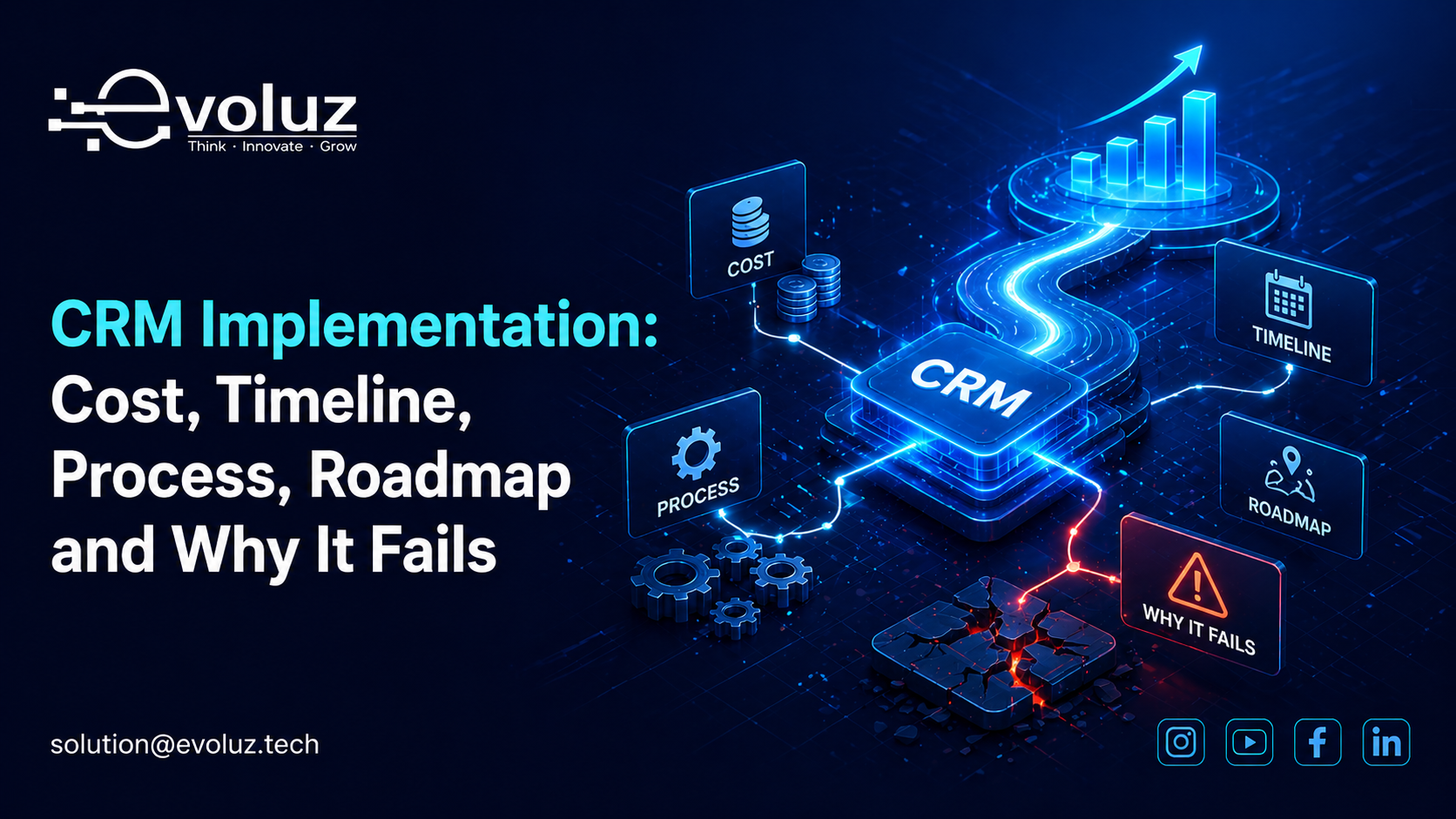
CRM implementation is not where most businesses think it begins.
It does not start with selecting a tool or configuring pipelines. It starts at the point where a business defines how revenue