

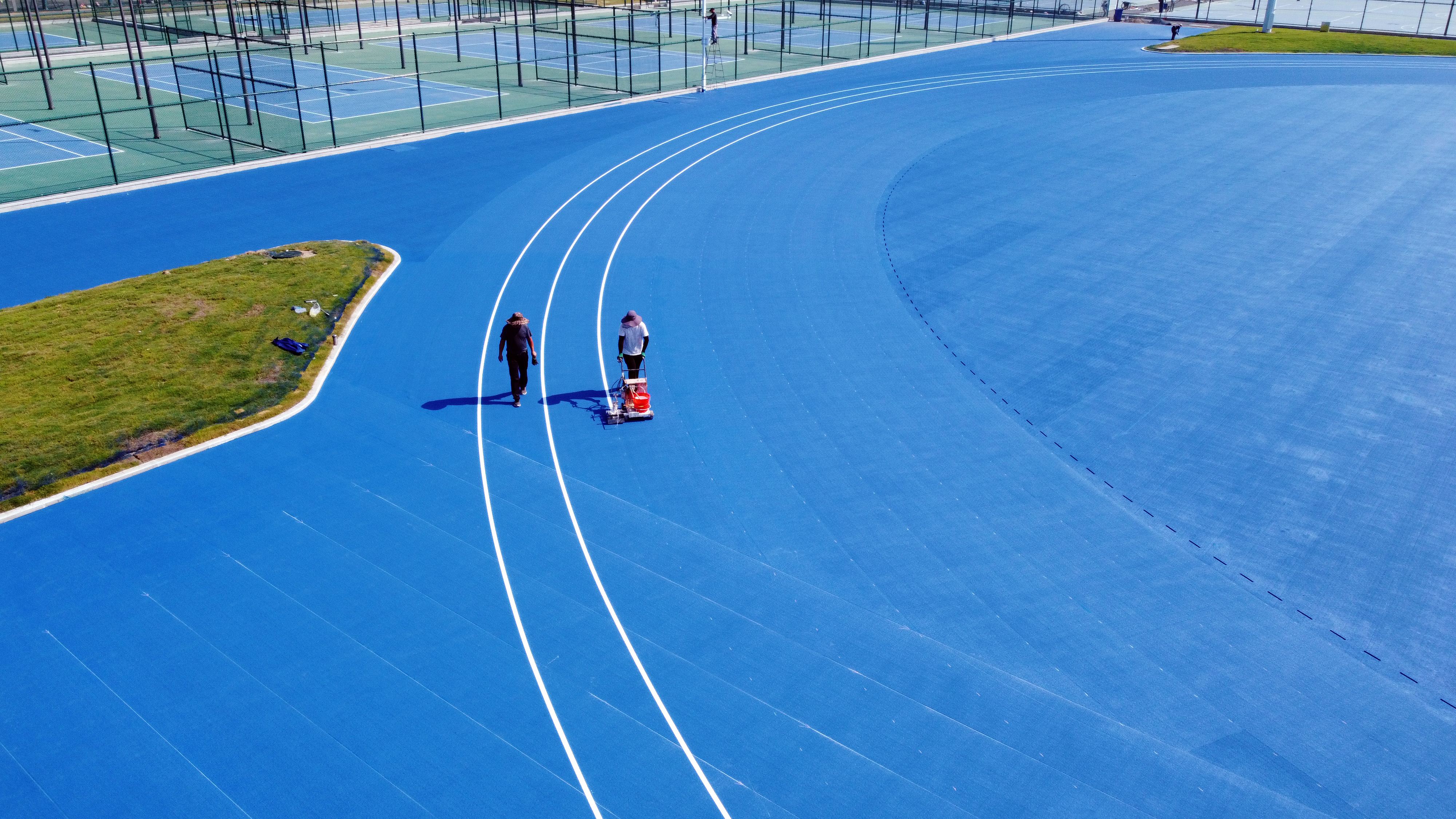
Synthetic running tracks are widely used in schools, stadiums, and sports facilities. However, water ponding on running tracks after rain is a common issue that affects safety, performance, and service life.
If you’re searching for “why does my running track hold water” or “how to fix track drainage problems”, this guide explains the real causes and practical solutions.
1. Poor Track Construction and Slope Design
The most common reason for water accumulation is improper installation.
- Insufficient slope gradient: Without proper longitudinal and transverse slopes, rainwater cannot flow toward drainage outlets.
- Uneven foundation: Poor sub-base compaction leads to surface depressions over time.
- Construction inaccuracies: Small errors during installation can disrupt water flow paths.
👉 In many cases, ponding issues start at the construction stage and worsen over time.
2. Low-Quality Materials and Surface Aging
Material quality directly impacts drainage performance.
- Low-grade materials may crack, shrink, or wear out quickly
- Surface damage can create micro-pits that trap water
- Aging tracks lose elasticity and water resistance
👉 Choosing high-performance materials like EPDM or prefabricated systems is critical.
Reference product:
https://www.alibaba.com/product-detail/JRACE-School-Sports-Field-EPDM-Surface_1601740448185.html
3. Inefficient Drainage System Design
Even a well-built track can fail without proper drainage.
- Too few drainage outlets
- Pipes with insufficient diameter
- Incorrect drainage channel slope
- Blocked or poorly maintained drains
👉 These issues reduce the track’s ability to handle heavy rainfall.
4. Environmental and Usage Factors
External conditions also contribute to water ponding:
- Heavy or continuous rainfall during rainy seasons
- Long-term UV exposure causing material degradation
- Damage from heavy equipment or sharp objects
- Chemical corrosion affecting surface sealing
👉 These factors gradually reduce drainage efficiency.
5. How to Fix and Prevent Water Ponding
A long-term solution requires both technical improvements and regular maintenance:
During Construction
- Ensure proper base compaction
- Design accurate slope gradients
- Follow strict installation standards
Material Selection
- Use durable, water-resistant materials (EPDM, PU, prefabricated track)
- Avoid low-cost, short-lifespan options
Explore more solutions:
https://www.alibaba.com/product-detail/JRACE-Eco-Friendly-Playground-Rubber-Running_1601738264544.html
Drainage Optimization
- Increase drainage outlet density
- Use larger drainage pipes
- Maintain correct channel slopes
Regular Maintenance
- Inspect the track every 3–6 months
- Clean drainage systems regularly
- Repair worn or damaged areas immediately
Conclusion
Water ponding on synthetic running tracks is usually caused by a combination of poor construction, low-quality materials, inadequate drainage, and environmental factors.
By improving installation quality, upgrading materials, and maintaining an efficient drainage system, you can eliminate standing water, extend track lifespan, and ensure a safe playing surface.