


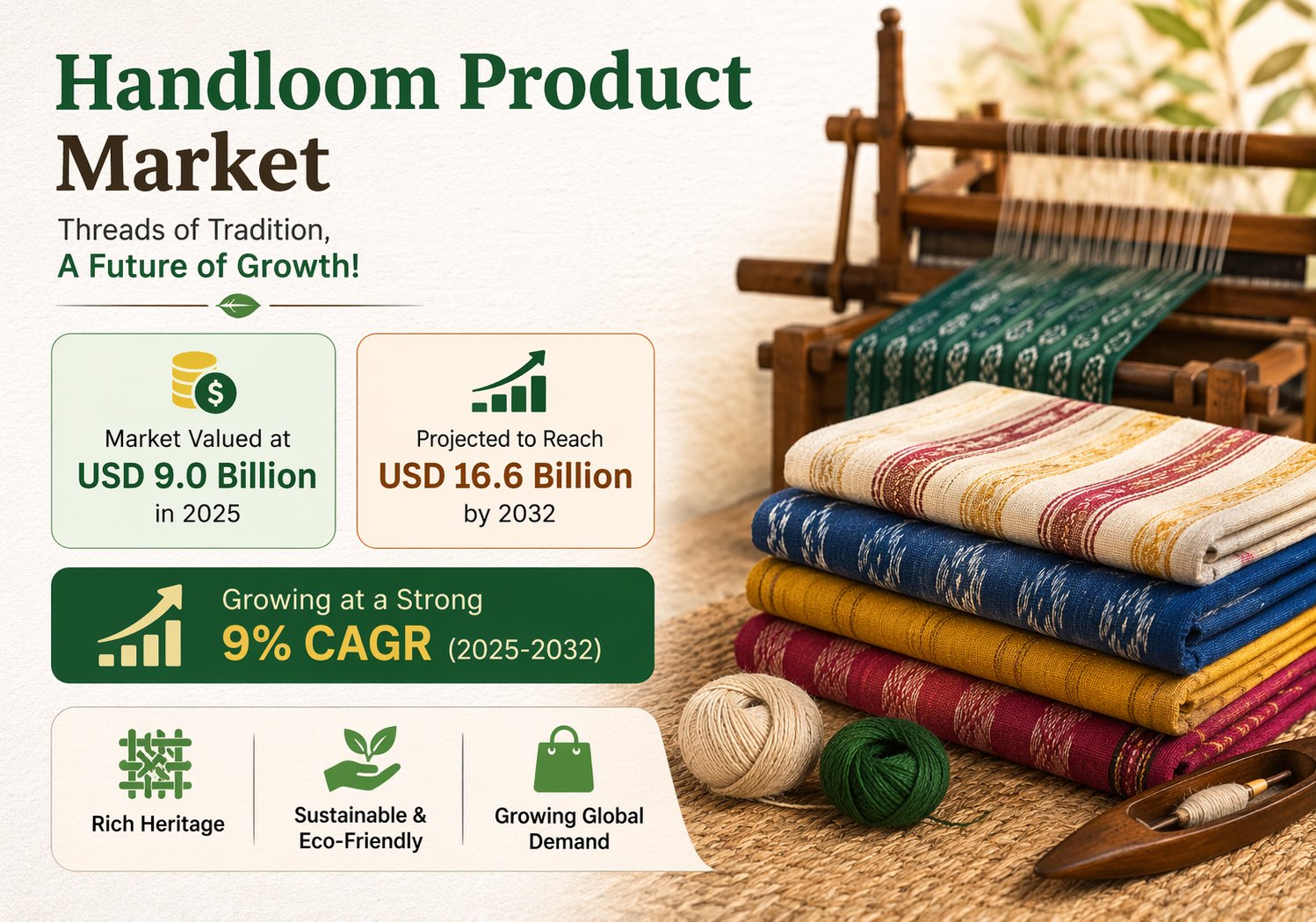
The global handloom product market is witnessing steady expansion, valued at approximately USD 9.0 billion in 2025 and projected to reach USD 16.6 billion by 2032, growing at a CAGR of 9%. This growth reflects increasing consumer preference for sustainable, ethically produced textiles and the rising global appreciation for traditional craftsmanship. Asia-Pacific dominates the market with a 70% share, led by India’s vast artisan base and strong export potential, while Europe and North America continue to show steady demand driven by eco-conscious consumers and diaspora communities.
For More Industry Insights Read: https://www.fairfieldmarketresearch.com/report/handloom-product-market
Sustainability Driving Market Momentum
Sustainability has emerged as a central growth driver in the handloom product market. Consumers worldwide are increasingly shifting toward environmentally responsible products, boosting demand for textiles made from natural fibers such as cotton, silk, and linen. Handloom production is inherently eco-friendly, consuming significantly less energy and water compared to mechanized processes. This advantage positions handloom products as premium offerings in markets like Europe and North America, where a large share of consumers are willing to pay more for ethically sourced goods. Additionally, certifications such as Fair Trade and GOTS are enhancing brand credibility and market penetration.
Digital Transformation and E-Commerce Expansion
The integration of e-commerce and direct-to-consumer (D2C) models is transforming the handloom industry. Online platforms now account for 25–30% of global sales, growing significantly faster than traditional retail channels. Marketplaces such as Etsy, Amazon Handmade, and Flipkart are enabling artisans and small enterprises to reach global audiences without heavy infrastructure investments. This shift not only improves profit margins for producers but also enhances product visibility across international markets. Government-backed initiatives and export promotion programs further support digital adoption, strengthening global trade opportunities.
Emerging Opportunities in New Markets
Rising disposable incomes and growing appreciation for artisanal products in regions such as Southeast Asia, Latin America, and the Middle East are opening new growth avenues. Expanding middle-class populations in countries like India, Indonesia, and Vietnam are driving demand for premium handloom goods. Institutional buyers, including hospitality, corporate gifting, and luxury retail sectors, are also creating high-volume opportunities. Tourism and global exhibitions further amplify market exposure, enabling artisans to connect with new customer segments.
Technology Integration and Supply Chain Modernization
Technological advancements are enhancing efficiency, transparency, and scalability within the handloom sector. Initiatives such as upgraded looms, solar-powered units, and AI-assisted design tools are improving productivity while preserving traditional craftsmanship. Blockchain-based traceability systems are also gaining traction, particularly in premium markets, ensuring authenticity and ethical sourcing. Early adoption of digital tools and supply chain modernization is expected to provide a competitive edge to organizations aiming for sustainable growth.
Competitive Landscape
The handloom market remains highly fragmented, with artisans, cooperatives, and small enterprises playing a dominant role. Leading players such as Fabindia, Khadi Gramodyog, and Dastkar have established strong brand identities by combining heritage with modern retail strategies. Meanwhile, digital-first platforms like Jaypore and Nandini Handlooms are expanding global reach, highlighting the evolving dynamics of this culturally rich and economically significant market.
Trending Reports:
• Smart Gas Meter Market: https://www.linkedin.com/pulse/smart-gas-meter-market-growth-accelerates-digital-utility-verma-elkgf/
• Syngas Market: https://www.linkedin.com/pulse/syngas-market-growth-driven-clean-energy-transition-ankita-verma-6gh2f/
• Pneumatic Components Market: https://www.linkedin.com/pulse/pneumatic-components-market-growth-fueled-industrial-automation-o1pqf/



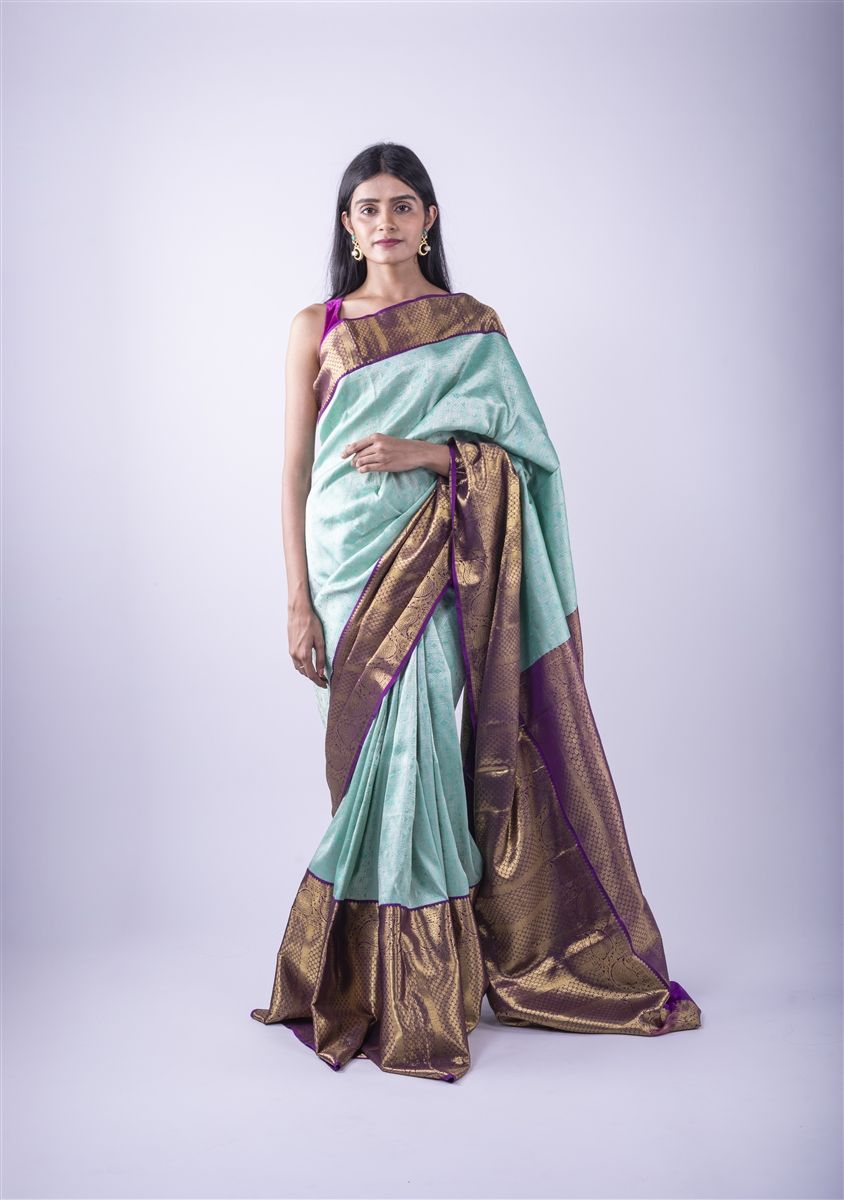
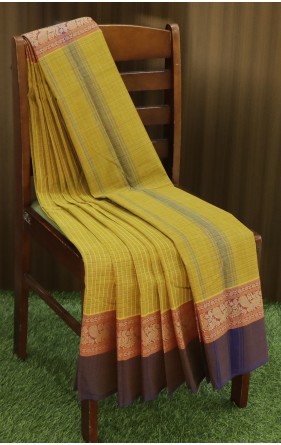
When it comes to wear at ease the longer time or a whole day, the fabric plays an inevitable part.
Indeed occasions like weddings and parties may extend for hours and hence you should look for the most convenient fabric.Buy latest collection of handloom silk sarees, handloom cotton sarees, silk cotton sarees.
Sri Baba Handlooms manufacturers sarees from their own handloom weaving mill.
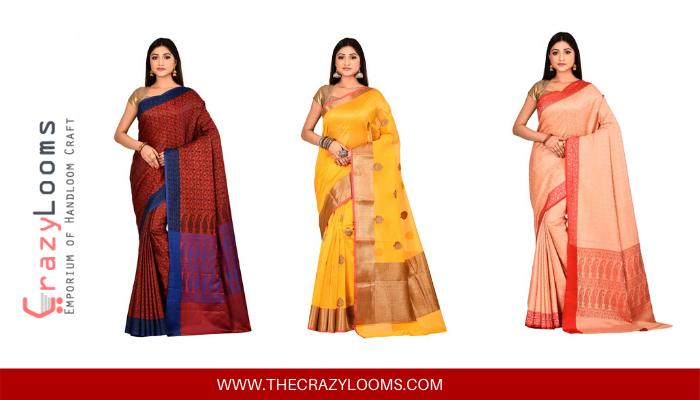
Large collection of handloom banarasi saree & banaras handloom sarees at The Crazy Looms.
Buy Banarasi Silk Sarees and banarasi handloom sarees online.