You adjust. Shift. Try not to wake them.
And quietly wonder — there has to be an easier way to do this.
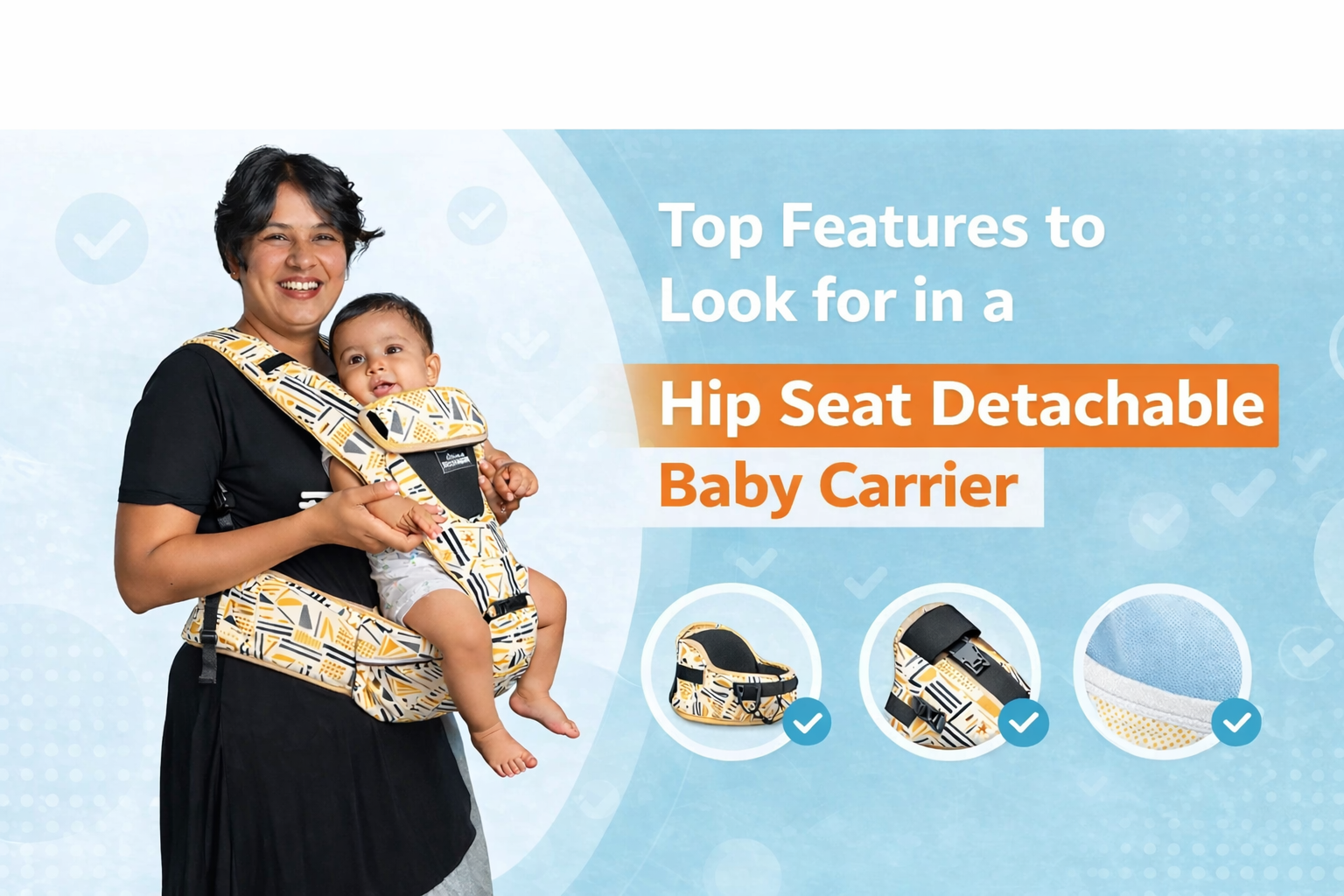
That’s where a Hip Seat Baby Carrier starts making sense. Not as a “product”, but as something that fits into real, everyday parenting — in our kind of weather, our kind of homes, our kind of routines.
If you’ve been thinking about getting one, or just trying to understand what actually matters, here’s a simple, honest guide. Nothing technical. Just what helps in real life.
Why More Indian Parents Are Choosing Hip Seat Carriers
In the past, many of us managed with just arms, dupattas, or basic slings. And honestly, that still works — for short moments.
But daily life today looks different.
· You may be cooking while holding your baby
· Travelling in autos or cabs
· Visiting OPDs or standing in queues
· Managing chores without help
· Attending family functions where babies get overwhelmed
Add to that the heat, humidity, and long days, and carrying a baby constantly becomes physically exhausting.
That’s why many parents are slowly moving toward options like a Detachable Hip Seat Baby Carrier or an Ergonomic Hip Seat Carrier — not because it’s trendy, but because it reduces strain over time.
What Actually Matters When Choosing One
There are so many options online. Different designs, features, prices. It can get confusing.
But when you look closely, a few things really matter more than others.
1. The Hip Seat Itself (This Is the Core)
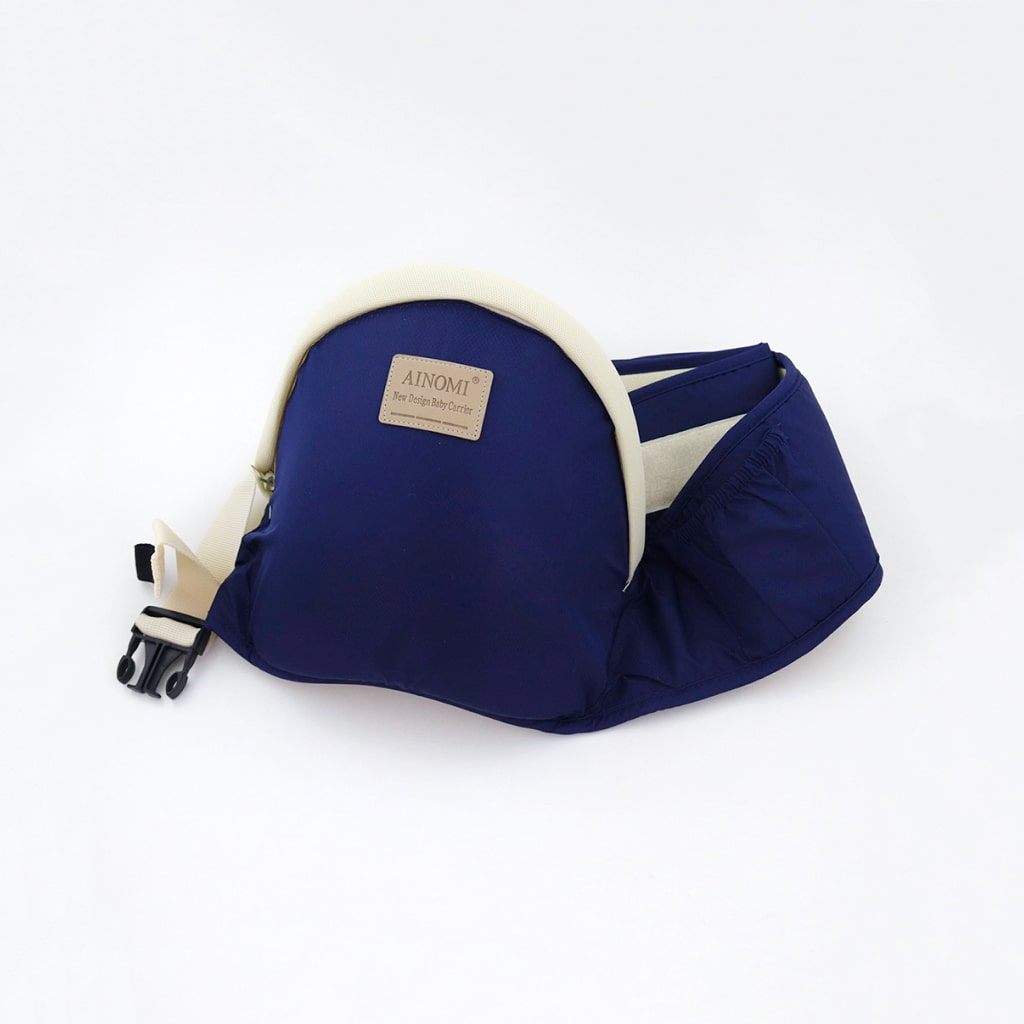
The “seat” part is what changes everything.
Instead of your arms taking the baby’s full weight, the seat supports it from below. That simple shift:
· Reduces pressure on your shoulders
· Keeps your back more balanced
· Helps you carry longer without strain
For daily use — especially with growing babies — this becomes very important.
2. Detachable Option (Flexibility for Real Life)
This is something many parents don’t think about at first.
A Detachable Hip Seat Baby Carrier gives you two ways to use it:
· Full carrier (hands-free, secured with straps)
· Just the hip seat (quick support for short holds)
And honestly, both are useful in different situations.
· At home → quick lifting, settling, feeding
· Outside → full carrier for longer support
· During travel → easy switching
You don’t always need full straps. And sometimes, you really do.
3. Breathable Fabric (Very Important in Indian Weather)
Let’s be honest — Indian summers are not mild.
Between heat, humidity, and sweat, anything heavy or padded can feel uncomfortable very quickly.
So look for:
· Soft, breathable fabric
· Airflow-friendly design
· Non-sticky material
This becomes even more important during:
· Summer afternoons
· Crowded indoor events
· Travel without AC
· Monsoon humidity
A good carrier shouldn’t feel like extra heat.
4. Ergonomic Support (For Baby and You)
This sounds like a technical word, but it’s actually simple.
An Ergonomic Hip Seat Carrier means:
· Baby’s legs sit in a natural “M” position
· Weight is evenly distributed
· Spine and hips are supported properly
Why it matters:
· Better comfort for baby during longer use
· Less strain on your body
· Safer posture overall
Especially as your baby grows into a Toddler Baby Carrier stage, this becomes even more important.
5. Weight Capacity & Age Range
Babies grow faster than we expect.
One day they’re tiny. Next thing you know, they want to be carried everywhere — but they’re much heavier.
So it helps to choose something that:
· Works from around 3–4 months onward
· Supports up to toddler stage
· Feels stable even as weight increases
This avoids needing multiple carriers as your baby grows.
6. Comfortable Waist Support
Most of the weight in a hip seat carrier sits around your waist.
So check for:
· Wide waistband
· Strong support
· Comfortable fit (not digging into skin)
This is especially useful if you:
· Use it daily
· Carry baby for longer periods
· Have back or shoulder discomfort
A Real-Life Example: How One Design Helps Daily Life
Let’s take something like the LittleBum Yellow Pyramid Detachable Hip Seat Baby Carrier.
Get Littlebum’s stories in your inbox
Join Medium for free to get updates from this writer.
Subscribe
Subscribe
Remember me for faster sign in
Not from a “product” angle — just from how it fits into daily routines.
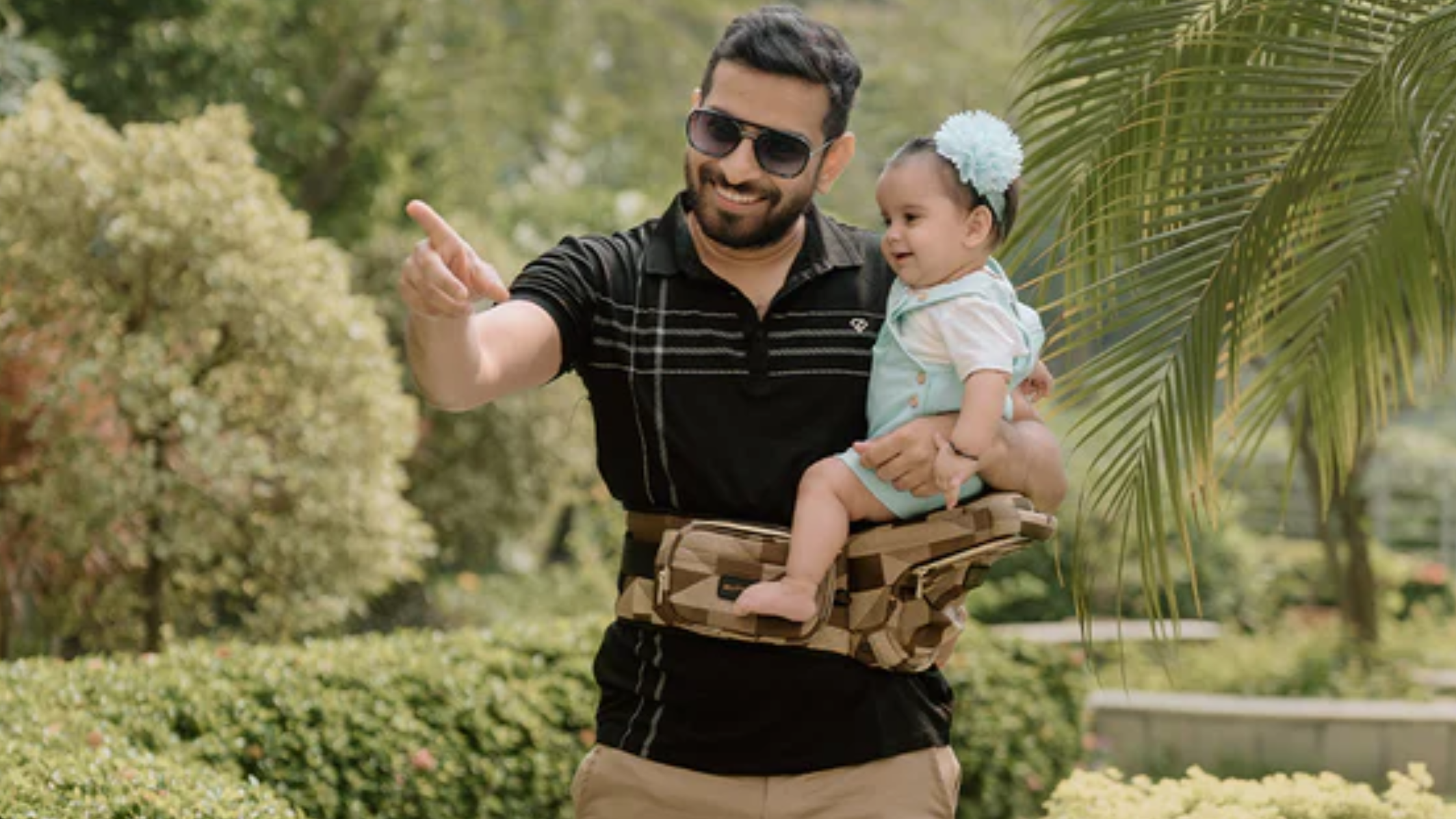
· The hip seat gives solid support when holding your baby for longer durations
· The detachable design allows quick switching between full carrier and simple seat
· The fabric feels breathable enough for warm weather
· The structure keeps baby sitting in a stable, supported position
· The weight support works well from baby stage into toddler phase
Where it helps most:
· Cooking while baby wants to be held
· Short market trips or auto rides
· Long hospital visits or waiting lines
· Evening walks or family gatherings
It’s not about making parenting “easy”.
It just makes certain moments a little less physically tiring.
Daily Usage: What Actually Works
You don’t need to overthink how to use it. Just keep things simple.
Wearing Positions
· Front carry (most common)
· Hip carry (quick and comfortable at home)
· Facing inward (better for smaller babies)
For most parents, front carry + hip seat combination works best.
Summer & Monsoon Tips
· Dress baby in light cotton clothes
· Avoid over-layering inside the carrier
· Take short breaks during long use
· Check for sweating around neck and back
During monsoon:
· Keep carrier dry
· Avoid damp fabric touching baby’s skin
Comfort Checks (Very Important)
Every time you use:
· Baby’s legs should not hang straight down
· Baby should sit comfortably, not slouch
· No tight pressure around baby’s waist or chest
· Your shoulders should not feel overloaded
If something feels off, adjust. It usually takes a few tries to get it right.
Washing & Care
· Use mild detergent
· Avoid harsh chemicals
· Air dry properly (important in humid weather)
· Check straps and stitching regularly
Simple care keeps it usable for a long time.
Common Mistakes to Avoid
· Carrying baby too low or too loose
· Using thick clothing inside carrier in summer
· Ignoring your own posture
· Using it continuously without breaks
It’s a support tool — not something to depend on non-stop.
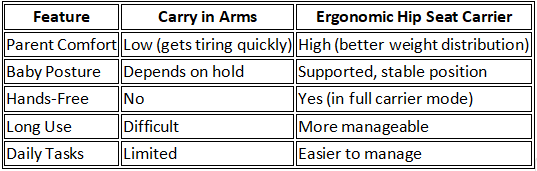
Quick Comparison: Traditional Carry vs Ergonomic Carrier
A Small Shift Happening (2025–2026)
More parents now are thinking a little ahead.
Instead of short-term solutions, they’re choosing:
· Breathable materials
· Long-term usability
· Designs that grow with the baby
· Better posture support
Not because it’s “modern”, but because daily life is demanding.
Anything that reduces physical strain — even slightly — matters.
Final Thoughts (Just Between Parents)
There’s no perfect way to carry a baby.
Some days, arms are enough.
Some days, nothing feels comfortable.
Some days, everything works.
A Hip Seat Baby Carrier — especially a Detachable Hip Seat Baby Carrier — doesn’t solve everything. But it can make everyday moments a little easier.
Less strain.
Better balance.
A bit more comfort for both of you.
And honestly, in the middle of long days, that small difference matters.
You’ll figure out what works best for you and your baby.
Just take it one day at a time.
FAQs (Real Parent Questions)
1. Can I use a hip seat carrier for a newborn?
Most are suitable from around 3–4 months, when baby has better neck control. Always check support and positioning.
2. Is it safe for long durations?
Yes, but with breaks. Even the best carrier shouldn’t be used continuously for hours without rest.
3. Will my baby feel too hot inside it?
If the material is breathable and clothing is light, it should be comfortable. Always check for sweating.
4. Can I use it at home daily?
Yes, especially the hip seat mode. It’s helpful for quick tasks and short holds.
5. Is it useful for toddlers too?
Yes. A good Toddler Baby Carrier setup supports heavier weight and reduces strain on your body.
6. Does it help with back pain?
It can reduce strain by distributing weight better, but correct posture and proper fit are important.
7. Is detachable really useful?
Very. You won’t always need full straps. The flexibility helps in real-life situations.
8. How tight should the carrier be?
Snug, but not restrictive. Baby should feel secure, not compressed.
TCHA