Enterprise governance, risk, and compliance (eGRC) has moved from a back-office function to a core business requirement. In the U.S., this shift is more pronounced than anywhere else, driven by regulatory pressure, litigation risk, and increasing operational complexity.
According to data from MarketsandMarkets U.S. eGRC Report, the U.S. eGRC market is expected to grow from $5.45 billion in 2025 to $10.17 billion by 2030, at a CAGR of around 13.3%. This is steady, sustained growth, not hype-driven expansion.
Download PDF Brochure: https://www.marketsandmarkets.com/pdfdownloadNew.asp?id=210046005
eGRC Is Now Mandatory Infrastructure
The most important shift is this: eGRC is no longer optional.
Organizations in regulated industries cannot defer compliance without exposing themselves to legal, financial, and reputational risk. In the U.S., enforcement is strict and penalties are real. This creates what can be called a “mandatory spend category.”
Unlike discretionary IT investments, eGRC budgets are tied directly to survival. Companies invest because they have to, not because they want to optimize operations.
Why the U.S. Leads the Market
The U.S. dominates eGRC adoption for three structural reasons.
First, regulatory density is high. Laws such as CCPA and CPRA, along with sector-specific regulations in banking, healthcare, and government, require continuous compliance.
Second, litigation risk is significant. Non-compliance often leads to lawsuits, fines, and long-term brand damage. This raises the cost of inaction.
Third, U.S. enterprises adopt enterprise software faster. The ecosystem of vendors, consultants, and system integrators accelerates deployment and adoption.
The result is a market where demand is driven by necessity, not trend.
Shift from Siloed Tools to Integrated Platforms
Historically, governance, risk, and compliance functions operated in silos. Organizations used separate tools for audits, risk tracking, and compliance reporting. These systems were often manual and reactive.
This model is breaking down.
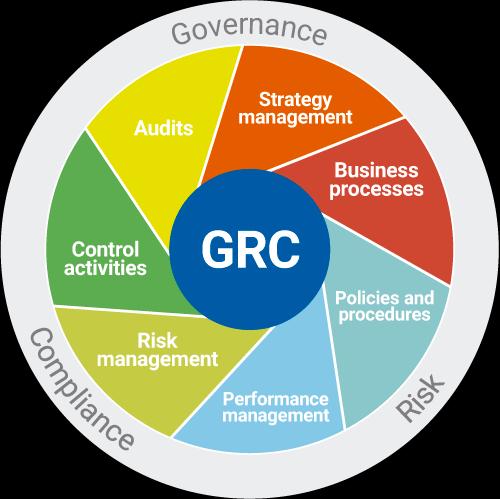
Modern eGRC platforms are designed to unify these functions into a single system. Organizations now expect:
Centralized risk visibility
Real-time dashboards
Automated workflows
Cross-functional integration across IT, legal, and finance
The goal is simple: create a single source of truth for risk and compliance.
This shift is driving demand away from point solutions and toward integrated platforms.
Key Growth Drivers
Several factors are accelerating adoption.
Third-Party Risk Is Expanding
Organizations rely heavily on vendors, SaaS platforms, and external partners. Each of these introduces risk.
Managing third-party risk manually is no longer viable. Companies need tools that provide continuous monitoring and standardized risk assessment.
This has made third-party risk management one of the fastest-growing segments within eGRC.
Data Privacy Requirements Are Increasing
Privacy regulations are expanding and becoming more complex. Companies must track how data is collected, stored, and used across systems.
Compliance is not a one-time activity. It requires continuous monitoring and reporting.
This drives demand for automation in compliance workflows.
Cyber Risk Is Now a Governance Issue
Cybersecurity is no longer limited to IT teams. It is now a governance and compliance concern.
Boards expect visibility into cyber risk. Regulators require reporting. This expands the scope of eGRC platforms to include cybersecurity risk management.
Digital Transformation Increases Complexity
Cloud adoption, APIs, SaaS tools, and AI systems increase the attack surface and operational risk.
More systems create more dependencies. More dependencies create more risk.
eGRC platforms help manage this complexity by providing structured oversight.
Where the Money Is Going
The market shows clear patterns.
Software solutions generate the majority of revenue
Large enterprises lead adoption due to regulatory exposure
Highly regulated industries dominate spending, especially BFSI, healthcare, and government
On-premise deployments still exist, particularly where data control is critical
This is not evenly distributed growth. It is concentrated in industries with the highest compliance burden.
Competitive Landscape
The market includes both large technology providers and specialized vendors.
Large players integrate eGRC into broader enterprise platforms. Smaller players focus on specific compliance or risk domains.
The direction is clear: consolidation.
Organizations prefer fewer systems with broader capabilities. This favors platform-based solutions over standalone tools.
What Changes Next
Looking ahead to 2030, four trends stand out.
Automation Becomes Standard
Manual compliance processes will not scale. Automation will become the baseline.
This includes automated control testing, continuous monitoring, and AI-assisted compliance mapping.
ESG and AI Governance Expand Scope
New regulatory areas are emerging, particularly around environmental, social, and governance (ESG) reporting and AI governance.
These will become part of the eGRC framework.
Real-Time Risk Visibility
Periodic audits will not be enough. Organizations will need continuous, real-time visibility into risk.
This shifts eGRC from reporting systems to operational intelligence systems.
Convergence with Security and IT
eGRC will increasingly overlap with cybersecurity and IT operations.
The boundaries between these functions are already blurring.
Challenges to Consider
Despite strong growth, the market faces constraints.
Implementation is complex and time-consuming
Costs can be high, limiting adoption among smaller companies
Organizations struggle with too many overlapping tools
These challenges create opportunities for simpler, more integrated solutions.
Get More Info : https://www.marketsandmarkets.com/Market-Reports/enterprise-governance-risk-compliance-market-1310.html
Final Take
The growth of the U.S. eGRC market is driven by one core factor: increasing complexity.
More regulations, more data, more systems, and more external dependencies all contribute to rising risk.
This trend is not reversing.
As a result, eGRC is becoming foundational infrastructure for modern enterprises. The focus is shifting toward integration, automation, and real-time intelligence.
Companies that treat eGRC as a strategic capability, rather than a compliance checkbox, will be better positioned to manage risk and scale operations in an increasingly regulated environment.