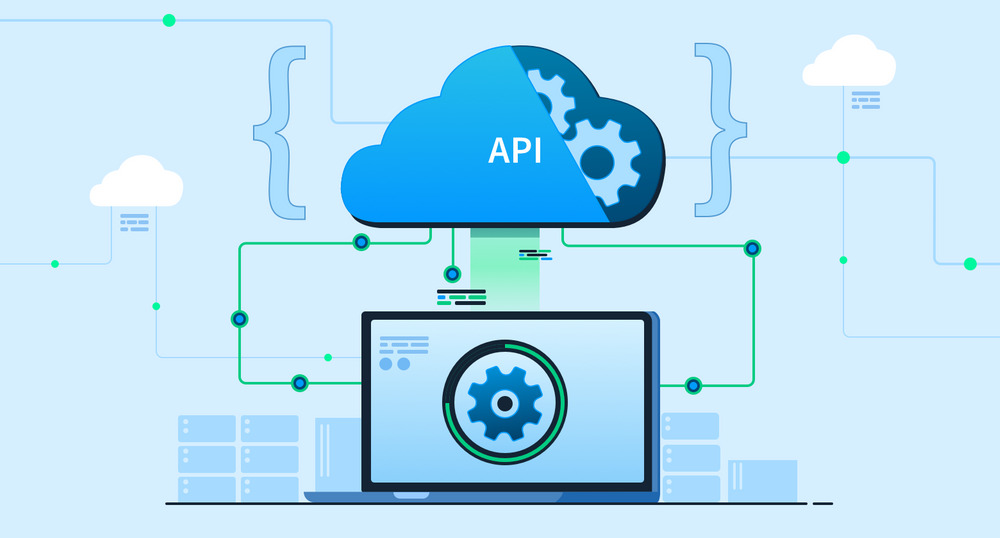



Take any modern app - doesn’t matter if it’s a finance tool, a delivery service, or a social platform - and peel back the interface. Ignore the colors, buttons, and animations for a second. Underneath, what you actually have is a set of systems talking to each other. That conversation is made possible by APIs.
They’ve been around for years, yet only recently started getting the attention they deserve. For a long time, APIs were treated like backend utilities - necessary, but not particularly interesting. That mindset doesn’t really hold up anymore.
Not Just Glue Between Systems
It’s easy to think of APIs as connectors: one service plugs into another, data flows, job done. That’s still true, but it’s also a bit outdated.
Today, APIs often define what a product can become, not just how it works internally. Instead of building everything from zero, teams now assemble products from existing building blocks - login systems, maps, machine learning models, payment flows. Most of these are accessed through APIs.
This shift has changed timelines dramatically. Projects that once took a year can now be shipped in a few months, sometimes weeks. The barrier to entry has dropped, and experimentation is cheaper.
What’s interesting is that many companies no longer hide their APIs. They expose them deliberately, turning internal functionality into something others can build on.
Designing From the Inside Out
There’s been a noticeable shift toward what people call “API-first” development. The idea is simple: instead of writing code and figuring out integrations later, you start by defining how different parts of the system will communicate.
It sounds like a technical detail, but it has broader implications. When you design an API upfront, you’re forced to think about structure, consistency, and long-term use. You can’t rely on quick fixes or hidden logic.
Questions come up early:
- What should be accessible, and what shouldn’t?
- How stable does this need to be over time?
- Will someone else understand this without context?
Answering those properly leads to cleaner systems. It also makes it much easier to support multiple frontends - web, mobile, third-party tools - without rewriting everything each time.
The Convenience Trade-Off
There’s no denying how convenient APIs are. Need a feature? There’s a good chance someone already offers it as a service. Plug it in, configure it, and move on.
But convenience comes with strings attached.
Every external API you rely on introduces a dependency you don’t control. Pricing can change. Performance can drop. Endpoints can be deprecated. And when that happens, your product feels it immediately.
That’s why more experienced teams don’t just stack APIs endlessly. They’re selective. They build critical pieces in-house and use external services where it makes sense. It’s less about avoiding risk and more about knowing where you can afford it.
Security Becomes Front and Center
As APIs take on a bigger role, they naturally attract more attention - from developers and attackers alike.
Unlike traditional interfaces, APIs expose data in a structured, predictable way. That’s great for usability, but it also makes them easier to probe and exploit if something is misconfigured.
Common issues aren’t particularly exotic: weak authentication, missing rate limits, poorly validated inputs. But the impact can be serious, especially when sensitive data is involved.
The key difference now is that security can’t be bolted on later. It has to be part of the design process. Access control, encryption, monitoring - these aren’t optional extras anymore.
At the same time, locking everything down too aggressively can slow development. The challenge is finding a balance where systems are both safe and usable.
Opening the Door to Others
One of the more interesting effects of APIs is how they enable ecosystems to form.
When a company makes its API public, it’s essentially saying: “Here’s what we’ve built - see what you can do with it.” That invitation can lead to integrations, extensions, and entirely new use cases that weren’t planned internally.
Some of the most successful platforms today didn’t grow by building everything themselves. They grew by letting others contribute, often in unexpected ways.
Of course, this only works if the API is actually usable. Poor structure or unclear documentation can kill adoption before it even starts.
Documentation Is Part of the Product
For developers, documentation isn’t a side note - it is the experience.
You can have a powerful API, but if it’s hard to understand, people simply won’t use it. Or worse, they’ll use it incorrectly and blame the system.
Good documentation doesn’t just list endpoints. It explains intent. It shows real examples. It anticipates mistakes.
Companies that take this seriously tend to stand out quickly. They reduce friction, shorten onboarding time, and make integration feel straightforward instead of frustrating.
Where Things Are Heading
Software is becoming more modular. Instead of large, tightly coupled systems, we’re seeing smaller components connected through well-defined interfaces.
APIs are what make that possible.
This modular approach allows teams to move faster. Different parts of a system can evolve independently. Updates don’t require full rewrites. Experimentation becomes less risky.
It also changes how companies compete. It’s no longer just about features - it’s about how easily others can connect to what you’ve built.
APIs don’t usually get credit. They sit in the background, doing their job quietly. But without them, most of what we consider “modern software” wouldn’t function the way it does.
The shift happening now is less about technology and more about perspective. Once you start seeing APIs as something more than technical connectors - as products, as entry points, as leverage - you begin to approach them differently.
And that difference tends to show up everywhere else.
References:
https://playercounter.com/online-game-launch-in-2026/
https://www.latestnigeriannews.com/d/216233/why-nigeria-is-one-of-the-fastest-growing-online.html
https://thetradable.com/press-releases/why-flexibility-and-scalability-of-turnkey-solution-providers-define-success-in-2025

Pass the API-570 exam with guarantee that you will be able to get 100% passing socre for your final API-570 test.https://www.certschief.com/exam/api-570/
API testing helps ensure that your application’s APIs are secured and perform as expected.
Check out our blog here for additional API testing benefits: https://blog.qasource.com/advantages-of-api-testing/ and learn what all you need to know about API testing.