


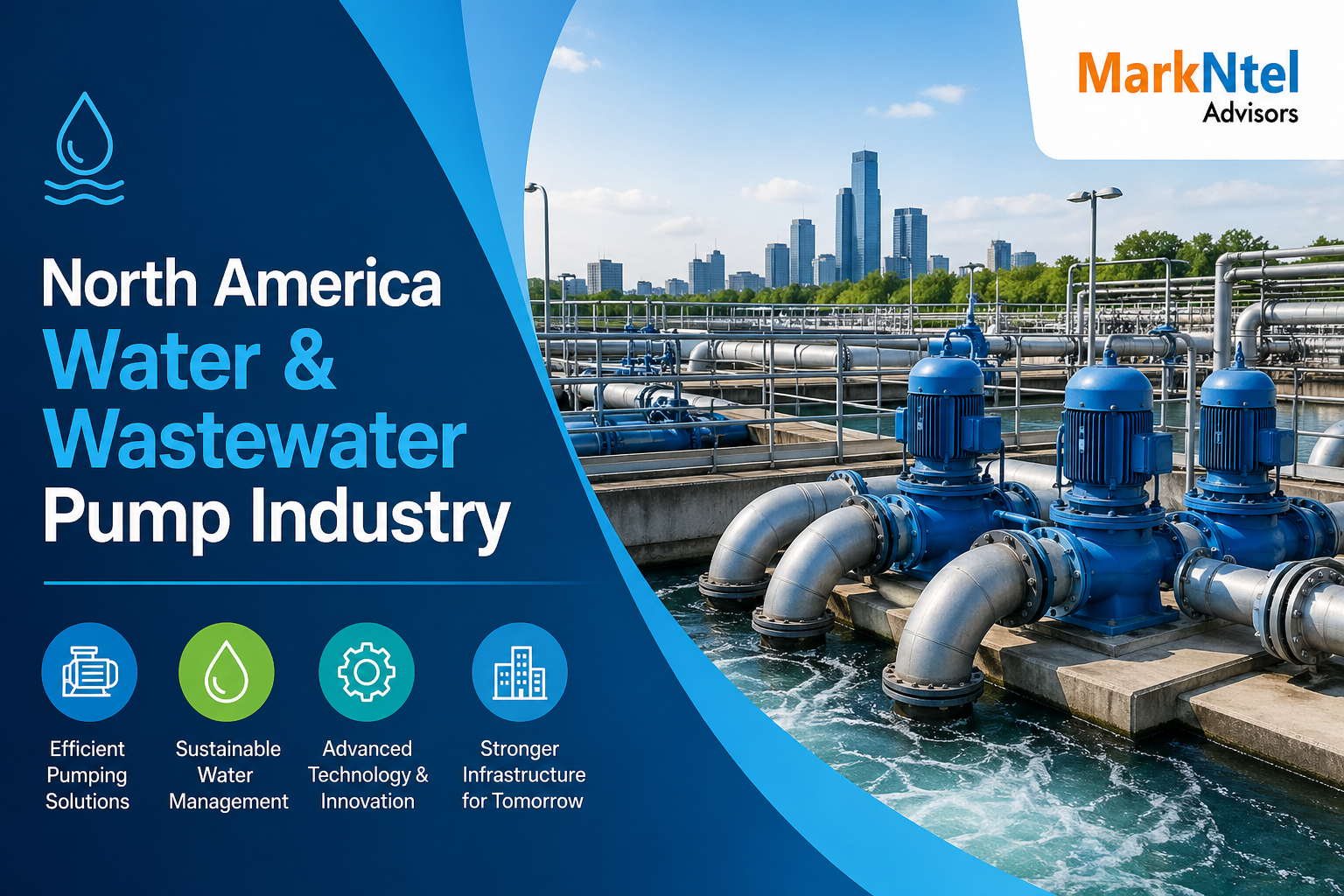
Water and wastewater management has become a critical aspect of infrastructure development across North America. Pumps play a central role in transporting, treating, and distributing water efficiently across residential, industrial, and municipal systems. From supplying potable water to handling sewage and stormwater, these systems form the backbone of modern sanitation and environmental protection frameworks.
The increasing focus on sustainable water management and aging infrastructure replacement continues to shape demand patterns. According to a study by MarkNtel Advisors, the North America Water and Wastewater Pump Market is projected to grow at a steady CAGR during the forecast period, supported by rising investments in water infrastructure upgrades and stricter environmental regulations. Detailed insights can be found in this comprehensive industry report
Importance of Water and Wastewater Pumps
Water and wastewater pumps are essential for maintaining hygiene, supporting industrial processes, and ensuring environmental safety. These pumps are used in various applications, including drinking water supply systems, wastewater treatment plants, agricultural irrigation, and flood control mechanisms.
Organizations such as the United States Environmental Protection Agency emphasize the importance of efficient wastewater systems in reducing pollution and protecting public health. Proper pumping systems ensure that wastewater is transported to treatment facilities where contaminants are removed before discharge or reuse.
Additionally, the Environment and Climate Change Canada highlights the need for sustainable water management practices to preserve freshwater resources. Pumps enable the effective movement and reuse of water, which is especially important in regions facing water stress.
Key Demand Drivers
1. Aging Infrastructure
A significant portion of water infrastructure in North America is decades old and requires modernization. According to the American Society of Civil Engineers, much of the existing water infrastructure in the United States is nearing the end of its operational life. This has increased the need for efficient and reliable pumping systems to replace outdated equipment.
2. Urbanization and Population Growth
Growing urban populations place additional pressure on water supply and wastewater systems. Expanding cities require robust pumping solutions to handle increased water demand and sewage generation. Urban development projects often integrate advanced pumping technologies to ensure efficient water distribution and waste management.
3. Industrial Expansion
Industries such as oil & gas, manufacturing, and power generation rely heavily on water for operations. Efficient wastewater handling is also crucial to comply with environmental standards. The International Energy Agency notes that industrial water use continues to grow, further driving the demand for advanced pump systems.
4. Regulatory Frameworks
Government regulations aimed at reducing water pollution and improving sanitation standards are key drivers. Policies introduced by agencies like the United States Environmental Protection Agency mandate strict wastewater treatment requirements, encouraging the adoption of high-performance pumps.
Technological Advancements in Pump Systems
Technological innovation is playing a crucial role in enhancing pump efficiency and reliability. Modern pumps are increasingly equipped with smart monitoring systems, automation capabilities, and energy-efficient designs.
Smart pumps integrated with sensors and IoT technologies allow real-time monitoring of performance and predictive maintenance. This reduces downtime and operational costs. Additionally, energy-efficient pumps help reduce electricity consumption, which is a significant cost factor in water management systems.
The U.S. Department of Energy highlights that energy-efficient pumping systems can significantly lower energy usage in municipal water operations, supporting sustainability goals.
Environmental and Sustainability Considerations
Sustainability has become a key focus area in water and wastewater management. Efficient pump systems contribute to reduced energy consumption, lower greenhouse gas emissions, and improved water conservation.
Water reuse and recycling initiatives are gaining momentum across North America. Pumps are essential in processes such as desalination, water recycling, and sludge management. These applications help reduce dependence on freshwater sources and support long-term environmental sustainability.
According to the United Nations, improving water infrastructure and management systems is vital to achieving global sustainability goals, including access to clean water and sanitation.
Challenges in the Sector
Despite steady demand, the sector faces several challenges. High installation and maintenance costs can be a barrier, particularly for smaller municipalities. Additionally, energy consumption remains a concern, as pumping systems are often energy-intensive.
Another challenge is the need for skilled professionals to operate and maintain advanced pumping systems. As technologies evolve, workforce training becomes essential to ensure efficient system management.
Future Outlook
The future of water and wastewater pumps in North America is closely tied to infrastructure investment, technological innovation, and environmental priorities. Governments and private stakeholders are increasingly focusing on upgrading water systems to enhance efficiency and resilience.
The industry is expected to witness continued adoption of smart and energy-efficient pumps, driven by regulatory requirements and sustainability goals. As urbanization and industrial activities expand, the demand for reliable water management solutions is likely to remain strong.


Global Water has the leading submersible wastewater pumps manufacturer in South Australia.
We are the exclusive distributor of sump pumps, compact submersible pumps, sewage pumps, grinder pumps, wastewater pumps and dewatering pumps.


Our body requires different types of nutrients and other essential elements to perform properly.
Lack of any of these items can cause serious health issues.
Thankfully, these days, there are tons of different types of supplements available in the market which has proven to be excellent sources of these nutrients.
They contain all the essential elements which are required by our body and at the same time, they have also proven to be quite useful when it comes to preventing different types of diseases and also fighting against them.
Supplements play an important role in ensuring the overall well being of the bodyWhat makes Supplements Essential?
There are various reasons as to why supplements play an important role to maintain a healthy body.