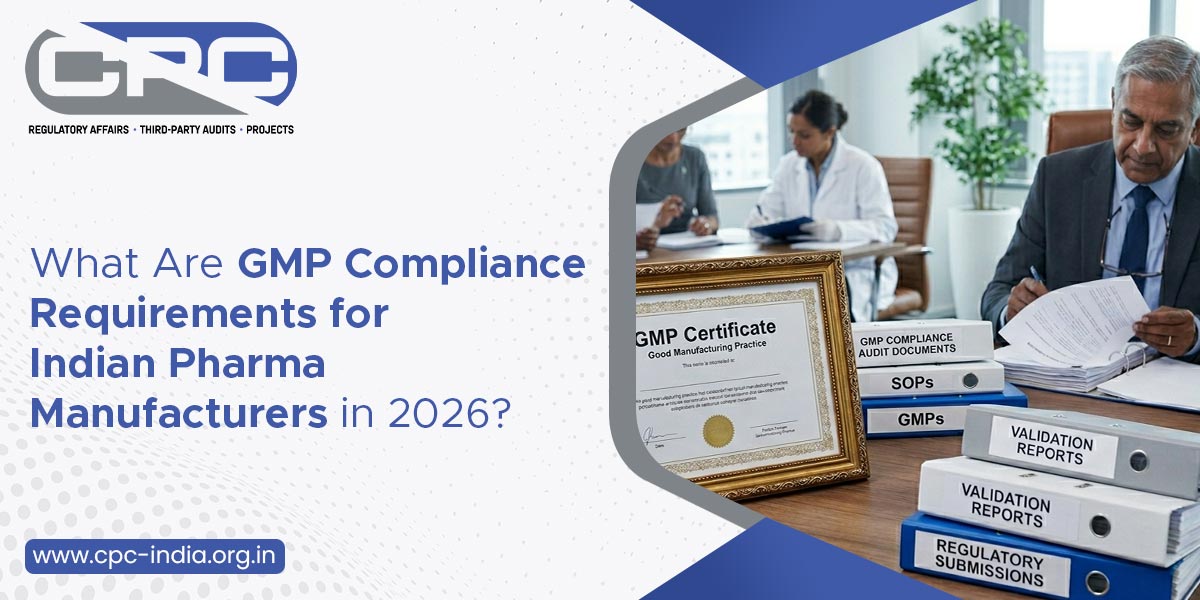
India’s pharmaceutical sector is entering a stricter, globally aligned regulatory era in 2026. With revised Schedule M guidelines, stronger inspections, and increasing export demands, Good Manufacturing Practices (GMP) are no longer just a compliance checkbox—they are a strategic necessity. For Indian manufacturers aiming to compete internationally, understanding updated GMP compliance requirements is critical.
This guide explains the latest GMP expectations in India, key compliance pillars, and how expert support like GMP consultants for pharma in India can help organizations stay audit-ready and globally competitive.
The Evolving GMP Landscape in India (2026):
In recent years, Indian regulators have significantly tightened GMP norms. The revised Schedule M introduced in 2024 aligns Indian standards with global benchmarks such as WHO-GMP and EU-GMP. These updates emphasize quality systems, risk management, and digital traceability.
Additionally, the Drugs Controller General of India (DCGI) has mandated strict enforcement of WHO-GMP standards by 2026, with inspections already underway.
This means pharmaceutical companies must now meet higher expectations across manufacturing, documentation, and quality assurance—or risk regulatory action.
Core GMP Compliance Requirements in 2026:
1. Pharmaceutical Quality System (PQS):
A robust Pharmaceutical Quality System is now central to GMP compliance. Manufacturers must establish a structured system that integrates quality policies, risk management, and continuous improvement.
Modern PQS frameworks include:
● Quality risk management (QRM)
● Corrective and preventive actions (CAPA)
● Product quality reviews (PQR)
Regulators expect companies to proactively prevent defects rather than fix them later.
This is where Pharmaceutical GMP consultancy India services play a vital role—helping design and implement compliant quality systems.
2. Personnel Training and Qualification:
GMP compliance begins with people. In 2026, regulators require:
● Clearly defined roles and responsibilities
● Continuous GMP training programs
● Documented competency assessments
Employees must understand not just what to do, but why compliance matters. Skilled teams reduce deviations and improve audit outcomes.
3. Facility and Equipment Standards:
The revised Schedule M places strong emphasis on:
● Hygienic facility design
● Controlled environments (cleanrooms, HVAC systems)
● Qualified and validated equipment
Manufacturers must demonstrate that their infrastructure supports contamination-free production.
Validation is no longer optional—it’s mandatory for all critical systems.
4. Process Validation and Control:
Every manufacturing process must be validated to ensure consistent output. This includes:
● Process validation (PV)
● Cleaning validation
● Change control procedures
Companies must prove that their processes reliably produce quality products batch after batch.
This is a key focus area for GMP audit consultants in India, who assess gaps and recommend improvements before regulatory inspections.
5. Documentation and Data Integrity:
“Not documented = not done” remains the golden rule of GMP.
In 2026, compliance requires:
● Real-time documentation
● Electronic data integrity controls
● Audit trails and secure record systems
Regulators are increasingly focused on data integrity violations, making this one of the most critical compliance areas.
6. Quality Control and Testing:
Before any batch is released, it must undergo rigorous testing:
● Raw material testing
● In-process quality checks
● Finished product testing
Manufacturers must retain samples and maintain traceability for every batch.
This ensures that products meet safety, efficacy, and quality standards.
7. Packaging and Labeling Compliance:
Incorrect labeling can lead to serious compliance issues. GMP requires:
● Accurate labeling systems
● Tamper-proof packaging
● Line clearance procedures
Automation and barcode systems are increasingly used to minimize human errors.
8. Supply Chain and Distribution Controls:
GMP compliance extends beyond manufacturing. Companies must ensure:
● Proper storage conditions
● Controlled transportation
● Traceable distribution systems
These practices align with Good Distribution Practices (GDP), ensuring product integrity throughout the supply chain.
9. Internal Audits and Regulatory Inspections:
Regular internal audits are mandatory in 2026. These audits:
● Identify compliance gaps
● Prepare companies for inspections
● Ensure continuous improvement
Given the rise in global inspections and warning letters, companies increasingly rely on GMP & FDA compliance services in india to maintain readiness.
Global Compliance Expectations: Beyond India:
Indian pharma companies are major exporters, supplying medicines to over 200 countries.
As a result, they must comply with multiple international standards:
● WHO-GMP
● US FDA (cGMP)
● EU-GMP
● MHRA (UK), TGA (Australia), and others
Working with the Best EU GMP Compliance Company in India helps manufacturers align with European standards, which are among the most stringent globally.
Key Challenges in GMP Compliance (2026):
Despite clear regulations, many companies face challenges such as:
● Legacy infrastructure upgrades
● Lack of trained personnel
● Poor documentation practices
● Data integrity issues
Small and medium manufacturers, in particular, have been given extended deadlines to comply with revised standards.
However, delays in compliance can result in license suspension or export restrictions.
Why GMP Consultancy Matters More Than Ever:
With increasing regulatory complexity, expert guidance is no longer optional. Professional consultants help in:
● Gap analysis and readiness assessment
● Documentation and SOP development
● Audit preparation and mock inspections
● Training and compliance strategy
Choosing experienced GMP consultants for pharma in India ensures faster, smoother compliance with minimal disruption to operations.
Future Trends in GMP Compliance:
Looking ahead, GMP in India is evolving toward:
● Digital quality systems and automation
● AI-driven quality analytics
● Real-time monitoring and predictive compliance
● Stronger integration of global standards
Regulators are shifting focus from basic compliance to quality maturity, where companies must demonstrate continuous improvement and accountability.
Final Thoughts:
GMP compliance requirements for Indian pharmaceutical manufacturers in 2026 are more rigorous, structured, and globally aligned than ever before. From advanced quality systems to strict documentation and audit readiness, every aspect of manufacturing is under scrutiny.
For companies aiming to scale globally, compliance is not just about meeting regulations it’s about building trust, ensuring patient safety, and securing long-term growth.
Partnering with expert Pharmaceutical GMP consultancy India providers and leveraging reliable GMP & FDA compliance services in india can make the difference between regulatory risk and global success.
For More Information: https://www.cpc-india.org.in/gmp-compliance-requirements-indian-pharma-2026/