


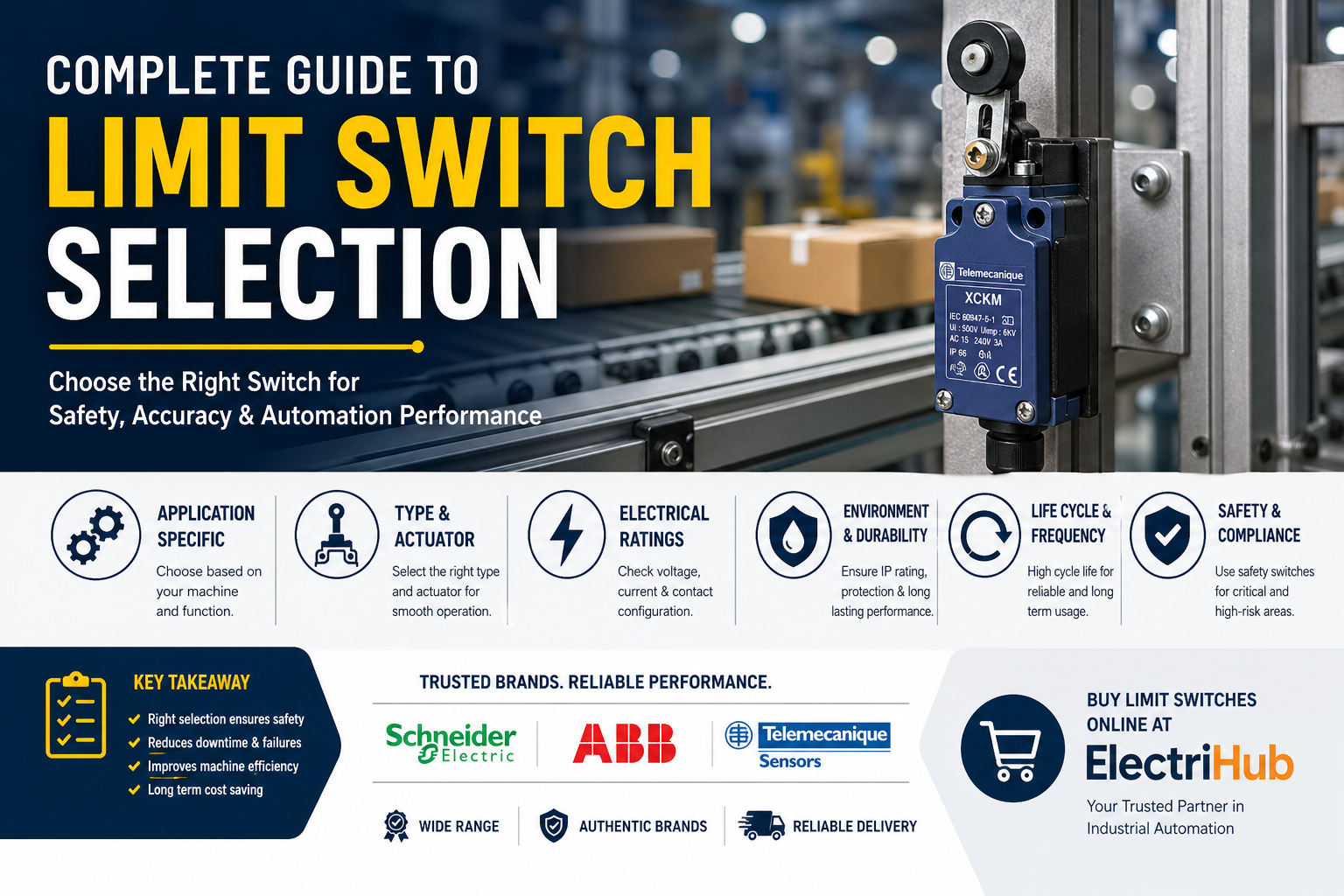
In today’s rapidly evolving industrial automation landscape, choosing the right limit switch goes far beyond a simple technical choice—it directly influences machine safety, precision, and overall productivity. Whether you're sourcing from an e-shop or electrical platforms like ElectriHub, understanding the right selection parameters helps prevent downtime, equipment failures, and unnecessary replacement costs.
This comprehensive guide simplifies limit switch selection, helping engineers, buyers, and maintenance professionals make informed decisions with confidence.
What is a Limit Switch?
A limit switch is an electromechanical device designed to detect the presence, absence, or position of an object and accordingly control machine operations.
It serves a vital role in:
Position sensing
Safety interlocking
Motion regulation
Automation feedback systems
These switches are commonly used in conveyors, packaging equipment, cranes, elevators, and a wide range of industrial automation setups.
Why Choosing the Right Limit Switch is Important
Selecting an unsuitable limit switch can result in:
Frequent breakdowns
Inaccurate positioning
Reduced equipment lifespan
Potential safety risks
This is why leading manufacturers such as Schneider Electric, ABB, and Telemecanique Sensors develop switches tailored for specific industrial applications.
Key Parameters for Selecting a Limit Switch
1️⃣ Application Type (Most Critical Factor)
Begin by identifying your application, such as:
Conveyor systems
Hoisting machinery
Packaging equipment
CNC machines
Heavy industrial operations
Each application demands a specific design. For instance, Telemecanique Sensors offers specialized models for conveyors, mining, and hoisting systems.
Pro Tip: Focus on matching the switch to the function of the machine—not just technical specifications.
2️⃣ Type of Limit Switch
Select based on operational requirements:
Common options include:
Standard limit switch
Heavy-duty limit switch
Miniature limit switch
Safety limit switch
Precision limit switch
Advanced variants now include IEC, NEMA, wireless, and battery-free designs for modern automation systems.
For rugged environments → Choose heavy-duty
For compact setups → Choose miniature switches
3️⃣ Actuator Type (Operating Mechanism)
The actuator determines how the switch is triggered.
Popular types:
Roller lever
Plunger
Rotary lever
Whisker
Your selection should depend on:
Direction of movement
Required force
Available installation space
4️⃣ Electrical Ratings (Voltage & Current)
This is a crucial consideration.
Check the following:
Rated voltage (AC/DC)
Current capacity
Contact configuration (NO/NC)
Ensure compatibility with your control systems such as PLCs and relays.
5️⃣ Environmental Conditions (IP Rating & Durability)
Industrial settings can be demanding.
Look for resistance to:
Dust
Water
Oil
Extreme temperatures
For example, IP67-rated switches are ideal for outdoor or dusty environments, offering enhanced durability and protection.
6️⃣ Mechanical Life & Operating Frequency
Since limit switches are mechanical devices, longevity is essential.
Evaluate:
Mechanical life cycles
Electrical life
Switching frequency
High-speed applications require switches designed for extended cycle life.
7️⃣ Mounting Style & Installation
Select a mounting method suited to your system:
Panel mounting
Surface mounting
DIN rail mounting
Simpler installation reduces downtime and maintenance efforts.
8️⃣ Size & Space Limitations
For compact machinery, space optimization is key.
Consider:
Mini limit switches
Compact housing designs
These are especially useful in packaging machines, robotics, and smaller automation systems.
9️⃣ Safety Requirements
In critical operations, safety is non-negotiable.
Use safety-rated limit switches that comply with industrial standards, especially for:
Emergency stop systems
Safety guards
Interlock mechanisms
🔟 Brand & Quality (Trusted Manufacturers)
Always opt for reliable brands available on platforms like ElectriHub.
Top manufacturers include:
Schneider Electric
ABB
Telemecanique Sensors
These brands are known for:
Long operational life
High accuracy
Robust industrial performance
Buying Limit Switches from E-Commerce Platforms
Today, many industrial buyers prefer online electrical platforms for ease and efficiency.
Advantages of sourcing from ElectriHub:
Extensive product range
Access to trusted brands
Easy product comparison
Bulk purchasing options
Dependable delivery
ElectriHub offers solutions designed for precise detection, positioning, and automation control, making it a reliable sourcing partner for industrial needs.
Common Mistakes to Avoid
Ignoring environmental conditions (dust, oil, moisture)
Choosing the wrong actuator type
Overlooking electrical ratings
Opting for low-quality brands
Not considering application-specific requirements
Final Thoughts
Selecting the right limit switch isn’t just about matching specifications—it’s about aligning the device with your application, environment, and performance expectations.
When purchasing from electrical e-commerce platforms like ElectriHub, always prioritize:
Application suitability
Durability and IP rating
Electrical compatibility
Trusted brands
Long-term performance
A well-chosen limit switch ensures:
Smooth automation processes
Enhanced safety
Reduced downtime
Improved operational efficiency

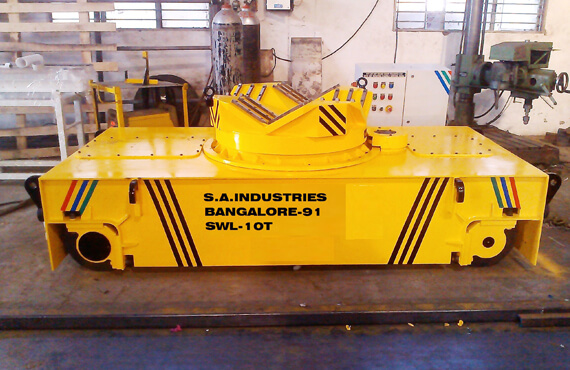
Transfer Cart, Coil/Sheet bundle/blooms & ingot transfer carts will be generally designed with motorized/battery-operated or which driven as per customer choice.
Generally, carts will be fabricated with reputed quality structural steel sections or sheets and duly stress relieved after full welding and fabrication.
Suitable HDPE/Alu linear pads provided on V Saddle to avoid damage or scratches of coil contact surface while handling.Hooter/Blinker, Limit switch will be provided on the cart.
The cart will be finished with two coats of golden yellow synthetic enamel paint on two coats of yellow primer.
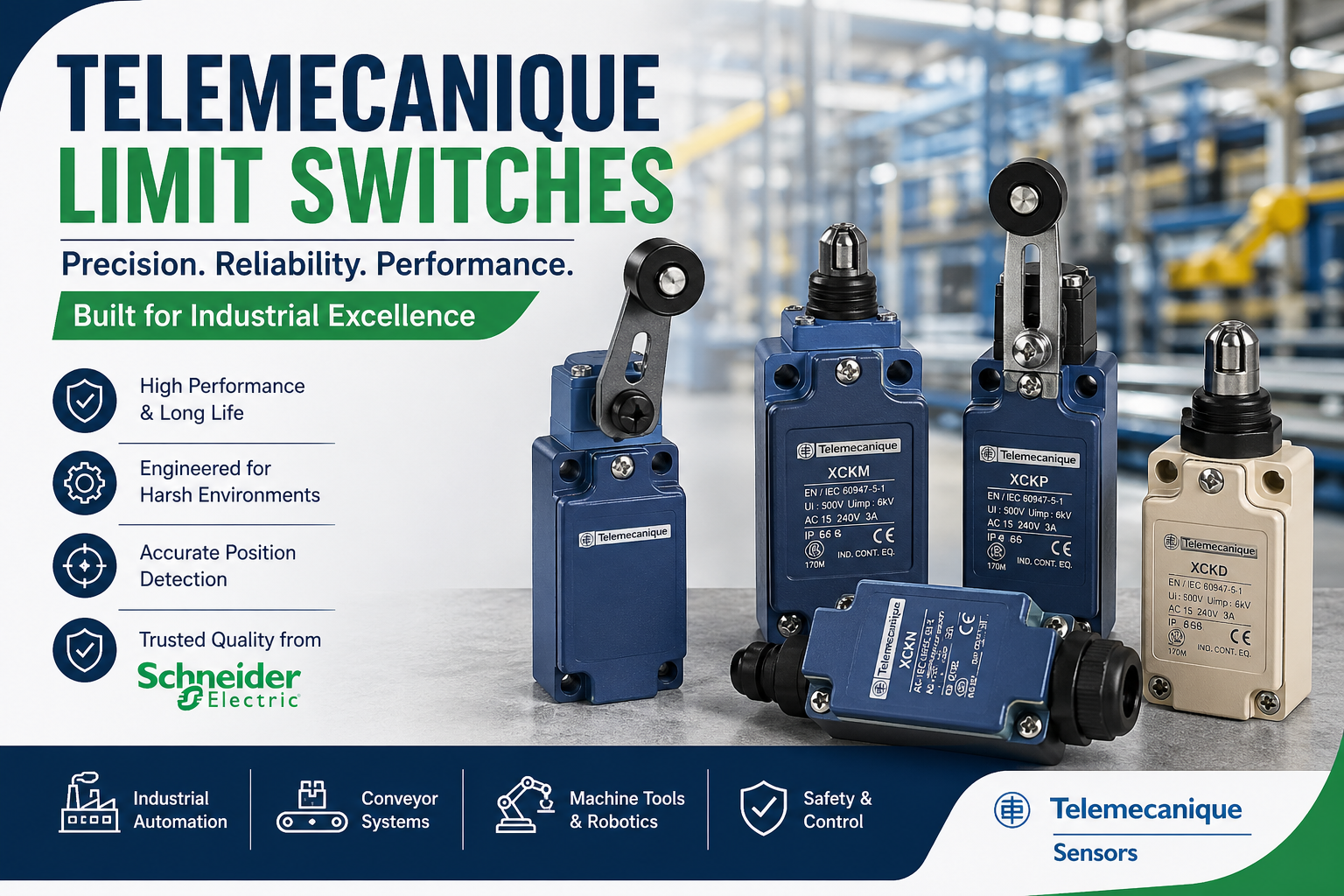
In today’s fast-evolving industrial automation landscape, Telemecanique limit switches have become a trusted solution for precision control, safety, and durability. Manufactured under Schneider Ele