


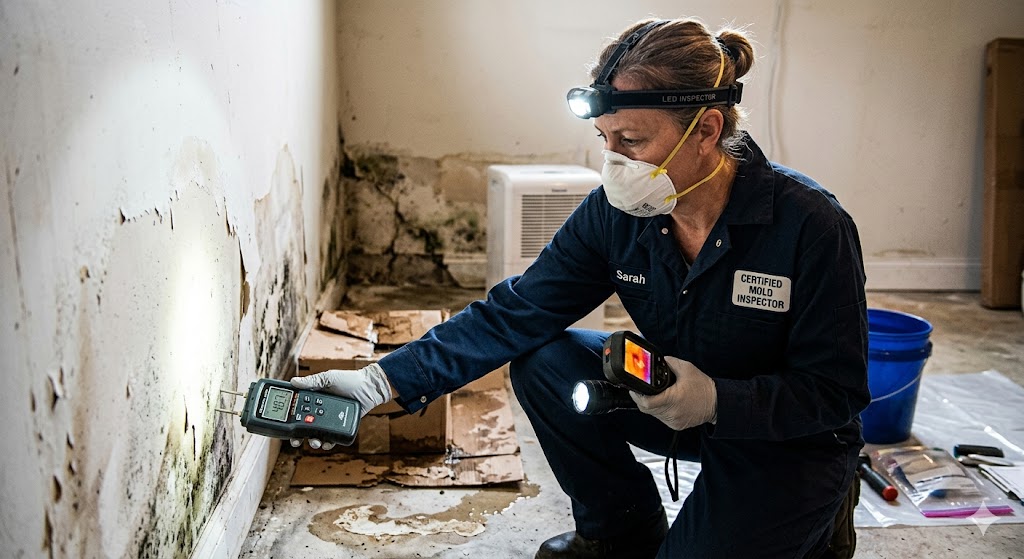
Water damage and mold go hand in hand. Where there’s moisture, mold is never far behind. Whether it’s a burst pipe, a leaking roof, or flooding after a storm, water intrusion creates the perfect environment for mold to grow—often faster than most homeowners realize.
The biggest mistake people make after water damage is jumping straight into cleanup without fully understanding what’s happening behind the scenes. That’s where a professional inspection becomes the critical first step.
In this comprehensive guide, we’ll break down the relationship between water damage and mold, explain why inspection should always come first, and show you how taking the right approach can protect your home, health, and finances.
Understanding the Link Between Water Damage and Mold
Mold thrives in damp environments. When water enters your home—whether suddenly or gradually—it creates ideal conditions for mold growth.
How Quickly Mold Develops:
- Mold can begin growing within 24 to 48 hours after water exposure
- It spreads rapidly through porous materials like drywall, wood, and insulation
- Hidden moisture allows mold to grow unnoticed
Even a small leak can trigger a large mold problem if left unchecked.
Why Mold After Water Damage Is Often Hidden
One of the biggest challenges with mold is that it doesn’t always grow where you can see it.
Common Hidden Areas:
- Behind walls
- Under flooring
- Inside insulation
- Within HVAC systems
After water damage, moisture can seep into these areas, creating a perfect breeding ground for mold—without any visible signs.
The Biggest Mistake Homeowners Make
After water damage, many homeowners focus on drying visible surfaces and assume the problem is solved.
Why This Is Risky:
- Hidden moisture may remain
- Mold can begin growing out of sight
- Damage can worsen over time
Skipping inspection can lead to expensive repairs and health issues later.
Why Inspection Is the First Step
A professional inspection provides a complete picture of the situation before any cleanup or repairs begin.
Key Benefits of Starting with an Inspection:
- Identifies all affected areas
- Detects hidden moisture
- Determines the extent of damage
- Prevents incomplete remediation
Without inspection, you’re essentially guessing—and that can be costly.
What a Water Damage and Mold Inspection Includes
A thorough inspection goes far beyond what the eye can see.
Typical Inspection Process:
- Visual assessment of affected areas
- Moisture detection using specialized tools
- Thermal imaging to find hidden water
- Inspection of high-risk areas (attic, basement, HVAC)
- Optional air and surface testing
The goal is to uncover both visible and hidden issues.
How Inspectors Detect Hidden Moisture
Professional inspectors use advanced technology to find moisture that homeowners can’t detect.
Common Tools:
- Moisture meters: Measure moisture levels in materials
- Thermal imaging cameras: Identify temperature differences caused by water
- Hygrometers: Measure indoor humidity levels
These tools help pinpoint problem areas before mold spreads further.
The Role of Moisture in Mold Growth
Mold cannot grow without moisture. That’s why identifying and eliminating moisture is the key to solving mold problems.
Common Sources of Moisture:
- Leaking pipes
- Roof damage
- Poor drainage
- High humidity
- Faulty appliances
An inspection helps locate the exact source, ensuring the problem doesn’t return.
Health Risks of Mold After Water Damage
Mold exposure can have serious health consequences, especially if it goes undetected.
Common Symptoms:
- Sneezing and coughing
- Eye and skin irritation
- Headaches
- Fatigue
Long-Term Risks:
- Worsening asthma
- Chronic respiratory issues
An inspection helps protect your indoor air quality and your family’s health.
Structural Damage Caused by Mold
Mold doesn’t just affect air quality—it can also damage your home’s structure.
Materials at Risk:
- Drywall
- Wood framing
- Insulation
- Flooring
Over time, mold can weaken these materials, leading to costly repairs.
Why DIY Cleanup Isn’t Enough
Many homeowners attempt to handle water damage and mold themselves.
Limitations of DIY:
- Can’t detect hidden mold
- May not remove all contaminated materials
- Risk of spreading spores
Without proper inspection, DIY efforts often address only surface-level issues.
The Cost of Skipping an Inspection
Trying to save money by skipping an inspection can backfire.
- Incomplete cleanup
- Mold regrowth
- Higher remediation costs
- Structural damage
- Health-related expenses
An inspection is a small upfront cost that can prevent major financial losses.
When You Should Schedule an Inspection
Timing is critical after water damage.
- Schedule an Inspection:
- Immediately after water damage occurs
- After drying and initial cleanup
- If you notice musty odors
- If health symptoms appear
The sooner you act, the better your chances of preventing mold growth.
Water Damage Categories and Mold Risk
Not all water damage is the same. Understanding the type can help assess mold risk.
Categories:
Clean Water: From pipes or rain—lower risk but still dangerous if untreated
Gray Water: From appliances—moderate contamination
Black Water: From sewage or flooding—high contamination and immediate mold risk
All categories can lead to mold if not properly addressed.
How Inspection Guides the Remediation Process
Inspection doesn’t just identify problems—it shapes the solution.
Benefits:
- Creates a targeted remediation plan
- Ensures all affected areas are treated
- Prevents unnecessary demolition
- Speeds up the recovery process
It’s the foundation for effective mold removal.
Preventing Mold After Water Damage
Once the inspection is complete, prevention becomes the priority.
Key Steps:
- Dry affected areas thoroughly
- Fix the source of moisture
- Improve ventilation
- Use dehumidifiers
- Replace damaged materials
Prevention ensures the problem doesn’t come back.
The Importance of Professional Expertise
Water damage and mold issues can be complex.
Why Hire Professionals:
- Experience in identifying hidden problems
- Access to advanced tools
- Accurate assessment and recommendations
- Safe and effective solutions
Professional inspections provide peace of mind and reliable results.
Long-Term Benefits of Starting with Inspection
Taking the right first step offers lasting advantages.
Key Benefits:
- Reduced repair costs
- Healthier indoor environment
- Better property value
- Faster recovery from water damage
It’s a proactive approach that pays off in the long run.
Common Myths About Water Damage and Mold
Let’s clear up some misconceptions.
Myth 1: If It Looks Dry, It’s Safe
Hidden moisture can still exist behind surfaces.
Myth 2: Mold Takes Weeks to Grow
Mold can start growing within 24–48 hours.
Myth 3: Bleach Solves Everything
Bleach may clean surfaces but doesn’t address hidden mold.
Creating a Response Plan for Water Damage
Preparation can make all the difference.
Steps to Take:
- Stop the water source
- Remove standing water
- Schedule a professional inspection
- Begin drying and cleanup
- Follow remediation recommendations
Having a plan ensures a faster, more effective response.
Conclusion: Inspection Is the Smart First Move
Water damage can happen unexpectedly—but how you respond determines the outcome. Jumping straight into cleanup without a clear understanding of the damage can lead to hidden mold, costly repairs, and ongoing health risks. That’s why inspection is the first and most important step. It reveals what you can’t see, identifies the source of the problem, and guides the entire restoration process.
By starting with a professional inspection from https://www.moldremediationspokanewa.com/, you’re not just reacting to water damage—you’re taking control of the situation. You’re protecting your home, your investment, and your family’s health. Don’t take chances with hidden moisture and mold. Start with inspection, and build your recovery on a solid foundation.


