




Note: This nanoemulsion preparation protocol is intended for laboratory research purposes only. Process parameters may require optimization depending on materials, equipment configuration, and application conditions. Results may vary between laboratories.
Nanoemulsions are fine oil-in-water or water-in-oil dispersions with droplet sizes typically below 200 nm, widely used in pharmaceutical, cosmetic, and functional food applications due to their high stability and solubilization capability.
This guide provides a step-by-step workflow for nanoemulsion preparation using high-pressure homogenization for formulation and process development studies.
1. Why Use High-Pressure Homogenization for Nanoemulsions?
High-pressure homogenization is a widely used technique for producing nanoemulsions at laboratory scale due to its strong droplet size reduction capability and good reproducibility. Compared with conventional emulsification methods such as ultrasonication or low-shear mixing, it provides:
•
Consistent nanoscale droplet size distribution
•
High reproducibility for formulation development
•
Improved physical stability of emulsions
•
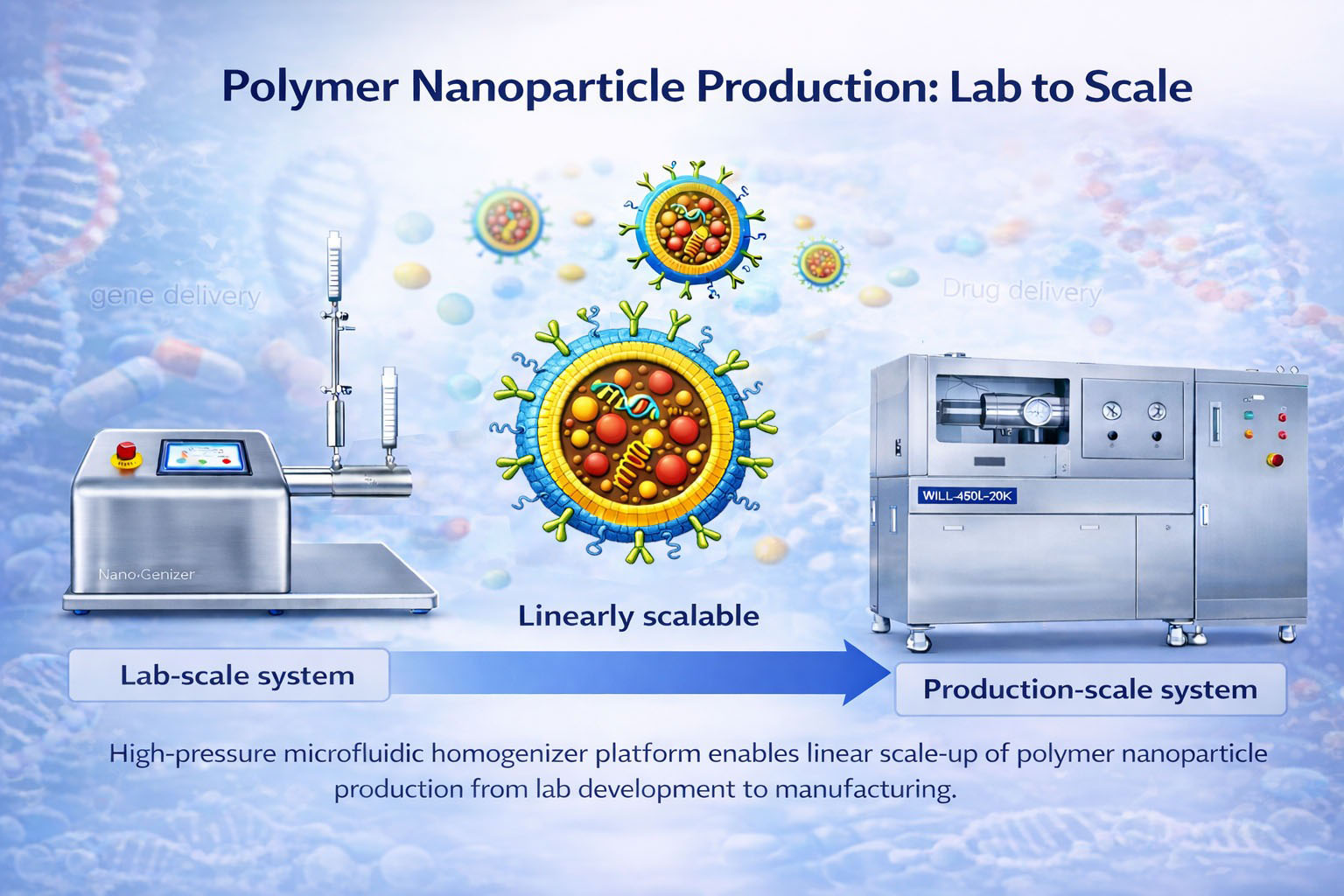
Process parameters that can be linearly scaled with appropriate system design
2. Materials & Reagents
API:
Oil-soluble active ingredient
Oil phase:
MCT (Medium Chain Triglycerides)
Emulsifiers:
Soy lecithin, glycerol, etc.
Aqueous phase:
Water for injection
Buffer & osmotic agents:
Na₂HPO₄, NaCl, etc.
pH adjusters:
NaOH, HCl
3. Step-by-Step Nanoemulsion Preparation
Step 1: Prepare Oil Phase
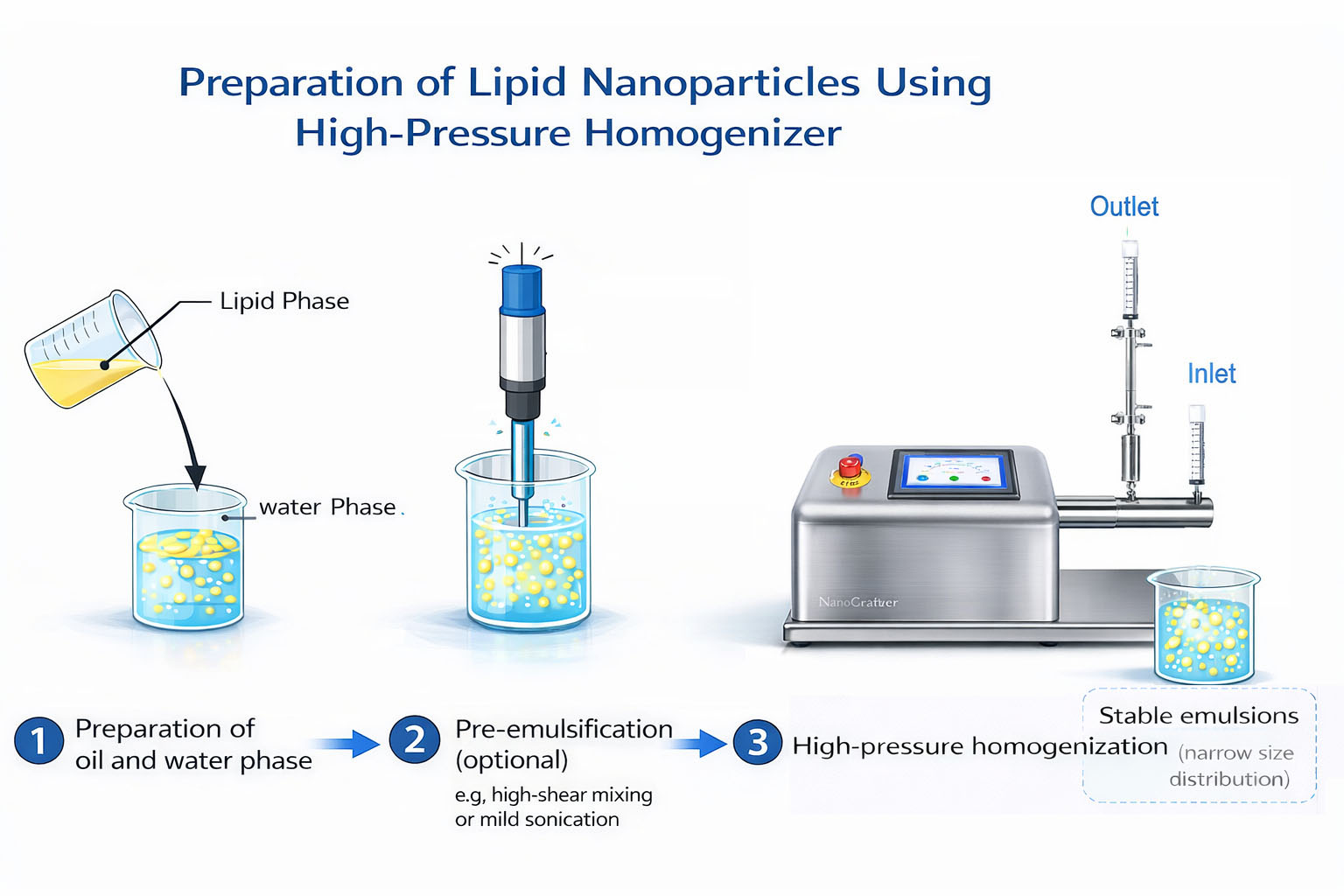
Dissolve the API in MCT and stir in a 60°C water bath until fully dissolved, forming a clear oil phase.
Step 2: Prepare Aqueous Phase
Add emulsifiers, phospholipids, and water for injection. Heat to 60°C and stir until no visible solids or oil droplets remain.
Step 3: Prepare Coarse Emulsion
Under 60°C and high-shear mixing (12,000 rpm), slowly add the oil phase into the aqueous phase. Continue shearing for 5–10 minutes to obtain a uniform coarse emulsion.
Step 4: High-Pressure Homogenization
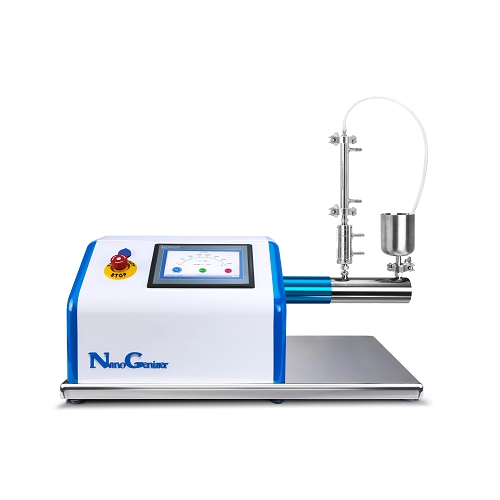
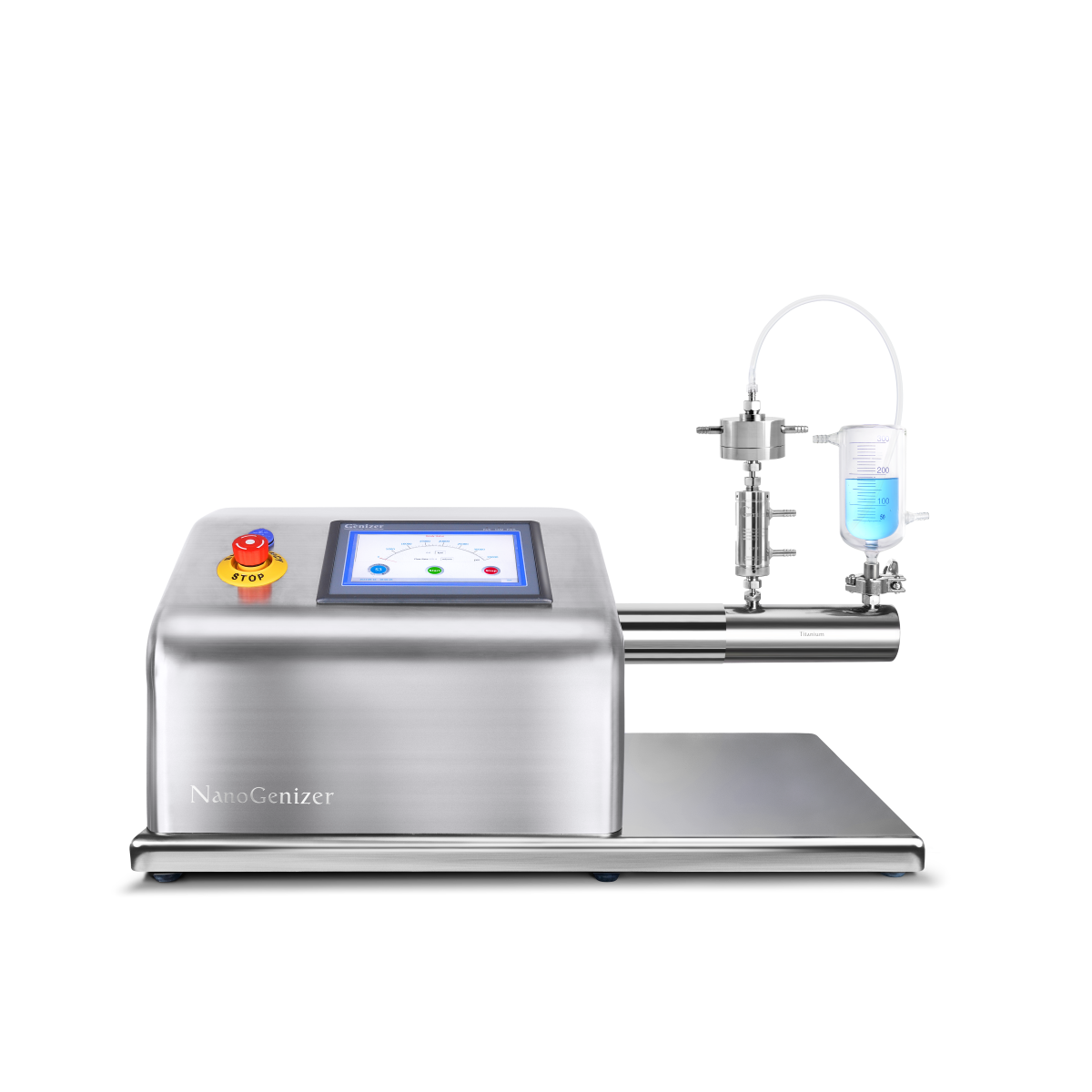
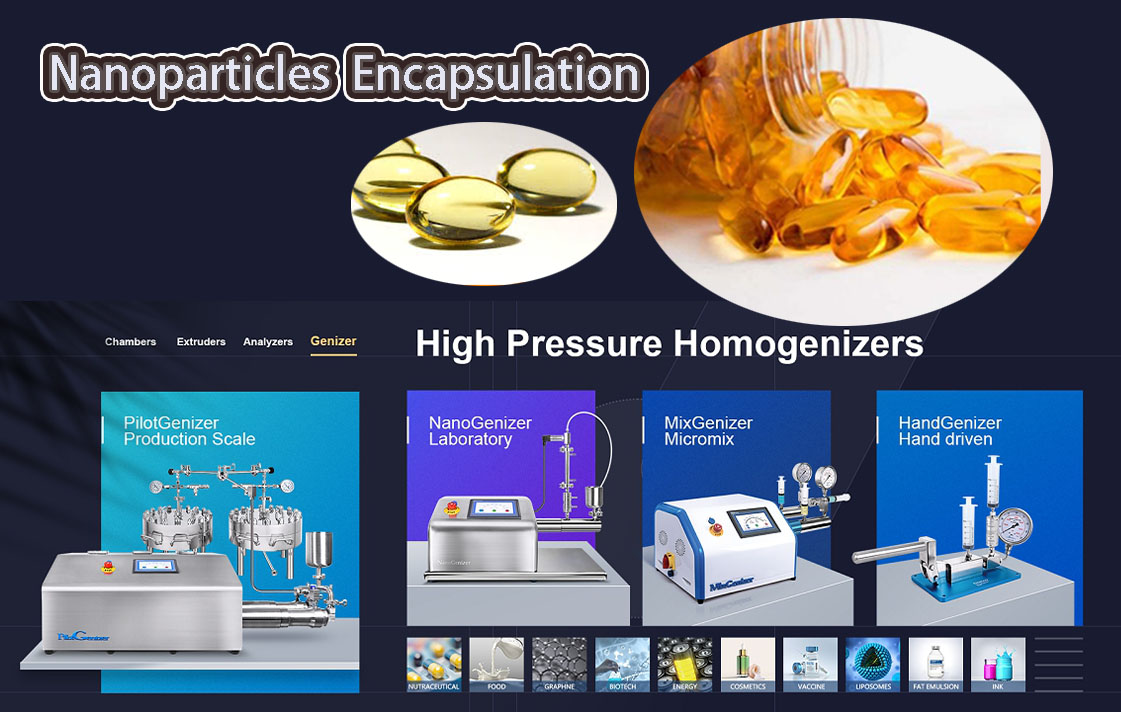
Transfer the coarse emulsion into a high-pressure homogenizer, NanoGenizer-30K. Process at 15,000 psi for 2 passes at room temperature, then increase pressure to 30,000 psi until the desired droplet size distribution is achieved.
NanoGenizer High Pressure Homogenizer
NanoGenizer High-Pressure Homogenizer
Step 5: pH Adjustment
Add buffer solution, mix thoroughly, and adjust pH to the desired range using NaOH or HCl.
Step 6: Characterization
Analyze particle size, polydispersity index (PDI), and zeta potential using dynamic light scattering (DLS).
4. Results
After high-pressure homogenization, the nanoemulsion exhibits significantly reduced droplet size and improved physical stability at laboratory scale.
Before high-pressure homogenization: Coarse, heterogeneous emulsion
After high-pressure homogenization: Stable nanoemulsion with uniform nanoscale droplets
Nanoemulsion Before and After High-Pressure Homogenization
crude emulsion Before Homogenization
Nanoemulsion After Homogenization
Particle Size Comparison Before and After High-Pressure Homogenization
Particle Size Before Homogenization
Particle Size After Homogenization
5. Application Notes
This nanoemulsion preparation workflow is widely used in pharmaceutical formulation development, cosmetic research, and functional delivery system design. Process parameters such as pressure, number of passes, and temperature should be optimized according to specific formulation properties.
6. Process Development & Scale-Up Considerations
While this protocol describes a laboratory-scale workflow, high-pressure homogenization allows scalable transition of process parameters when moving toward pilot and further scale-up development, provided that system configuration and formulation conditions are appropriately optimized.
For process optimization, scale-up support, or equipment selection, please contact Genizer technical team.
COVID-19 Impact Analysis on Lipid Nanoparticle Market report published by Value Market Research provides a detailed market analysis comprising market size, share, value, growth and trends for the period 2020-2027.
The report encompasses data regarding market share and recent developments by key players.
Moreover, this market report also covers regional and country markets in detail.The research report also covers the comprehensive profiles of the key players in the market and an in-depth view of the competitive landscape worldwide.
This section consists of a holistic view of the competitive landscape that includes various strategic developments such as key mergers & acquisitions, future capacities, partnerships, financial overviews, collaborations, new product developments, new product launches, and other developments.Get more information on "Global Lipid Nanoparticle Market Research Report" by requesting FREE Sample Copy at https://www.valuemarketresearch.com/contact/lipid-nanoparticle-market/download-sampleMarket DynamicsThe global lipid nanoparticle market is foreseen to thrive tremendously in coming years attributed to spurring research activities, growing cancer burden, and rapidly expanding COVID-19 cases.
Lipid nanoparticle has gained robust attraction in late 2020 for the manufacturing of COVID-19 vaccines.
Lipid nanoparticle’s unique size-dependent properties, control, target drug release, the feasibility of carrying both lipophilic and hydrophilic drugs, ease to scale‐up and sterilize, and capability to encapsulate high drug content is promising for market growth.